
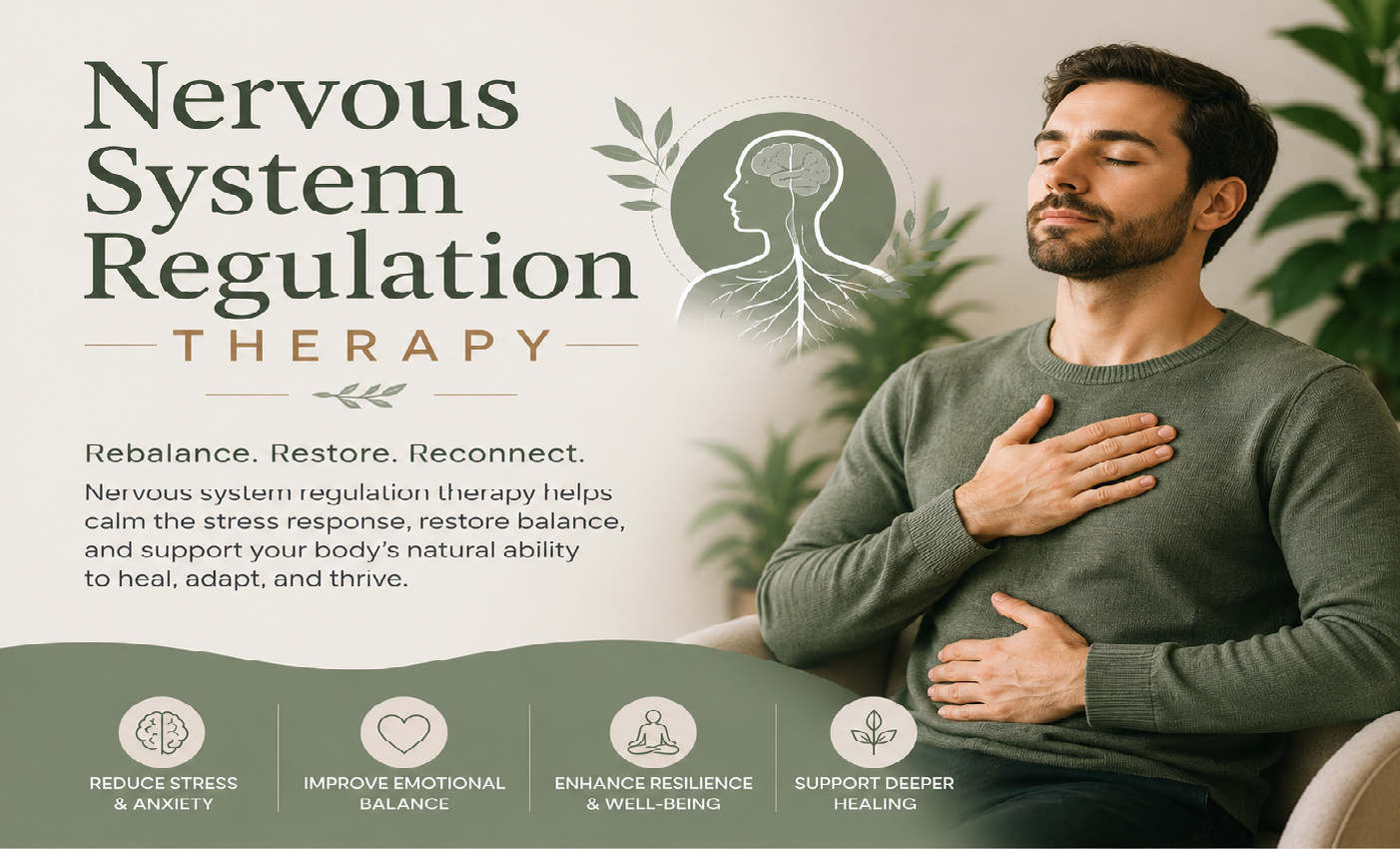
Stress rarely begins as a thought. More often, it begins as a sensation. A tightening in the chest. A jaw that never fully relaxes. A stomach that feels unsettled for no obvious reason. Difficulty sleeping, constant fatigue, irritability, emotional numbness, or the feeling that you’re always bracing for something can all be signs that your nervous system is carrying more than it was designed to hold alone.
Many people spend years trying to manage these symptoms without realizing their bodies are communicating something important. Understanding those signals can reveal a great deal about what is happening beneath the surface, which is why many people seek Nervous System Regulation Therapy in West Lafayette.
Stress is Sometimes as Old as The Hills
People typically think about stress in terms of what is happening to them at present. Life, work, family, financial stress, and relationship issues are all relevant. However, the body’s response to stress is influenced not just by what is happening now.
The nervous system is influenced by experience. The body learns lessons of safety before the conscious mind does when a person’s childhood experiences involve something other than safety, such as unpredictability, criticism, emotional neglect, conflict, or disconnection. With time, these adaptations become automatic.
Become very sensitive, constantly worrying about what might go wrong. Another may stop feeling those difficult feelings. Another person might feel the need to sacrifice him/herself for others, without paying attention to his/her own needs.
These are not coincidental. They evolved for a reason that was in line with the intent. It’s not about the fact that they are there. The issue is that they tend to persist after circumstances that caused them have changed.
The Nervous System is Always Listening
Polyvagal Theory suggests that the nervous system is always looking for cues that it is safe and secure, or that it is in danger. It does this automatically, out of the conscious mind. People are more connected, flexible, and engaged when safety is present. Are clear in their thinking, respond well, and stay emotionally present.
If the nervous system is feeling threatened, survival responses increase in activity even if the threat is a subtle one. This is what it appears like for some people with anxiety. Thoughts accelerate. The body is still tight. It is harder to get to sleep than usual, and sometimes impossible.
The answer is not as apparent to others. Energy drops. Motivation fades. Emotional numbness replaces emotions. The world feels far away.
Both sayings are not indicative of weakness. Both are evidence of a nervous system in an attempt to “guard” the person it serves.
What Symptoms are Trying to Accomplish
A very useful change in treatment is the ability to see beyond the meaning of the symptoms. Overthinking can be a result of trying to avoid making mistakes or a way to avoid disappointment.
Perfectionism may work to protect against criticism or rejection. When the need to connect becomes important for emotional safety, it can manifest in the form of people-pleasing.
Withdrawal can be a protective factor. Control can provide predictability in what can be a chaotic world. Many of these patterns are frustrating, but they are only formed for a reason. Randall S. Wood, LMHC, assists clients to look at these experiences with an open mind and not a critical eye. Why am I this way? So, what does this part of me want to save you from? This seemingly innocuous move can make all the difference.
The Body Carries What Words Cannot
Not all stress originates from outside pressures. Some of it is the awareness of what it takes not to feel those feelings. Many people experience it early on, that they can’t show their emotions like fear, sadness, anger, shame, or disappointment. They try to suppress their feelings rather than risk rejection or conflict, and they continue to go on functioning. The cost of the body is often taken up by the body.
Persistent tension, headaches, fatigue, digestive discomfort, irritability, and emotional numbness are all indicators of the constant struggle to suppress painful emotions. When this occurs, the body isn’t broken. It is communicating. The message is frequently very simple: “There’s something in there that needs to be attended to, understood, and felt.
Understanding Protective Parts
Many find the IFS framework to be both useful and comforting. IFS don’t see perfectionism, avoidance, or emotional withdrawal as problems; it sees them as protection. These parts are growing to maintain safety and manage emotional pain.
- The overthinking part might be trying to avoid failure.
- The caretaking part may be working to maintain a connection.
- The controlling part might be attempting to defend against uncertainty.
- This is because, viewed this way, self-criticism is less useful than curiosity.
- The protective parts need not be defeated. They must be comprehended.
Reconnecting With Self
The heart of Randall S. Wood, LMHC’s work is the notion that every person has a Self that can lead with calm, clarity, compassion, confidence, connection, courage, curiosity, and creativity. The 8 Cs are not accomplishments, but rather qualities. They are the authentic expressions of our humanity, when we are not always being protected by parts of our bodies.
Through therapy, a relationship is established that is based on a sense of trust, rather than conflict. Many people find that anxiety fades, emotional responses decrease, and challenging experiences become easier to manage as the Self becomes more present.
We’re not looking to get rid of all the struggles. We want to connect with these struggles from a place of stability, not survival.
Healing Through Safety and Connection
The nervous system can’t be forced to heal. It heals by safety. The nervous system starts to get new information when people feel genuine curiosity, compassion, and emotional presence in a therapeutic relationship. It discovers that protection of the connection isn’t always required. Learn that being vulnerable doesn’t always result in harm. These experiences over time develop space for meaningful change.
Conclusion
The body is talking all the time, particularly when the stress is ongoing. Signs of a nervous system that has been actively providing emotional safety may include anxiety, fatigue, emotional numbness, tension, overthinking, and shutdown. Insofar as these experiences are seen as issues to solve, Randall S. Wood, LMHC, helps clients explore them as adaptive responses to be curious and compassionate about. Clients use a relational, trauma-informed approach using principles of Polyvagal Theory and Internal Family Systems to deepen their relationship with Self and increase access to Calm, Clarity, Compassion, Confidence, Connection, Courage, Curiosity, and Creativity.
This book can guide individuals on their journey toward emotional safety, self-discovery, and a more Self-led life if they are looking for Nervous System Regulation Therapy in West Lafayette. Relationships, too, can benefit from connection and emotional safety, and attachment theory couples therapy in Crawfordsville is a helpful component to healing.
