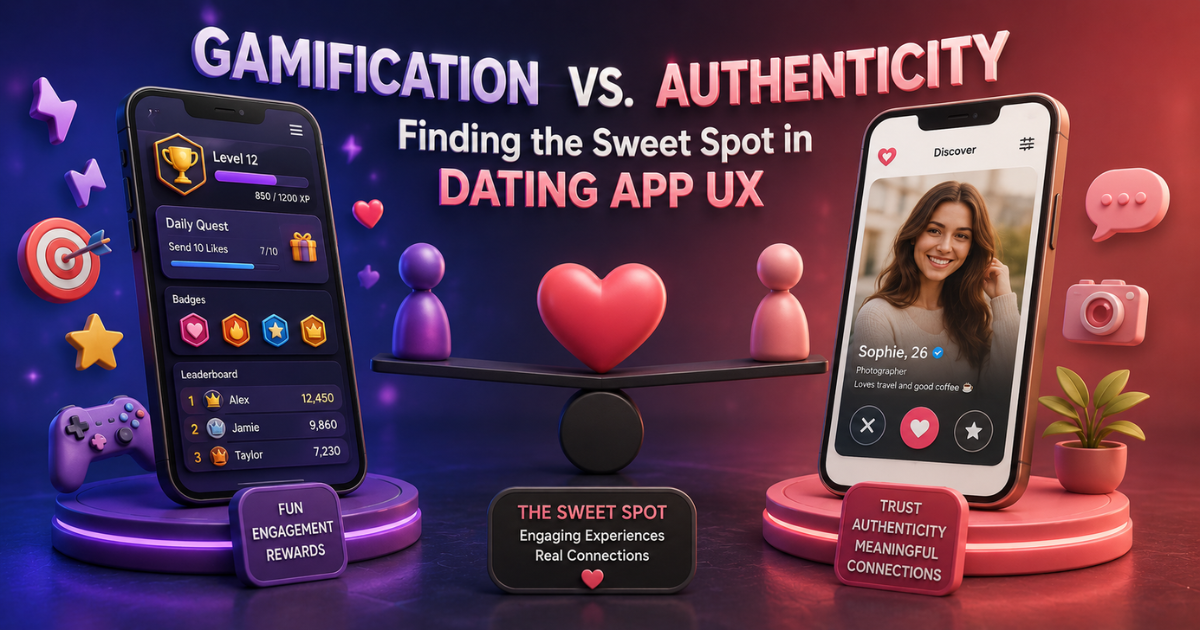
The digital dating market is at a crossroads. For a decade, the “swipe” mechanic dominated the industry. This simple gesture turned human connection into a repetitive game. While it increased engagement, it also led to “swipe fatigue.” Today, users demand more than just a dopamine hit. They want real connections.
Professional Dating App Development now faces a difficult challenge. You must balance addictive game mechanics with features that foster genuine human bonds. This explores the technical and psychological balance between gamification and authenticity.
The Current State of Digital Dating
Dating apps are more popular than ever. However, user frustration is also at an all-time high. Many people feel like they are playing a game with no prize.
- Market Stats: Over 300 million people worldwide use dating apps.
- The Fatigue Factor: Approximately 45% of users report feeling “burnt out” by dating platforms.
- Success Rates: Only about 20% of matches lead to a physical meeting in traditional swipe-based models.
These statistics show a clear gap. Engagement is high, but satisfaction is low. A specialized Dating App Development Company must bridge this gap using better User Experience (UX) design.
The Mechanics of Gamification
Gamification uses game-like elements in non-game contexts. It keeps users coming back. It triggers the reward center of the brain. When used correctly, it makes the search for a partner fun.
1. Variable Reward Systems
The swipe is a slot machine. You don’t know if the next profile will be a match. This uncertainty creates a powerful psychological loop. It encourages users to keep scrolling.
2. Progress Bars and Badges
Many apps use “profile completion” bars. These nudge users to add more photos or bio details. “Verified” badges provide a sense of achievement and status.
3. Daily Streaks and Quests
Some apps reward users for logging in every day. They might give “daily picks” or extra likes. These mechanics ensure high Daily Active User (DAU) counts.
The Problem with Excessive Gamification
When an app feels too much like a game, the people on it feel like objects. This leads to several technical and social issues.
- Low-Effort Interactions: Gamified apps encourage quick decisions. Users judge others in less than a second.
- Ghosting Culture: When matches are easy to get, they feel disposable. Users stop replying because a new “game” is always available.
- Bot and Spam Risks: Gamified systems attract automated accounts. These bots exploit the reward loops to scam real users.
The Shift Toward Authenticity
Authenticity focuses on the quality of the match. It prioritizes long-term success over short-term clicks. This requires a different technical approach to Dating App Development.
1. Rich Media Profiles
Static photos are easy to fake. Modern apps now integrate video and voice. Seeing a person move and hearing their voice builds trust. It proves the person is real.
2. Prompt-Based Bios
Instead of a blank box, apps offer specific questions. “What is your perfect Sunday?” or “What is your biggest pet peeve?” These prompts force users to share personality.
3. Verification Technology
Liveness detection is now a standard. Users must take a real-time selfie to prove their identity. This reduces “catfishing” and builds a safer community.
Finding the Sweet Spot: A Technical Guide
How do you build an app that is both fun and meaningful? You must blend these two worlds. A top-tier Dating App Development Company uses specific strategies to reach this balance.
Strategy A: Gamified Discovery, Authentic Interaction
Use game mechanics to help users find each other. Once they match, remove the games.
- Implementation: Limit the number of likes per day. This makes each choice feel important.
- The Goal: Move the user from “playing” to “talking” as fast as possible.
Strategy B: Reward Positive Social Behavior
Most games reward speed. A dating app should reward kindness and depth.
- Implementation: Give “Karma points” to users who respond quickly. Flag users who get reported for being rude.
- The Result: The algorithm promotes “good” daters over “popular” ones.
Strategy C: Depth-Based Matching
Move beyond simple filters like age and distance. Use data science to find true compatibility.
- Implementation: Ask users about their values and lifestyle. Use Natural Language Processing (NLP) to analyze bio text.
- The Data: Match users based on shared interests rather than just physical attraction.
The Role of Artificial Intelligence (AI)
AI can support both gamification and authenticity. It is the most powerful tool in modern Dating App Development.
- AI Wingman: An AI can suggest icebreakers. It helps shy users start a conversation. This reduces the “dead chat” problem.
- Safety Filters: Machine learning detects “not safe for work” (NSFW) images instantly. It keeps the platform clean and safe.
- Smart Sorting: AI learns what you like. It doesn’t just show you “hot” people. It shows you people you will actually talk to.
Case Studies in UX Balance
Example 1: Hinge
Hinge marketed itself as the app “designed to be deleted.” They removed the swipe. Users must like a specific part of a profile. This small change makes the interaction more authentic. It requires effort.
Example 2: Bumble
Bumble gamifies the “first move” by giving women 24 hours to message. This timer creates a game-like urgency. However, it also solves the problem of “match hoarding.” It forces a real decision.
Example 3: Thursday
This app only works on Thursdays. It uses the “fear of missing out” (FOMO) game mechanic. Because it is only open one day, users are more likely to meet in person that night.
Technical Architecture for Modern Dating Apps
Building these platforms requires a robust backend. You cannot afford downtime when millions are searching for love.
- Real-Time Messaging: Use WebSockets for instant chat. Users expect zero lag in a conversation.
- Geospatial Queries: Use efficient databases like MongoDB or PostGIS. You must calculate distances between thousands of users every second.
- Scalable Cloud Storage: Photos and videos take up massive space. Use S3 or similar cloud solutions to handle the load.
Protecting User Privacy
Authenticity requires sharing personal details. This makes security a top priority for any Dating App Development Company.
- End-to-End Encryption: Chats must be private. Even the developers should not be able to read them.
- Data Anonymization: Use data for the algorithm without revealing identities.
- Safe Meetup Features: Integrate “safety check-ins.” Let users share their location with a friend during a date.
The Business Case for Authenticity
Some argue that gamification makes more money. If people find love, they delete the app. This is a “retention paradox.”
However, authenticity builds a better brand. Users who find success on your app will tell their friends. Word-of-mouth is the cheapest and best marketing tool. High-quality users are also more likely to pay for premium features. They see the value in a service that actually works.
Design Best Practices for Developers
When coding the UI/UX, follow these rules for a balanced experience:
- Avoid Infinite Scrolls: Give the user a “finish line” for the day.
- Prioritize Clarity: Make it easy to see what a person is looking for.
- Encourage Detail: Do not let users create a profile without at least three photos.
- Use Haptic Feedback: Use subtle vibrations for matches. This provides a physical reward for a successful connection.
Future Trends in Dating UX
The next wave of Dating App Development will use even more advanced tech.
- Biometric Syncing: Imagine an app that knows you are nervous on a date. It could suggest a conversation topic based on your heart rate.
- VR Date Rooms: Meet in a virtual cafe before meeting in person. This saves time and money for the users.
- AI Matchmakers: An AI could “interview” you to find your perfect partner. This skips the swipe entirely.
Metrics of Success in 2.0 Apps
Traditional apps measure “Time Spent in App.” Modern apps should measure “Success Outside the App.”
| Metric | Old Focus | New Focus |
| Retention | Daily log-ins | Return after a break |
| Engagement | Number of swipes | Length of conversations |
| Conversion | Premium upgrades | Phone number exchanges |
| Outcome | More matches | Real-world dates |
Conclusion
The “sweet spot” in dating app UX lies in using games to facilitate reality. You want a platform that is exciting to use but serious about its goal.
Gamification gets users through the door. Authenticity keeps them safe and helps them find what they need. A great Dating App Development Company understands this nuance. They don’t just build a digital toy. They build a bridge between two people.
Focus on the user’s ultimate goal: a real connection. Use your technical skills to remove the friction of meeting someone new. If you can make the process fun without losing the humanity, you will win the market. The era of mindless swiping is ending. The era of the “smart match” is here.