
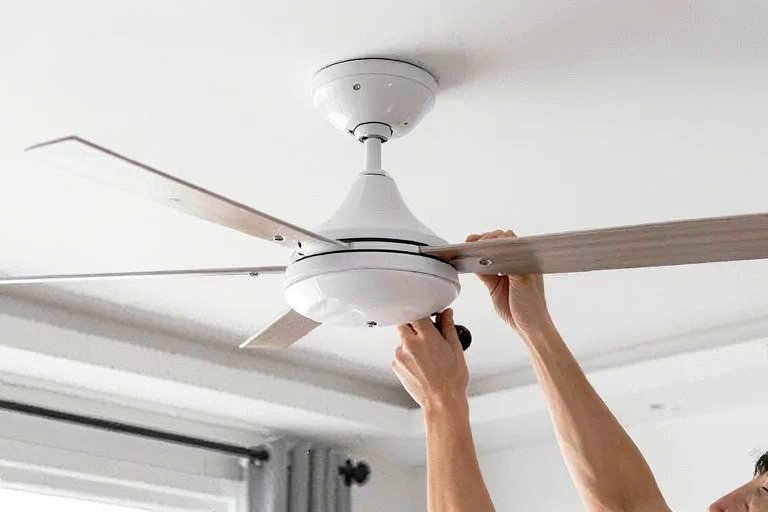
Most homeowners install ceiling fans with one clear expectation they should help reduce electricity bills and make the home more comfortable. In most cases, this is true. A properly installed ceiling fan supports airflow, reduces AC usage, and improves indoor comfort.
But interestingly, some Nashville homeowners notice something unexpected over time: instead of saving energy, their ceiling fans seem to be adding to electricity usage or not making any real difference at all. This often leads people to rethink ceiling fan installation Nashville services or question whether the fan is even worth using. So what actually causes a ceiling fan to become inefficient instead of helpful?
Ceiling Fans Don’t Save Energy Automatically
One common misunderstanding is that ceiling fans automatically reduce electricity bills just by being installed.
In reality, a ceiling fan only helps save energy when it is:
- Used correctly
- Installed properly
- Paired with smart cooling habits
- Positioned in the right location
Without these conditions, the energy-saving benefit becomes very small or even unnoticeable.
Leaving Fans Running in Empty Rooms
One of the most common mistakes homeowners make is running ceiling fans in rooms where no one is present.
Unlike air conditioners, ceiling fans do not cool the air—they cool people by creating airflow.
So when a fan is left running in an empty room:
- It uses electricity with no benefit
- It does not improve comfort
- It contributes to unnecessary energy usage
This simple habit is one of the main reasons energy savings don’t show up on electricity bills.
Incorrect Speed Settings Increase Power Usage
Many homeowners assume that higher fan speed equals better comfort. While it may feel stronger, it can also lead to unnecessary power consumption.
Using maximum speed all the time can:
- Increase motor strain
- Use more electricity than needed
- Reduce overall efficiency
On the other hand, using too low a speed in hot weather reduces comfort and makes people rely more on AC.
Finding the right balance is important for efficiency.
Poor Installation Reduces Efficiency
A ceiling fan that is not installed properly may still run—but it won’t work efficiently.
Common installation issues include:
- Improper blade alignment
- Loose mounting
- Incorrect ceiling height
- Weak electrical connections
These problems can cause:
- Wobbling airflow
- Uneven air circulation
- Motor strain
- Reduced performance
This is why professional Ceiling Fan Installation Nashville services play an important role in long-term energy efficiency.
Dirty or Dusty Blades Increase Energy Usage
Dust buildup is another hidden reason ceiling fans become inefficient.
When dust collects on blades:
- The fan becomes heavier
- The motor has to work harder
- Airflow becomes uneven
- Energy usage slowly increases
Most homeowners don’t notice this change because it happens gradually over time.
Regular cleaning helps maintain smooth and efficient operation.
Poor Room Airflow Design
Even a perfectly installed ceiling fan can feel inefficient if the room itself has airflow issues.
Problems include:
- Blocked air vents
- Closed or sealed windows
- Large furniture obstructing airflow
- Poor room layout
When air cannot move freely, the fan has to work harder to create a cooling effect, which reduces overall efficiency.
Using Ceiling Fans Without Adjusting Thermostat Settings
One of the biggest missed opportunities for energy savings is not adjusting the thermostat when using ceiling fans.
Many homeowners:
- Run AC at the same temperature as before
- Do not take advantage of wind-chill effect
- Ignore combined cooling benefits
Ceiling fans are most effective when used alongside a slightly higher thermostat setting. Without this adjustment, energy savings remain minimal.
Wrong Fan Size for the Room
Not all ceiling fans are suitable for all room sizes.
If the fan is:
- Too small → it cannot circulate enough air
- Too large → it may waste energy unnecessarily
Choosing the correct fan size is essential for balancing comfort and efficiency.
This is something often evaluated during professional Ceiling Fan Installation Nashville consultations.
Old or Low-Quality Fans Consume More Power
Older ceiling fan models or low-quality units may not be energy efficient.
They can:
- Use outdated motor technology
- Consume more electricity
- Produce weaker airflow
- Wear out faster over time
Modern energy-efficient fans are designed to provide better airflow with less power usage.
Running Fans 24/7 Without Need
Some homeowners develop the habit of leaving ceiling fans on all day and night, even when not required.
This leads to:
- Continuous electricity consumption
- No added comfort benefit in empty spaces
- Unnecessary energy costs
Turning off fans when not needed is a simple but effective way to improve efficiency.
Ceiling Fan Direction Is Often Ignored
Many people don’t realize ceiling fans have directional settings.
In summer:
- Fans should rotate counterclockwise for cooling airflow
In winter:
- Fans should rotate clockwise to circulate warm air
If the direction is not adjusted seasonally, the fan may not work as efficiently as it should.
Why Efficiency Depends on Overall Usage Habits
Ceiling fans are not standalone energy-saving devices. Their effectiveness depends heavily on how they are used in daily life.
Efficiency improves when:
- Fans are used only when needed
- Speed settings match room conditions
- Thermostat settings are adjusted
- Rooms are properly ventilated
Without these habits, savings become minimal.
Final Thoughts
Ceiling fans are designed to improve comfort and support energy savings, but they are not automatic energy-saving machines. Their performance depends on installation quality, usage habits, maintenance, and room conditions.
When these factors are ignored, even a good ceiling fan can feel like it is wasting energy instead of saving it.
That’s why proper Ceiling Fan Installation Nashville services are important—not just for setup, but for ensuring the fan actually performs efficiently in real-world conditions.
In the end, ceiling fans don’t waste energy on their own… it’s how they are used and installed that makes the difference.