
Water is a master of disguise. It can slowly drip behind your drywall, pool beneath your floorboards, or quietly escape from a pipe deep underground without dropping a single obvious clue. By the time you actually notice a warped baseboard or a musty smell, you’re already looking at a massive restoration bill.
For decades, finding a hidden water leak involved a lot of guesswork and destructive “exploratory” demolition. Thankfully, we live in an era where plumbing has gone high-tech. Modern plumbing professionals don’t need to smash through your beautiful tile just to see if a pipe is weeping. Instead, they rely on advanced, non-invasive technology.
Here is a look at the science behind smart leak detection and how it saves your home—and your wallet.
The Three Pillars of Modern Leak Detection
Smart leak detection isn’t just one single gadget; it’s an ecosystem of advanced tools designed to locate escaping water with pinpoint accuracy. Experts primarily rely on three core technologies to identify issues before they escalate:
1. Acoustic Sonic Detection
When water escapes from a pressurized pipe, it creates a distinct sound signature. To the human ear, a tiny pinhole leak deep under a concrete slab is completely silent. However, to ground microphones and acoustic sensors, it sounds like a distinct hiss, whoosh, or thumping noise.
Plumbing specialists use high-frequency acoustic equipment to “listen” through soil, concrete, and walls. By measuring the intensity and frequency of the sound waves, technicians can map out exactly where the pipe is compromised without digging up your entire yard.
2. Thermal Imaging Cameras
Water changes the temperature of the materials surrounding it. Even a minor damp patch inside an insulated wall will register a different thermal profile than the dry areas around it.
Using infrared and thermal imaging technology, plumbers can scan your ceilings and walls to see “invisible” moisture patterns. A cool spot on a dry-looking wall immediately tells an experienced technician that water is pooling nearby, allowing them to isolate the issue to a precise square inch.
3. Smart Flow Monitors and Shut-Off Valves
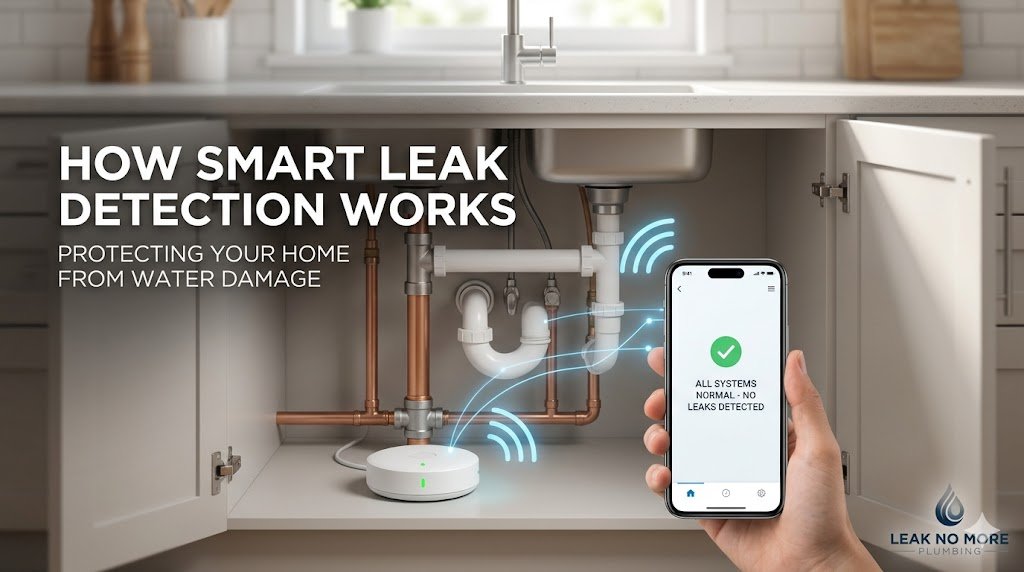
While acoustic and thermal tools are used by professionals to locate existing problems, smart flow meters are your home’s permanent digital security guards. Installed directly onto your main water line, these smart devices use ultrasonic waves to measure the exact velocity of water moving through your home.
If the system detects a micro-drip that has been running non-stop for hours—or a sudden spike indicating a burst pipe—it instantly sends an alert to your smartphone. The most advanced systems will even automatically shut off your home’s main water valve to prevent catastrophic flooding while you are away at work or on vacation.
Finding the Unseen: Deep and Underground Leaks
The most terrifying leaks are the ones you can’t see or hear at all. Main water service lines and sewer pipes run deep beneath your property. When these break, they can wash away foundational soil, crack your driveway, or cause localized sinkholes.
If you notice a sudden drop in water pressure or an unexplainable muddy patch in your lawn, standard visual inspections won’t cut it. Pinpointing these hidden issues requires highly specialized equipment. Utilizing advanced underground leak detection dallas ensures that your property remains intact while technicians locate the exact point of structural failure beneath the surface.
Why Upgrading to Smart Technology is a Game Changer
Investing in modern diagnostic services or installing smart home water monitors might seem like an extra step, but it offers unparalleled advantages over old-school plumbing methods:
- Zero Destruction: No more tearing down drywall or ripping up pristine landscaping just to locate a minor drip.
- Saves Money on Utilities: Micro-leaks can waste thousands of gallons of water a year. Catching them early keeps your monthly utility bills where they belong.
- Prevents Toxic Mold: Stagnant, hidden water is a breeding ground for black mold, which can compromise your family’s respiratory health within 24 to 48 hours.
What to Do When Technology Signals Trouble
If your smart home system alerts you to an anomaly, or if you suspect a hidden problem due to a skyrocketing water bill, acting quickly is vital. The very first step is to shut off your water supply to limit ongoing structural deterioration.
Once the immediate flow is stopped, reaching out for professional leak detection dallas allows local experts to deploy commercial-grade acoustic and thermal tools to resolve the issue cleanly.
Plumbing hitches don’t respect standard office hours. If a smart monitor alerts you to a major midnight pipe rupture, skipping the DIY fixes and calling a dedicated emergency plumber waxahachie ensures that a certified specialist can arrive with the right diagnostic gear to mitigate damage before sunrise.
Smart plumbing technology takes the mystery out of home maintenance. By pairing automated home sensors with professional diagnostic tools, you can keep your property dry, safe, and completely leak-free.
