
We’ve all been there: you’re right in the middle of a movie, cooking dinner, or working on a tight deadline, and suddenly—total darkness. The hum of the refrigerator stops, the Wi-Fi cuts out, and you’re left sitting with your thoughts (or practicing your best shadow puppet skills).
Power outages are always inconvenient, but during severe weather or extreme temperatures, they can also become safety hazards. Knowing exactly how to react when the lights go out can protect your family, save your food supply, and prevent costly damage to your home’s electrical appliances.
Here is your step-by-step checklist on how to handle a power blackout safely and effectively.
1. Verify the Scope of the Outage
Before you start hunting around for flashlights in the dark, you need to determine if the problem is widespread or specific to your house.
- Look Outside: Check your neighbors’ homes or look out at the streetlights. If the entire block is dark, it’s a grid-level utility issue.
- Check Your Breaker Box: If your neighbors have power but you don’t, you may have simply overloaded a circuit or tripped your main breaker.
Safety Warning: If you look at your electrical panel and smell a distinct burning odor, hear buzzing, or see physical sparks, do not attempt to flip the switches yourself. If your home has been singled out by a sudden electrical failure, you need a certified emergency electrician charlotte nc to inspect the system immediately to prevent an electrical fire.
2. Unplug Your Sensitive Electronics
When grid power eventually comes back on, it rarely returns with a smooth, steady flow. Instead, it often returns in a massive wave known as a power surge.
This sudden spike in electrical voltage can instantly fry the delicate circuit boards inside your television, computer, microwave, and smart home hubs. To avoid a costly replacement headache, walk through your home and unplug your major electronics. Leave one easily visible lamp turned on so you will instantly know when the power has been restored to the grid.
3. Keep the Fridge and Freezer Closed
Your refrigerator is essentially a giant insulated cooler. As long as you keep the doors tightly shut, it will preserve its internal temperature surprisingly well.
| Appliance | Safe Temperature Duration (Doors Closed) |
| Refrigerator | Keeps food safe for up to 4 hours |
| Half-Full Freezer | Keeps food safe for up to 24 hours |
| Full Freezer | Keeps food safe for up to 48 hours |
Avoid the temptation to constantly open the door to check on your milk or grab snacks. Every time you open it, cold air escapes, drastically shortening the lifespan of your perishable groceries.
4. Choose Safe Lighting Options
While candles can create a cozy ambiance, they are one of the leading causes of residential fires during major blackouts. If you have pets or children, an overturned candle can turn a minor power outage into a catastrophe.
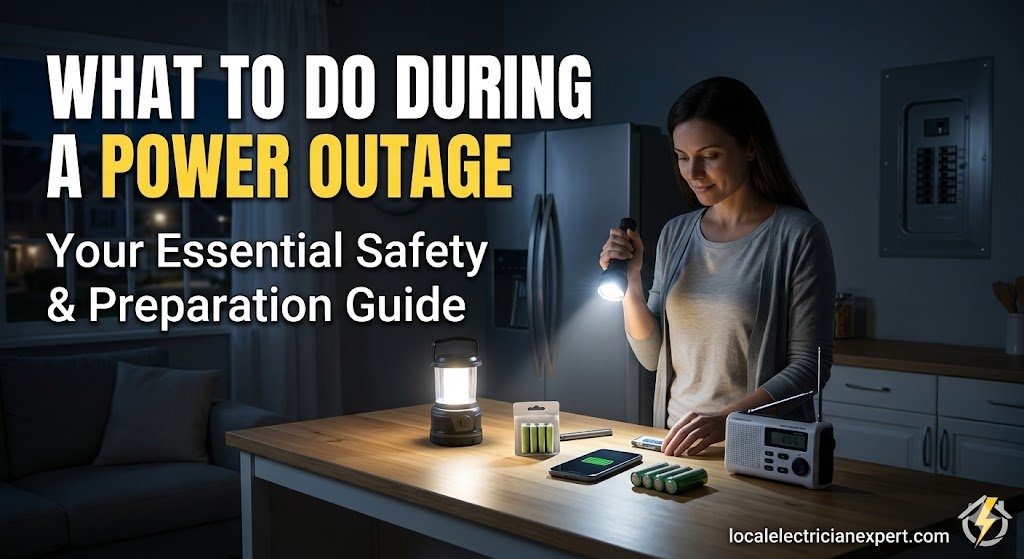
Always rely on LED flashlights, lanterns, or headlamps as your primary light sources. It is highly recommended to keep a dedicated emergency kit in an easily accessible closet containing fresh batteries, a portable power bank for your cell phones, and a battery-operated weather radio.
5. Assess the System Post-Outage
Once the utility company resolves the grid issue and your lights flicker back to life, don’t just go back to business as usual. Take a few minutes to inspect how your home’s infrastructure handled the shock.
Walk around and check if all your outlets are working. Sometimes, a severe power surge right before or after a blackout can permanently damage individual circuits or weaken older electrical panels.
If you notice that certain rooms still don’t have power, or if your breaker box keeps clicking off repeatedly after the grid reset, your electrical architecture may have suffered internal damage. Persistent tripping or partial power is a clear indicator that you need a professional electrical panel repair charlotte nc to ensure your main distribution board is still safe to operate.
Furthermore, don’t forget to check your exterior features. High-voltage grid fluctuations frequently damage exterior transformers, GFCI outlets, and timers. If your security lights or architectural lights fail to turn back on after a storm, scheduling an outdoor lighting repair will ensure your home’s perimeter remains safe, illuminated, and secure.
