
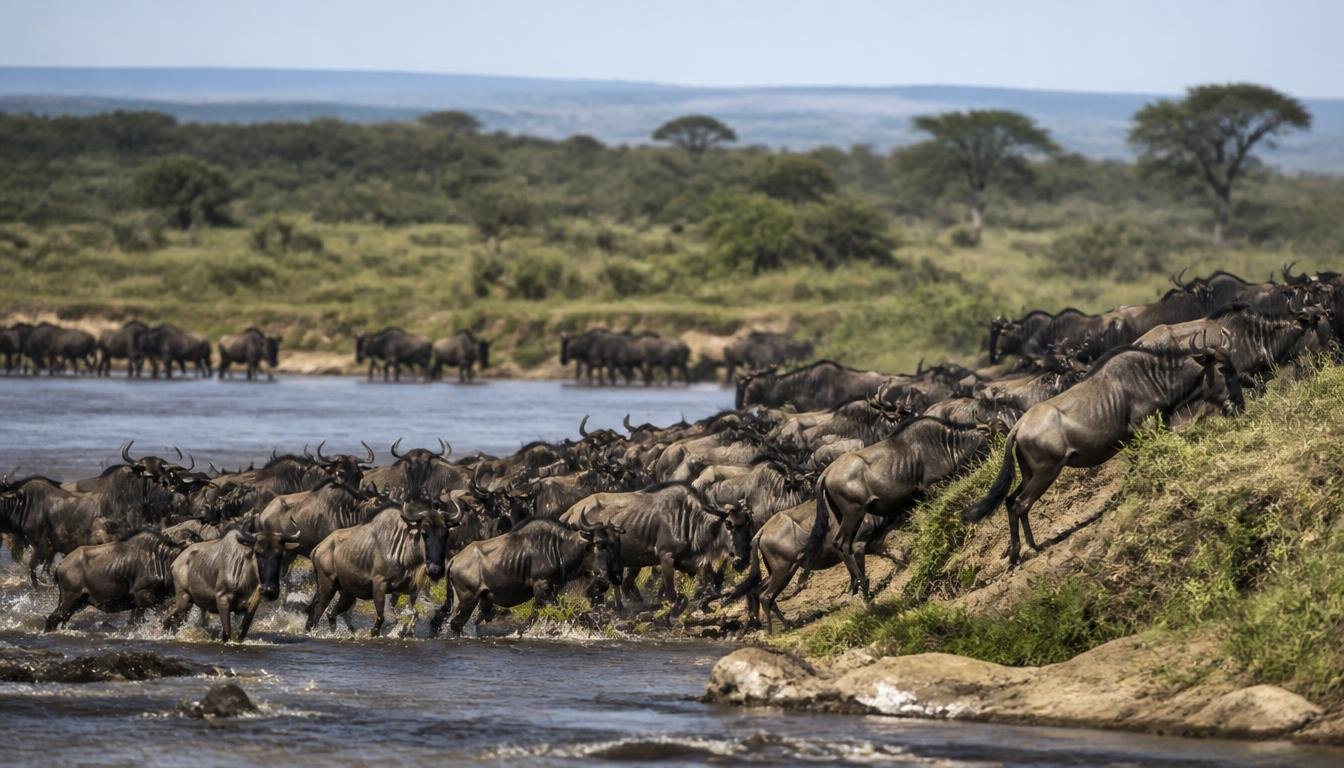
The Great Wildebeest Migration is a continuous, circular movement of over 1.5 million wildebeest, along with zebras and gazelles, across the Serengeti-Mara ecosystem. One of the most common questions travelers ask is: when does the wildebeest migration return to Tanzania?
The answer depends on rainfall patterns, but in general, the herds return to Tanzania between October and December, gradually moving back into the Serengeti from Kenya’s Maasai Mara.
Understanding this return journey is essential if you want to plan the best time to see wildebeest migration in Tanzania.
Why the Migration Returns to Tanzania
The migration is driven by one main factor: rainfall and fresh grass.
As the short rains begin in Tanzania around October–November:
- Fresh green grass starts growing in the southern Serengeti
- Water sources become available again
- Grazing conditions improve compared to Kenya
Because of this, the herds naturally begin moving south, following the rain.
This return movement is not a sudden event—it is a gradual process spread across several weeks.
When Exactly Do Wildebeest Return to Tanzania?
The timing varies slightly each year, but the general pattern is:
October – Early Movement Begins
- Some herds start leaving the Maasai Mara
- Crossing back through the northern Serengeti begins
- Movement is slow and scattered
November – Peak Return Phase
- Large groups move through northern and central Serengeti
- Rainfall in Tanzania increases
- Grazing becomes more abundant
December – Arrival in Southern Serengeti
- Herds settle in the southern plains (Ndutu region)
- Migration cycle prepares for calving season
- Large concentrations of animals are visible
By December, most of the wildebeest are back in Tanzania.
Best Time to See Wildebeest Migration in Tanzania
If your goal is to experience the best time to see wildebeest migration, Tanzania offers excellent viewing opportunities at different stages of the return journey.
December to March – Calving Season (Best Overall Experience)
- Over 500,000 calves are born
- High predator activity (lions, cheetahs, hyenas)
- Best wildlife photography opportunities
- Southern Serengeti is at its peak
April to June – Movement Across Serengeti Plains
- Herds spread across central Serengeti
- Large migration columns visible
- Fewer tourists compared to peak season
July to October – Herds in Kenya (Out of Tanzania)
- Most wildebeest are in Maasai Mara
- Tanzania still offers resident wildlife and some movement in the north
November to December – Return Phase (Key Period)
- Migration re-enters Tanzania
- Green landscapes return
- Excellent safari conditions begin again
Where to See the Migration When It Returns
When the herds come back into Tanzania, the best locations include:
Northern Serengeti
- First entry point from Kenya
- Occasional river crossings
- Large herd gatherings
Central Serengeti (Seronera)
- Movement corridors for returning herds
- Good predator activity
- Reliable year-round wildlife viewing
Southern Serengeti (Ndutu)
- Final destination before calving season
- Best place for early migration buildup
Why Timing Matters for Safari Planning
Understanding the return cycle helps you choose the best time to see wildebeest migration based on what you want:
- For dramatic action → July–October (Kenya crossings)
- For newborn wildlife and predator action → December–March
- For balanced migration movement in Tanzania → November–June
There is no single “perfect month”—each stage offers a different experience.
Final Thoughts
The wildebeest migration returns to Tanzania mainly between October and December, marking the beginning of a new ecological cycle in the Serengeti. This period is especially important because it leads directly into the calving season, one of the most spectacular wildlife events on Earth.
If you are planning your safari around the best time to see wildebeest migration, Tanzania’s southern Serengeti between December and March offers the most rewarding and action-packed experience, while the return months provide a unique opportunity to witness the migration rebuilding itself across the plains.
