
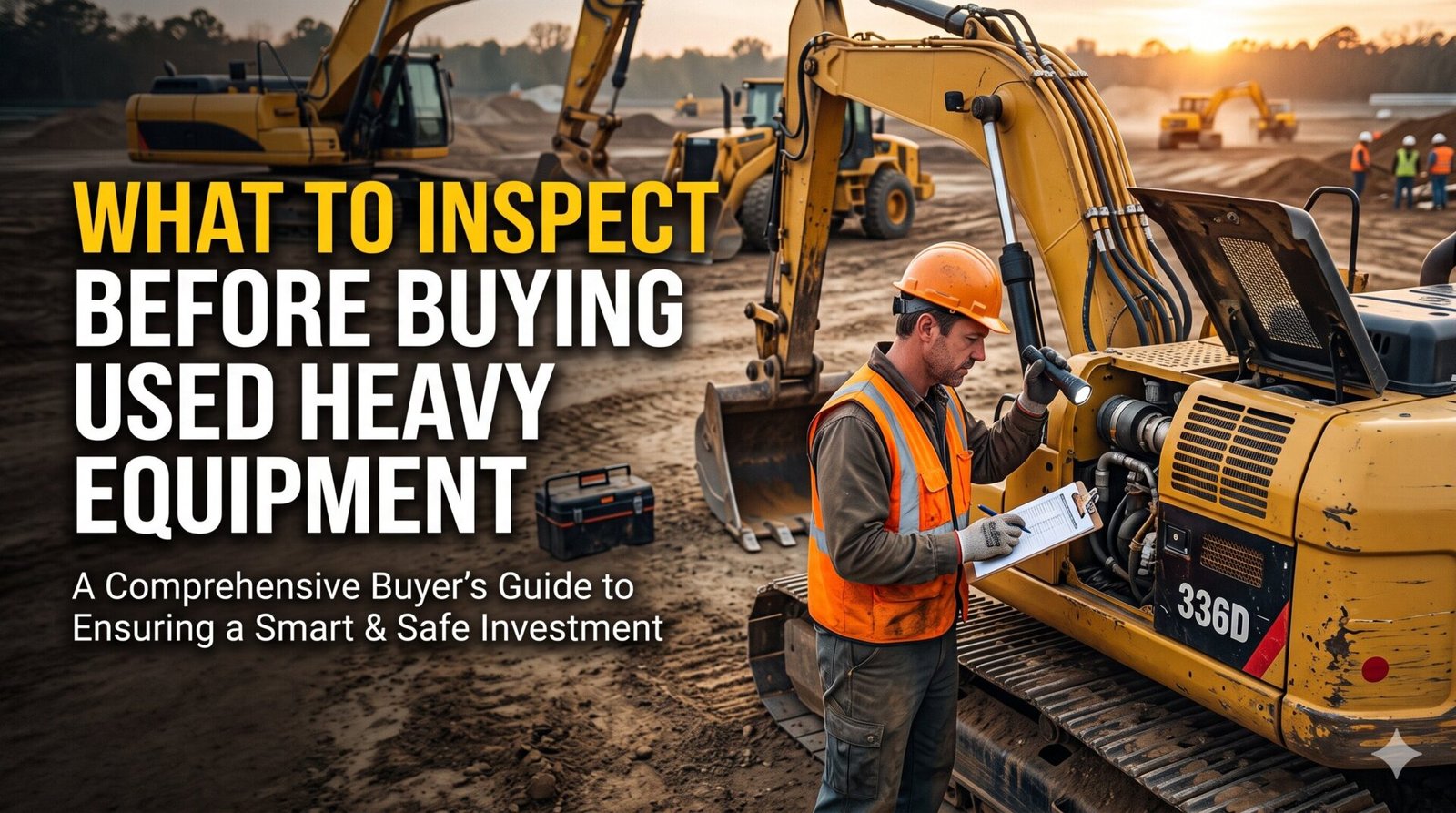
Purchasing used heavy equipment is a major capital decision. A bulldozer, excavator, or loader in poor condition can drain your budget through repairs faster than a new machine costs to operate. Before signing any agreement, a thorough inspection protects your investment and reveals whether a piece of used heavy equipment for sale is genuinely a bargain or a liability waiting to happen.
Report: UAE Heavy Construction Equipment Market Report Size
The difference between a steal and a regrettable purchase often comes down to 30 minutes of careful inspection. Equipment dealers and private sellers expect professional buyers to inspect machines thoroughly—it’s standard practice.
This guide walks you through exactly what to look for, what questions to ask, and the red flags that should stop you from proceeding.
Pre-Inspection Documentation Review
Before you even look at the machine, examine the paperwork. Documentation tells a story that the paint sometimes hides. Request and review:
Service Records: Consistent maintenance logs indicate an owner who cared for the equipment. Large gaps between services—or no records at all—suggest possible neglect or hidden damage repairs.
Ownership History: How many owners? One careful owner is better than five operators each using the machine differently. Multiple owners in short timeframes can indicate mechanical problems driving quick sales.
Operating Hours: This is your single most important metric. A 5,000-hour excavator is in its prime; a 15,000-hour machine is entering heavy maintenance territory. Verify hour readings against service records—mismatches are red flags.
Warranty Information: Does any original warranty remain? Can it be transferred? In regions like the UAE, manufacturer support matters for used equipment. Check what coverage exists.
Critical Red Flag
If the seller cannot provide service records or operating hours, treat this as a major warning sign. Legitimate dealers maintain documentation. Unwillingness to share history often means there’s something to hide.
Engine Inspection: The Heartbeat of Heavy Equipment
A used machine’s engine determines whether it runs for another 5,000 hours or requires a costly rebuild. Here’s what to inspect:
⚙️Engine Checklist
Cold Start: Does the engine start immediately, or does it crank repeatedly? Sluggish cold starts suggest compression problems or fuel system issues.
Oil Colour & Condition: Pull the dipstick. Fresh oil is amber; dark/black oil or sludge indicates irregular maintenance. Oil consistency matters—thick, gritty oil signals wear.
Coolant Level & Colour: Low or discoloured coolant indicates overheating history or leaks. Check for white crusty deposits—signs of past overheating.
Smoke & Exhaust: White smoke = coolant leak. Blue smoke = oil burning. Black smoke = fuel issues. Any excessive smoking is a problem.
Unusual Noises: Listen for knocking, grinding, or rattling. Run the engine under load (if safe) and listen. Strange sounds = expensive repairs ahead.
Fluid Leaks: Look under and around the engine for oil, coolant, or fuel leaks. Small weeps are normal; active dripping is not.
Hydraulic System: Lifeblood of Excavators, Loaders, and Dozers
The hydraulic system is where most heavy equipment failures originate. Hydraulic repairs are expensive—sometimes exceeding the machine’s value if the system needs rebuilding.
💧Hydraulic System Checklist
Hydraulic Fluid Colour: New hydraulic fluid is translucent amber. Dark brown or black indicates contamination or overheating. Never buy a machine with dark hydraulic fluid.
Cylinder Movement: Operate all hydraulic cylinders (boom, stick, bucket on excavators; lift and tilt on loaders). Movement should be smooth and fast. Slow, jerky, or stalling cylinders indicate internal seal failure.
Hose Condition: Check all visible hydraulic hoses. Cracks, leaks, or hardened/brittle rubber mean imminent failure. Replacement hose kits are costly.
Pump Pressure: If you have a hydraulic gauge, check system pressure under load. Pressure below spec indicates internal pump wear—major repair ahead.
Leakage Patterns: After the machine sits for 30 minutes, check for fresh leaks. Significant drips under cylinders or pump = seal failure.
Dealer Tip
When buying used heavy equipment for sale in the UAE or elsewhere, hydraulic fluid contamination is the leading cause of preventable failures. A fluid flush is cheap insurance—but won’t fix a damaged pump or worn cylinders.
Undercarriage Inspection: The Machine’s Foundation
For tracked equipment (excavators, dozers), undercarriage condition directly impacts resale value and operational longevity. Undercarriage replacement costs thousands.
🔩Undercarriage Checklist (Tracked Equipment)
Track Tension: Grab a track link and try to lift. Minimal movement is correct; excessive slack means sprocket/idler wear or loose pins.
Track Links & Pins: Inspect links for cracks, bending, or missing pins. Walk the length of both tracks. Missing segments = undercarriage replacement soon.
Roller & Sprocket Teeth: Look for missing, broken, or worn sprocket teeth. Worn rollers appear shiny/flat on top instead of rounded.
Drive Sprocket & Idler Wheel: Check both for impact damage, missing teeth, or extreme wear. These are expensive to replace.
For wheeled equipment (wheel loaders, articulated trucks), inspect tyres for uneven wear, sidewall damage, and remaining tread depth. Tyre replacement cost is substantial and often unexpected by new owners.
Attachments & Structural Integrity
Bucket, blade, ripper, or whatever attachment comes with the machine—inspect it thoroughly. A damaged bucket costs £2,000–5,000 to replace. Cracks in the base structure indicate this machine has been severely overloaded.
Bucket Inspection
Check for cracks (weld repair hotspots), bent teeth, and worn bucket bottom. Wear on the bucket bottom is normal; cracks are not.
Frame Damage
Look for bent or repaired frame sections, especially around boom attachment points. Welding repairs indicate past accidents or overloading.
Electrical Systems
Test all lights, wipers, and displays. Burned-out lights might indicate deeper electrical issues.
Cabin Condition
Torn seats or cracked glass suggest hard use. Interior condition often reflects how the machine was treated.
Test Run: The Real Test
A static inspection only tells half the story. Always demand a test run under load. Watch how the machine performs: acceleration, boom/bucket response, steering stability, and general responsiveness. If the seller refuses a test run, walk away. Legitimate sellers allow testing.
When buying used heavy equipment for sale, a 20-minute operational test reveals more than hours of visual inspection. Operational machines sometimes hide problems that become obvious under load.
Frequently Asked Questions
Q. How many operating hours is too much for used heavy equipment? When should I avoid a machine?
Operating hours vary wildly by machine type and application. A 5,000-hour excavator is young; a 12,000-hour machine is mid-life; 20,000+ hours means major rebuilds loom. The critical metric is hours per year of age. A 10-year-old excavator with 6,000 hours was lightly used (600/year); the same age with 25,000 hours was worked hard (2,500/year). Light-use machines command premiums for good reason—components haven’t been stressed as heavily. Avoid machines where you can’t verify operating hours, or where hours seem suspiciously low for the age (1,000 hours on a 15-year-old machine is a red flag—someone disabled the hour meter). Generally, anything over 15,000 hours on an excavator should trigger a pre-purchase inspection by an independent technician.
Q. Should I hire a third-party inspector before buying used heavy equipment, or can I do it myself?
If you’re experienced with heavy equipment and confident in your technical knowledge, you can do an initial inspection yourself. But for any machine over £15,000, a professional third-party inspection is insurance worth purchasing. An independent technician with a pressure gauge, hydraulic fluid tester, and compression tester can identify hidden problems you’ll miss visually. They typically charge £300–800 for a full inspection and provide a written report—invaluable if problems emerge later. For buying used heavy equipment for sale in the UAE or internationally, a third-party inspection protects you from costly surprises. Sellers generally cooperate because their own inspections usually pass—machines with serious hidden flaws rarely get inspected by external parties.
Q. What’s a reasonable price discount for used heavy equipment with minor visible wear versus mint condition?
Surface wear—paint fading, scratches, dents—shouldn’t affect pricing much (maybe 5–10% discount). But operational wear matters enormously. A machine with high operating hours might be 30–40% cheaper than an equivalent low-hour machine. Hydraulic issues? 20–30% discount, assuming the fix is straightforward. Engine problems? 40–50% discount—you might be buying a machine with a pending overhaul. Undercarriage damage on a track machine? 50%+ discount because replacement costs are staggering. When evaluating used heavy equipment for sale, ask yourself: “What’s my cost to fix this?” If repairs exceed the discount, walk away. A £5,000 discount doesn’t matter if the repair bill is £8,000.
Q. Is it safer to buy from a dealer or a private owner when purchasing used heavy equipment?
Dealers offer accountability and sometimes warranties—if a machine fails shortly after purchase, you have recourse. Private owners rarely offer either. That said, dealers often inflate prices to cover overhead and profit margins. Private sales can be cheaper, but you’re buying as-is with no protection. The safer approach: Buy from a reputable dealer or an owner with extensive maintenance records and transparent communication. A private owner who maintains meticulous service logs and openly discusses the machine’s history is more trustworthy than a dealer who can’t articulate maintenance details. Whether you’re buying from a dealer or private owner, documentation and test runs matter more than the source. A bad machine from a dealer is still a bad machine.
Thanks, zoobynews.com