
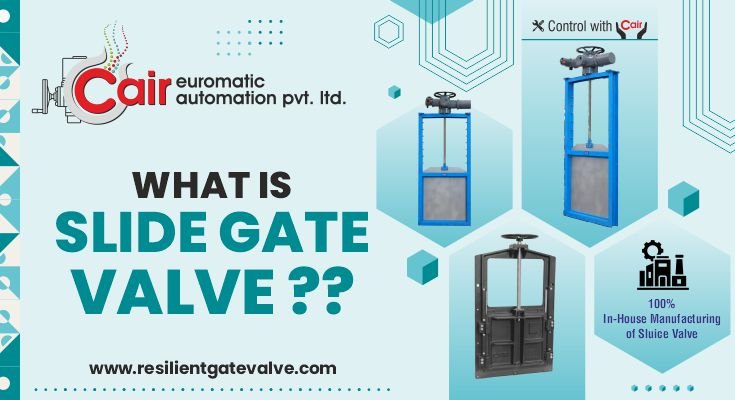
Water management systems depend heavily on reliable flow control equipment. One of the most widely used devices for controlling water in canals, pipelines, reservoirs, irrigation systems, and treatment plants is the sluice gate.
However, not all sluice gates work in the same way. The two most common types are manual sluice gates and motorized sluice gates. While both are designed to control water flow, their operation, performance, and applications are quite different.
Understanding the difference between them helps industries, engineers, and project planners choose the right solution for their system.
What is a Sluice Gate?
A sluice gate is a mechanical device used to regulate, stop, or allow the flow of water in a channel or pipeline. It works by lifting or lowering a gate plate that controls the opening through which water passes.
When the gate is lifted, water flows freely. When it is closed, the flow is blocked completely. This simple mechanism makes sluice gates highly effective in water control systems.
They are widely used in:
- Dams and reservoirs
- Irrigation canals
- Water treatment plants
- Sewage systems
- Industrial water pipelines
What is a Manual Sluice Gate?
A manual sluice gate is operated by human effort using a handwheel, gearbox, or stem mechanism. The operator physically turns the wheel to raise or lower the gate.
How it Works:
- Turning the handwheel rotates the stem
- The stem moves the gate up or down
- Water flow is controlled manually
Key Features:
- No electricity required
- Simple mechanical design
- Easy installation
- Low initial cost
- Suitable for small to medium systems
Advantages of Manual Sluice Gates:
- Cost-effective solution
- Easy to operate
- Low maintenance
- Reliable in remote areas without power supply
- Long service life
Limitations:
- Requires physical effort
- Not suitable for frequent operation
- Slower response time
- Not ideal for large or automated systems
Manual sluice gates are commonly used in small irrigation channels, rural water systems, and low-pressure applications.
What is a Motorized Sluice Gate?
A motorized sluice gate uses an electric actuator or motor to control the opening and closing of the gate automatically. Instead of manual effort, the system operates through electrical control.
How it Works:
- Electric actuator receives a signal
- Motor rotates the mechanism
- Gate moves up or down automatically
- Flow is controlled precisely
Key Features:
- Automated operation
- Remote control capability
- High precision flow control
- Suitable for large-scale systems
- Can be integrated with SCADA systems
Advantages of Motorized Sluice Gates:
- No manual effort required
- Faster operation
- Suitable for frequent use
- Can be controlled remotely
- Improves operational efficiency
- Better safety in industrial environments
Limitations:
- Higher initial cost
- Requires electricity supply
- Slightly higher maintenance
- Needs technical setup and control systems
Motorized sluice gates are widely used in modern infrastructure projects, water treatment plants, industrial plants, and large irrigation networks.
Key Differences Between Manual and Motorized Sluice Gates
1. Operation Method
- Manual: Operated by handwheel or gearbox
- Motorized: Operated by electric actuator
2. Power Requirement
- Manual: No power needed
- Motorized: Requires electricity
3. Speed of Operation
- Manual: Slow
- Motorized: Fast and efficient
4. Cost
- Manual: Lower cost
- Motorized: Higher cost
5. Maintenance
- Manual: Low maintenance
- Motorized: Moderate maintenance
6. Application Area
- Manual: Small systems, rural irrigation
- Motorized: Industrial and large-scale systems
7. Control System
- Manual: On-site operation only
- Motorized: Remote and automated control possible
Comparison Table
| Feature | Manual Sluice Gate | Motorized Sluice Gate |
|---|---|---|
| Operation | Handwheel | Electric actuator |
| Power | Not required | Required |
| Speed | Slow | Fast |
| Cost | Low | Higher |
| Maintenance | Low | Medium |
| Automation | No | Yes |
| Best Use | Small systems | Large industrial systems |
Which One Should You Choose?
Choosing between a manual and motorized sluice gate depends on your project requirements.
Choose Manual Sluice Gate if:
- Budget is limited
- Operation is infrequent
- No electricity is available
- System is small or simple
Choose Motorized Sluice Gate if:
- Automation is required
- Large water volume is handled
- Remote operation is needed
- Frequent operation is required
- Industrial or municipal system is involved
Importance in Modern Water Management
Today’s water systems are becoming more advanced and automated. Efficient control of water flow is essential for preventing waste, managing pressure, and ensuring smooth operation.
Manual systems still play an important role in basic applications, but motorized systems are becoming more popular due to their speed, accuracy, and integration with modern control systems.
Both types are important depending on the scale and complexity of the project.
Industrial Reliability and Engineering Quality
High-quality sluice gates are designed with strong materials such as cast iron, stainless steel, and ductile iron to ensure durability and long service life.
In advanced systems, manufacturers also focus on sealing performance, corrosion resistance, and smooth movement to improve efficiency.
Modern industrial applications often combine sluice gates with other flow control components such as:
- Air Valves Single and Double for air release
- Non Return Valve for backflow prevention
- Gate valves for pipeline isolation systems
These components work together to ensure safe and efficient water management.
Role of Manufacturers in Quality Performance
A reliable manufacturer plays a major role in ensuring performance and safety.
A trusted Resilient Seated Sluice Valve Manufacturer ensures leak-proof sealing and long-lasting operation in water distribution systems.
For heavy-duty applications, a Metal Seated Sluice Valve provides durability and resistance to wear and pressure.
When automation is required, a Motorised Actuator Operated Sluice Gate Manufacturer ensures precise and efficient flow control for modern infrastructure systems.
Conclusion
Both manual and motorized sluice gates are essential components in water management systems, but they serve different purposes.
Manual sluice gates are simple, cost-effective, and suitable for small systems, while motorized sluice gates offer automation, speed, and precision for large and industrial applications.
Understanding their differences helps in selecting the right solution for long-term efficiency, safety, and performance.
Whether it is irrigation, industrial flow control, or municipal water systems, choosing the right sluice gate ensures better water management and reliable system operation.
FAQs – Manual vs Motorized Sluice Gate
1. What is the main difference between a manual and motorized sluice gate?
A manual sluice gate is operated by hand using a wheel or gearbox, while a motorized sluice gate uses an electric actuator for automatic operation.
2. Which is better: manual or motorized sluice gate?
It depends on the application. Manual gates are better for small, low-budget systems, while motorized gates are ideal for large, automated, or industrial water systems.
3. Do motorized sluice gates need electricity?
Yes, motorized sluice gates require an electrical power supply to operate the actuator system.
4. Where are manual sluice gates commonly used?
Manual sluice gates are commonly used in small irrigation canals, rural water systems, and low-pressure applications where frequent operation is not required.
5. Where are motorized sluice gates used?
Motorized sluice gates are used in dams, water treatment plants, industrial facilities, reservoirs, and automated water distribution systems.
6. Are motorized sluice gates expensive?
Yes, they have a higher initial cost compared to manual gates, but they offer better efficiency, automation, and long-term operational benefits.
7. Which sluice gate requires less maintenance?
Manual sluice gates generally require less maintenance because they have a simpler mechanical structure.
8. Can motorized sluice gates be controlled remotely?
Yes, motorized sluice gates can be integrated with control systems like SCADA for remote monitoring and operation.
9. Which sluice gate is more suitable for industrial use?
Motorized sluice gates are more suitable for industrial applications due to their automation, precision, and ability to handle frequent operations.
10. Do sluice gates help in water saving?
Yes, both manual and motorized sluice gates help control water flow efficiently, reducing wastage and improving water management systems.