
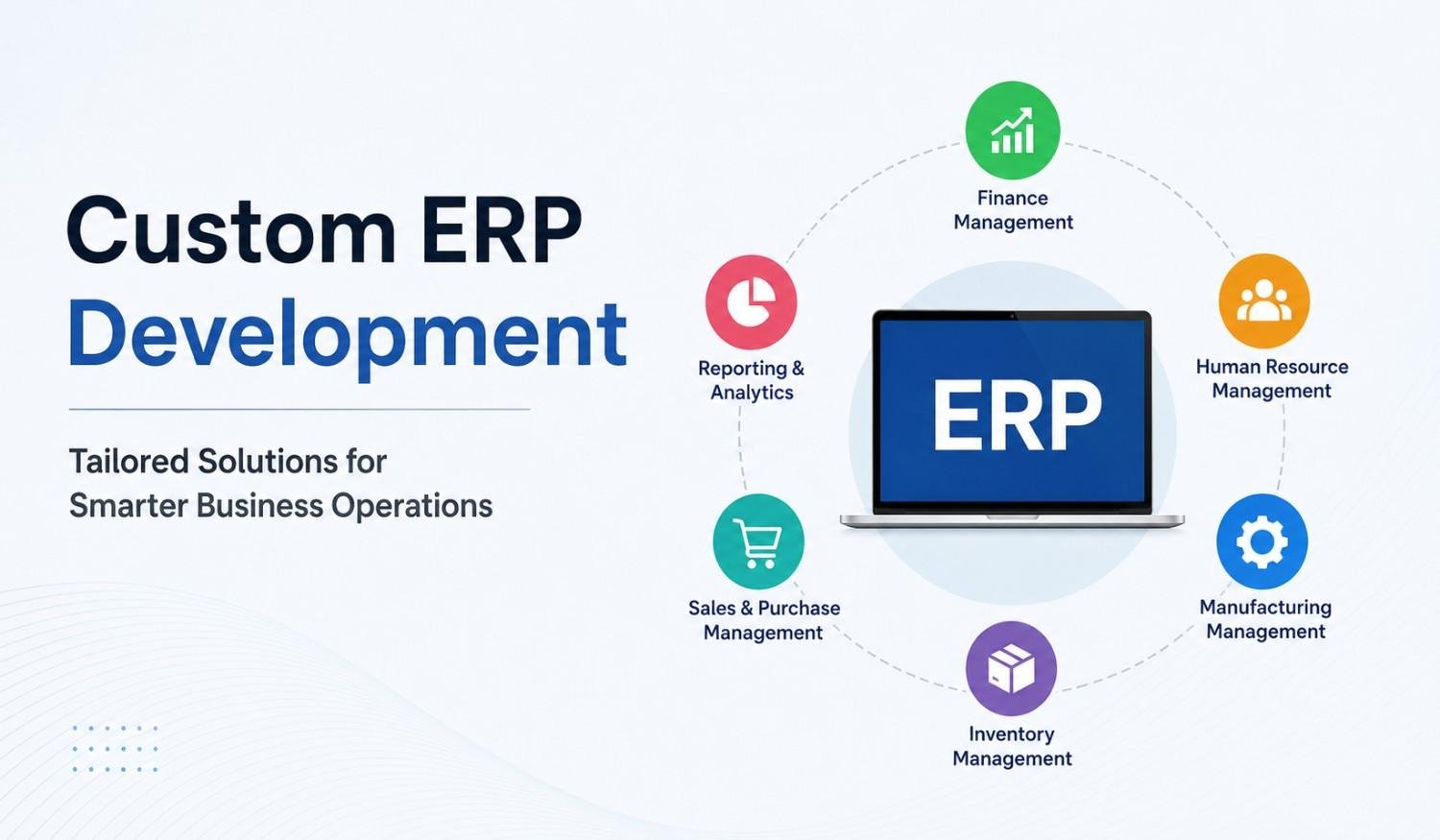
Enterprises face a reality that looks very different from the one software vendors imagined a decade ago. Business processes have become more complex, customer expectations have skyrocketed, and teams often rely on dozens of applications just to complete daily tasks. Somewhere along the way, many organizations discovered that their ERP system was no longer simplifying operations—it was creating additional hurdles.
We have observed businesses spending more time adapting their workflows to software limitations than focusing on growth. That situation is a bit like buying a suit three sizes too small and hoping it magically stretches during an important meeting. As companies evolve, the need for tailored ERP solutions continues to grow. Understanding the challenges behind this shift helps explain why custom development has become a strategic investment rather than an optional upgrade.
The One-Size-Fits-All ERP Problem
Off-the-shelf ERP platforms promise broad functionality, but enterprise operations are rarely broad and generic. Every organization develops unique workflows, approval processes, reporting structures, and operational requirements over time. Unfortunately, standardized ERP products often struggle to accommodate those differences.
As a result, employees create workarounds, maintain separate spreadsheets, and manually bridge process gaps. Instead of streamlining operations, the ERP becomes another obstacle to navigate. We frequently see organizations attempting to force highly specialized business activities into rigid software frameworks. The outcome is predictable—reduced efficiency, frustrated users, and growing operational complexity. Custom ERP solutions eliminate these compromises by aligning technology with actual business requirements rather than requiring businesses to change how they operate.
Fragmented Business Systems and Data Silos
One of the biggest operational challenges facing enterprises today is the existence of disconnected systems. Sales teams may use one platform, finance relies on another, inventory operates separately, and customer service maintains its own database. Each department works hard, yet critical information remains scattered across multiple locations.
Naturally, fragmented systems create data silos that limit visibility and slow decision-making. Reports become inconsistent, communication suffers, and leaders spend valuable time verifying information instead of acting on it. We often compare this situation to assembling a puzzle while half the pieces remain hidden in different rooms. Custom ERP development helps unify data sources, creating a centralized environment where information flows seamlessly and departments operate from a single source of truth.
Rapid Business Growth Creates New ERP Requirements
Growth is exciting—until existing software struggles to keep pace. Many organizations implement ERP systems when operations are relatively straightforward. As the business expands into new markets, adds locations, introduces services, or increases transaction volumes, those same systems can begin showing their limitations.
What worked perfectly for fifty employees may not support five hundred. Reporting demands increase, workflows become more sophisticated, and integration requirements multiply. We have seen businesses outgrow their software faster than they expected, creating bottlenecks across multiple departments. Custom-built ERP platforms provide the flexibility needed to support expansion while maintaining operational consistency. Instead of replacing systems repeatedly, organizations gain technology designed to evolve alongside long-term growth objectives.
Industry-Specific Processes Demand Tailored Solutions
Every industry operates according to its own rules, regulations, and workflows. A manufacturing company manages production schedules and supply chains differently than a healthcare provider handling patient information or a logistics company coordinating deliveries. Generic ERP systems attempt to serve everyone, but they rarely excel at supporting specialized processes.
We often see organizations trying to customize standard software so extensively that the original platform becomes difficult to maintain. That approach can feel like turning a family sedan into a delivery truck using spare parts and optimism. Custom ERP solutions are built around industry-specific requirements from the beginning, allowing businesses to improve efficiency without sacrificing the workflows that make them successful.
Increasing Demand for Real-Time Business Visibility
Enterprise leaders can no longer afford to wait days—or even hours—for critical business insights. Market conditions change quickly, customer demands evolve constantly, and operational challenges require immediate attention. Access to real-time information has become a necessity rather than a competitive advantage.
Unfortunately, many traditional ERP systems struggle to provide instant visibility across departments. Information often resides in separate systems, creating delays and reporting inconsistencies. We frequently encounter organizations where managers spend more time collecting data than analyzing it. A customized ERP platform centralizes information and delivers accurate dashboards, helping decision-makers respond faster, reduce uncertainty, and maintain a clearer understanding of overall business performance.
Compliance and Regulatory Challenges
Regulatory requirements continue to expand across industries. Businesses must comply with data privacy laws, financial regulations, industry standards, and security requirements that frequently evolve. Managing compliance manually increases administrative burdens and exposes organizations to unnecessary risks.
Many enterprises discover that their existing ERP software cannot fully support changing compliance needs without expensive modifications. We have seen teams maintain separate tracking systems simply to satisfy reporting obligations—a solution that rarely improves anyone’s day. Custom ERP development enables organizations to embed compliance directly into workflows, automate audit trails, generate required reports, and maintain accurate records. The result is greater confidence, reduced risk, and a stronger foundation for long-term operations.
Remote and Hybrid Work Environments Require Greater Flexibility
The workplace has changed dramatically over the past several years. Employees, managers, vendors, and customers increasingly interact from multiple locations, often across different time zones. Business systems must support this flexibility while maintaining security, accessibility, and operational consistency.
Legacy ERP platforms were often designed with centralized office environments in mind. As organizations adopted remote and hybrid work models, those limitations became increasingly apparent. We have observed companies investing in multiple tools simply to bridge communication and workflow gaps. A customized ERP solution provides secure access from anywhere, supports collaboration across distributed teams, and ensures critical information remains available whenever and wherever it is needed.
Customer Expectations Are Rising Faster Than Internal Systems
Modern customers expect accurate information, fast service, personalized experiences, and seamless interactions across channels. While businesses understand these expectations, their internal systems do not always provide the visibility required to meet them consistently.
Disconnected applications and outdated processes often create delays that customers notice immediately. Orders take longer to process, support teams lack complete information, and communication becomes fragmented. We frequently find that customer-facing challenges originate from internal operational limitations. A well-designed ERP platform connects departments, consolidates customer information, and improves responsiveness. When teams have access to accurate data, delivering exceptional customer experiences becomes significantly easier—and considerably less stressful.
The Need for Automation Across Business Processes
Manual processes remain surprisingly common within growing enterprises. Employees spend hours entering data, transferring information between systems, generating reports, and managing approvals. While these activities may appear manageable individually, collectively they consume significant time and resources.
The challenge becomes even greater as transaction volumes increase. Human error, processing delays, and inconsistent workflows begin affecting overall productivity. We often joke that if a task requires copying information between three spreadsheets and two emails, automation is probably overdue. Custom ERP systems streamline repetitive activities through intelligent workflows, automated notifications, approval routing, and real-time reporting. This allows teams to focus on strategic initiatives rather than administrative tasks.
Legacy Systems Are Reaching Their Limits
Many enterprises continue relying on software platforms implemented years—or sometimes decades—ago. While these systems may still function, maintaining them often becomes increasingly expensive and complex. Integration challenges, security concerns, performance limitations, and outdated user experiences create ongoing operational obstacles.
Business leaders frequently hesitate to modernize because replacement projects can seem overwhelming. Yet continuing to depend on aging technology often creates hidden costs that accumulate over time. We have encountered organizations where employees knew every workaround but still could not achieve optimal efficiency. Custom ERP development offers a practical modernization path, enabling businesses to replace outdated systems while preserving critical processes and minimizing disruption to daily operations.
Why Businesses Are Turning to Specialized ERP Development Partners
Successful ERP projects require far more than technical expertise. Organizations need strategic planning, process analysis, integration capabilities, and long-term scalability considerations. That combination explains why many enterprises seek guidance from experienced development partners.
Working with a custom ERP software development company allows businesses to create solutions specifically aligned with operational goals, industry requirements, and future growth plans. Rather than adapting workflows to software limitations, organizations gain systems designed around their needs. Skilled custom ERP developers evaluate challenges, identify opportunities for improvement, and build platforms that support efficiency, visibility, and innovation. The result is technology that functions as a business asset rather than another operational hurdle.
Conclusion
Enterprise challenges continue to evolve, and software expectations are evolving right alongside them. Fragmented systems, regulatory requirements, operational complexity, customer demands, and rapid growth have exposed the limitations of one-size-fits-all ERP solutions. Businesses increasingly require platforms capable of adapting to unique processes rather than forcing processes to adapt to software.
We have learned that the most effective ERP strategy begins with understanding how a business actually operates. Technology should support growth, improve visibility, and simplify complexity—not create additional obstacles. As enterprises prepare for future opportunities, custom ERP development is becoming less about customization and more about creating the operational foundation necessary for long-term success.
FAQs
1. What is custom ERP development?
Custom ERP development involves designing and building enterprise resource planning software specifically tailored to an organization’s unique business processes, workflows, and operational requirements.
2. How does a custom ERP system differ from off-the-shelf ERP software?
Off-the-shelf ERP software provides standardized features for a broad audience, while custom ERP solutions are developed around the specific needs of a business, offering greater flexibility and efficiency.
3. When should a business consider building a custom ERP solution?
Businesses should consider custom ERP development when existing systems create workflow bottlenecks, lack scalability, require excessive manual work, or fail to support unique operational requirements.
4. What industries benefit most from customized ERP platforms?
Manufacturing, healthcare, logistics, retail, professional services, construction, and distribution companies often benefit significantly from tailored ERP solutions due to their specialized processes.
5. Can a custom ERP integrate with existing business software?
Yes. Custom ERP platforms can integrate with CRM systems, accounting software, inventory management tools, eCommerce platforms, and various third-party applications.
6. How does custom ERP software improve operational efficiency?
Custom ERP software centralizes data, automates repetitive tasks, eliminates duplicate processes, improves reporting accuracy, and streamlines workflows across departments.
7. Is custom ERP development scalable for growing businesses?
Absolutely. Custom ERP systems are designed with future growth in mind, allowing organizations to add features, users, departments, and integrations as requirements evolve.
8. What features should businesses prioritize in a custom ERP system?
Key priorities often include workflow automation, real-time reporting, integration capabilities, security controls, mobile accessibility, compliance management, and scalability.
9. How long does a custom ERP implementation typically take?
Implementation timelines vary depending on project complexity, integrations, and feature requirements. Most projects range from several months to over a year.
10. How can Kanhasoft help businesses develop tailored ERP solutions?
Kanhasoft works closely with organizations to analyze business processes, identify operational challenges, and develop ERP platforms that improve efficiency, visibility, scalability, and long-term business performance.
