
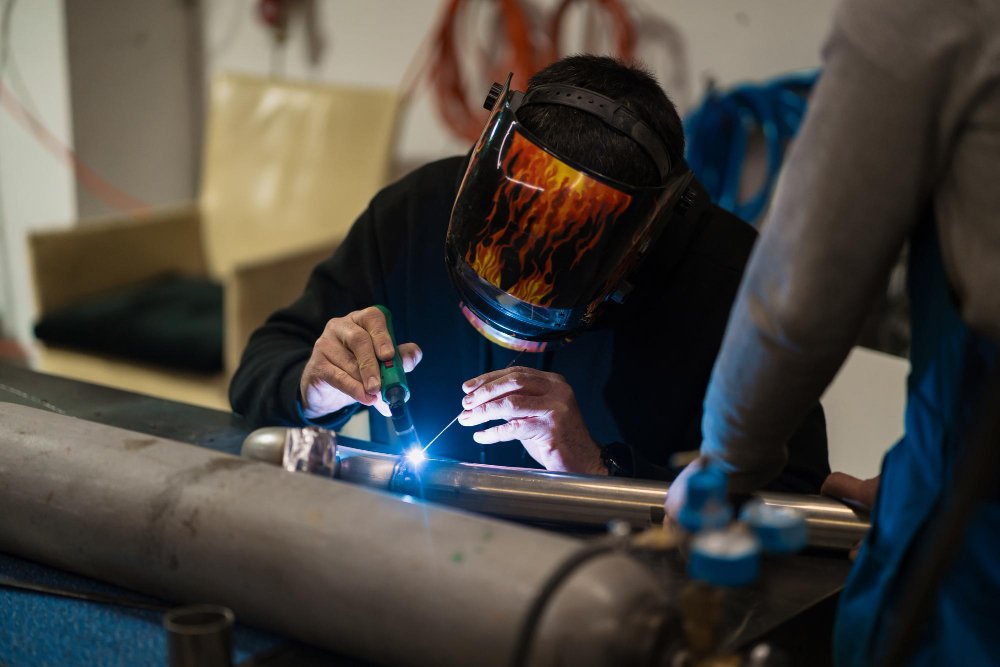
Steel tubes are widely used in construction, manufacturing, infrastructure, transportation, and industrial applications for their strength, versatility, and durability. While material selection and dimensional accuracy are important considerations, welding quality also plays a significant role in determining the final appearance and performance of steel tubes. Poor welding practices can create surface irregularities, visible defects, and structural weaknesses that affect both functionality and aesthetics. Companies involved in Steel Tubes Philippines production understand that high-quality welding contributes to smoother surface finishes, improved reliability, and better long-term performance. Understanding this relationship highlights why welding standards remain an important part of tube manufacturing.
How Welding Influences Surface Finish
Creating Smooth and Uniform Weld Seams
Welding joins steel edges together to form a continuous tube structure. The quality of this process directly affects the appearance of the weld seam and the surrounding surface. Properly controlled welding produces clean and consistent seams that blend more effectively with the tube’s exterior.
Uniform welds contribute to a more polished final product. This consistency is particularly important in applications where appearance and dimensional accuracy are both considered during material selection.
Minimizing Surface Irregularities
Poor welding techniques can create uneven surfaces, excessive weld buildup, and visible imperfections along the seam. These irregularities may require additional finishing processes to achieve the desired appearance. In some cases, they can also affect downstream fabrication activities. Maintaining welding precision helps reduce surface defects before they become larger production challenges. This supports both manufacturing efficiency and product quality.
Common Welding Defects That Affect Surface Quality
Porosity and Surface Imperfections
Porosity occurs when gas becomes trapped within the weld during the joining process. This can create small holes or surface blemishes that affect the appearance and integrity of the tube. Improper shielding, contamination, or inconsistent welding parameters often contribute to this issue. Controlling welding conditions helps reduce the risk of porosity. A cleaner weld surface supports both aesthetic and performance requirements.
Excessive Spatter Formation
Welding spatter consists of small metal particles that are expelled during the welding process and adhere to the tube surface. Excessive spatter can leave rough areas that require additional cleaning and finishing. It may also affect coating applications if not removed properly. Well-controlled welding procedures help minimize spatter generation. This contributes to smoother surfaces and more efficient post-weld processing.
The Importance of Welding Process Control
Maintaining Consistent Heat Input
Heat management is a critical factor in achieving high-quality welds. Excessive heat can distort the material and create visible surface inconsistencies, while insufficient heat may result in incomplete fusion. Maintaining proper heat input helps achieve balanced and uniform weld formation. Consistent welding parameters support better surface quality throughout production. This level of control helps manufacturers meet both visual and structural requirements.
Using Proper Equipment and Techniques
Modern welding equipment allows manufacturers to monitor and control key variables during production. Advanced systems improve precision and help ensure that welds remain consistent across large production runs. Skilled operators also play an important role in maintaining quality standards.
The combination of appropriate equipment and experienced personnel helps produce steel tubes with reliable surface characteristics. This contributes to greater consistency across finished products.
Surface Finish and Downstream Applications
Supporting Protective Coatings
Many steel tubes receive additional treatments such as painting, galvanizing, or powder coating. A smooth and defect-free surface provides a stronger foundation for these protective finishes. Surface irregularities can affect coating adhesion and overall appearance. High-quality welds help create surfaces that are better prepared for finishing processes. This supports both durability and visual consistency in the final product.
Improving Fabrication Efficiency
Steel tubes often undergo further fabrication processes such as cutting, bending, machining, and assembly. Smooth weld seams and consistent surfaces can simplify these operations by reducing the need for corrective work. Better surface quality contributes to improved workflow efficiency.
Manufacturers and fabricators benefit when materials arrive with minimal surface defects. This helps reduce processing time and supports more predictable production outcomes.
Long-Term Benefits of High Welding Standards
Enhancing Product Reliability
Welding quality affects more than appearance alone. Proper weld formation contributes to structural integrity and overall product performance. Tubes with well-executed welds are better positioned to withstand operational demands over time.
Reliable welding practices support consistency across different applications and industries. This helps manufacturers meet performance expectations while maintaining quality standards.
Supporting Industry Requirements
Many industries require steel tubes that meet strict quality and appearance specifications. Construction projects, architectural installations, industrial systems, and manufacturing applications often depend on materials with consistent surface finishes. Welding quality plays an important role in meeting these expectations.
Producers of Steel Tubes Philippines recognize that surface finish and welding quality are closely connected. Maintaining strong welding standards helps ensure that finished tubes satisfy both technical requirements and customer expectations.
Key Takeaway
Welding quality directly affects the surface finish, appearance, and overall performance of steel tubes. Factors such as weld seam consistency, heat control, spatter reduction, and defect prevention all contribute to smoother and more reliable products. Manufacturers involved in Steel Tubes Philippines production rely on controlled welding processes to support coating performance, fabrication efficiency, and long-term durability. By prioritizing high welding standards throughout the manufacturing process, producers can deliver steel tubes that meet the quality demands of a wide range of industrial and commercial applications.
