
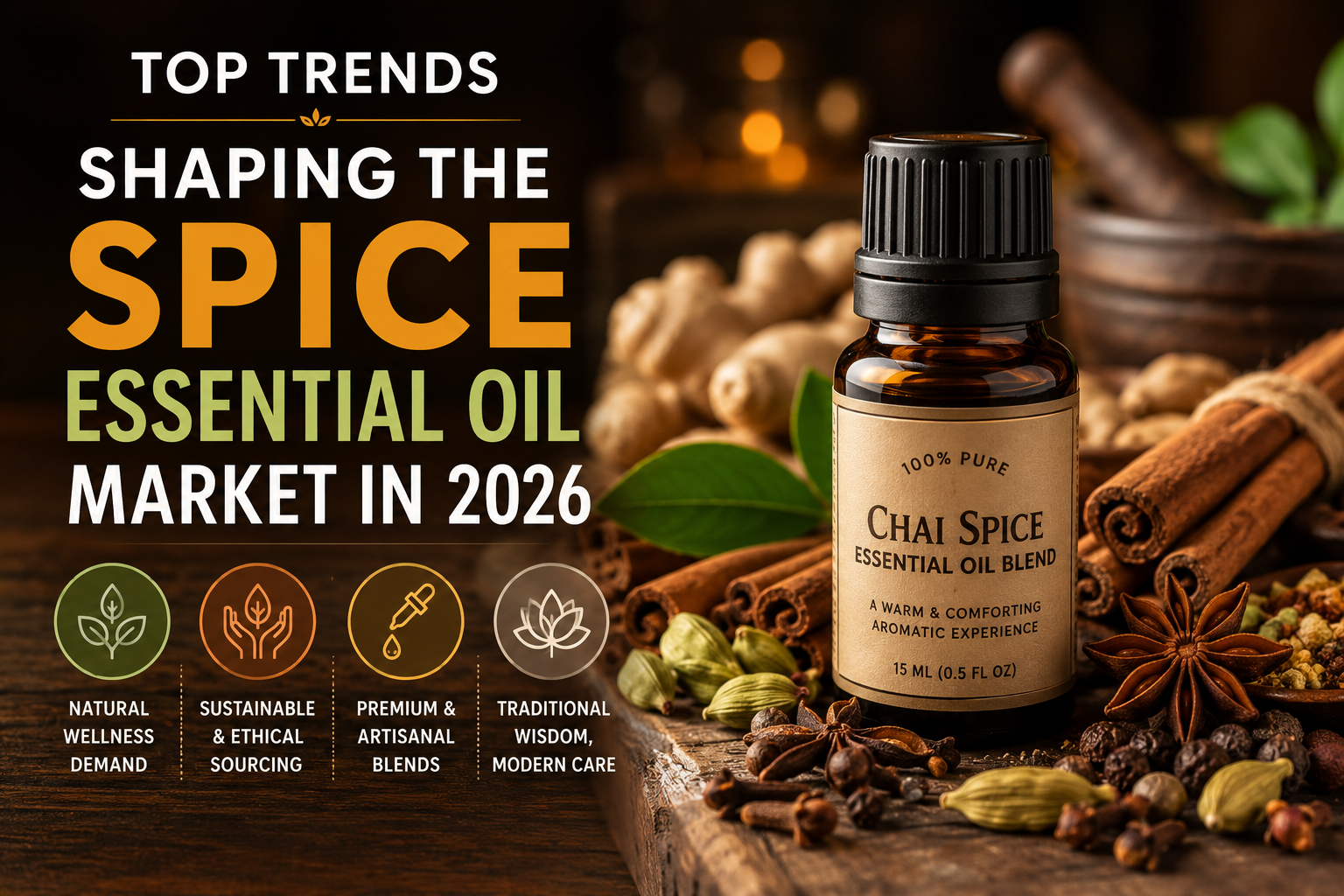
The global essential oil industry continues to evolve rapidly, with consumers increasingly seeking natural, plant-based solutions for wellness, personal care, and home fragrance. Among the fastest-growing categories within this market are spice-derived aromatic products, which have gained popularity due to their rich aromas, traditional uses, and versatile applications. As consumer preferences shift toward authenticity, sustainability, and holistic well-being, several important trends are shaping the industry landscape in 2026.
From wellness routines and aromatherapy practices to luxury fragrances and clean-label products, spice-based botanical extracts are finding their way into a wide range of applications. Understanding these emerging trends can help businesses, wellness enthusiasts, and consumers navigate the future of this dynamic market.
Rising Demand for Natural Wellness Solutions
One of the strongest drivers influencing the essential oil sector in 2026 is the growing preference for natural wellness alternatives. Consumers are increasingly moving away from synthetic fragrances and chemical-based products in favor of plant-derived options that align with holistic lifestyles.
The popularity of aromatherapy has significantly contributed to the demand for spice essential oil products. Warm, comforting aromas such as cinnamon, cardamom, clove, ginger, nutmeg, and vanilla are widely appreciated for their sensory appeal and their traditional associations with relaxation, comfort, and seasonal wellness practices.
As wellness routines become more personalized, consumers are exploring unique aromatic combinations that support mindfulness, stress management, and emotional balance.
Increased Interest in Traditional and Ayurvedic Ingredients
Traditional healing systems continue to influence global wellness trends. Ayurvedic practices, in particular, have experienced renewed interest among consumers seeking natural approaches to health and self-care.
Many spice ingredients commonly used in essential oil blends have deep roots in Ayurvedic traditions dating back centuries. Ingredients such as cardamom, ginger, cinnamon, and clove have long been valued for their aromatic and therapeutic qualities. This historical connection is helping manufacturers create products that combine traditional wisdom with modern wellness preferences.
As consumers become more educated about botanical ingredients, brands that emphasize heritage, authenticity, and transparency are gaining a competitive advantage.
Growth of Premium and Artisanal Blends
The premiumization trend continues to reshape the essential oil industry in 2026. Consumers are increasingly willing to invest in high-quality, small-batch products that prioritize purity, sourcing transparency, and craftsmanship.
Artisanal blends featuring carefully selected spice ingredients have become particularly popular. These formulations often combine multiple botanicals to create complex aromatic profiles that deliver both sensory enjoyment and wellness benefits.
Companies such as Miracle Botanicals Essential Oils have contributed to this movement by offering specialized botanical blends that emphasize purity and traditional extraction methods. Products inspired by traditional chai spice formulations demonstrate how artisanal craftsmanship can appeal to modern consumers seeking authentic experiences.
Sustainability and Ethical Sourcing Take Center Stage
Environmental consciousness continues to influence purchasing decisions across nearly every consumer category, and essential oils are no exception. Buyers increasingly want assurance that products are sourced responsibly and produced using sustainable agricultural practices.
In 2026, transparency regarding cultivation methods, harvesting practices, and supply chain management has become a critical differentiator. Consumers actively seek brands that provide detailed information about sourcing regions, extraction processes, and environmental commitments.
Sustainable farming practices not only support ecological preservation but also help maintain the quality and integrity of botanical ingredients. This trend is expected to continue driving innovation throughout the industry.
Seasonal and Comfort-Based Aromatic Experiences
Consumer preferences are shifting toward emotional and experiential purchasing behaviors. Warm, nostalgic fragrances associated with comfort and relaxation have become increasingly desirable, particularly in home fragrance and personal wellness categories.
The popularity of chai-inspired aromatic profiles illustrates this trend perfectly. Blends featuring cardamom, cinnamon, clove, ginger, nutmeg, and vanilla create comforting sensory experiences that resonate with consumers seeking familiarity and emotional well-being.
As a result, the market for spice essential oil blends designed for seasonal use, home diffusion, and personal fragrance applications continues to expand rapidly.
Expansion into Personal Care and Beauty Products
The beauty and personal care industries are embracing botanical ingredients more aggressively than ever before. Consumers increasingly prefer products containing recognizable plant-based ingredients over synthetic alternatives.
Essential oils derived from spices are now appearing in skincare products, massage oils, perfumes, haircare formulations, and wellness-focused cosmetics. Their distinctive aromatic profiles make them attractive additions to premium beauty formulations.
This trend reflects broader consumer demand for multifunctional products that combine sensory enjoyment with natural ingredients and wellness-oriented branding.
Technology and Consumer Education
Digital platforms and social media continue to transform how consumers discover, evaluate, and purchase essential oils. Educational content has become a major factor influencing purchasing decisions.
Consumers now expect detailed information regarding ingredient origins, extraction methods, traditional applications, and safety guidelines before making a purchase. Brands that invest in educational resources, expert content, and transparent communication are building stronger relationships with their audiences.
Additionally, online communities dedicated to aromatherapy, wellness, and natural living have accelerated knowledge sharing, helping consumers make more informed decisions about botanical products.
Customized Aromatherapy Experiences
Personalization remains one of the most influential consumer trends across industries. In the essential oil market, consumers increasingly seek customized aromatic experiences tailored to their individual preferences and wellness goals.
Whether creating personalized diffuser blends, home fragrance combinations, or self-care rituals, consumers want products that reflect their unique lifestyles. This trend has encouraged manufacturers to expand their blend offerings and provide educational tools that support customization.
Miracle Botanicals Essential Oils has participated in this growing market by offering specialized botanical blends designed for various wellness and aromatic preferences.
The Future of the Spice Essential Oil Market
Looking ahead, the outlook for spice essential oil products remains exceptionally promising. Several factors—including increased wellness awareness, demand for natural products, sustainability concerns, and interest in traditional botanical practices—are expected to support continued market growth.
As consumers prioritize authenticity, quality, and holistic well-being, manufacturers that emphasize transparency, sustainability, and innovation will likely lead the industry. The convergence of traditional botanical knowledge with modern consumer preferences creates significant opportunities for continued expansion and product development.
The evolving landscape of natural wellness suggests that spice-inspired botanical products will remain an important segment of the global essential oil industry for years to come.
FAQs
1. What is a spice essential oil?
A spice essential oil is a concentrated botanical extract derived from aromatic spices such as cinnamon, clove, ginger, cardamom, and nutmeg, commonly used in aromatherapy, wellness, and personal care products.
2. Why is the demand for spice essential oil increasing in 2026?
Growing interest in natural wellness, aromatherapy, sustainable products, and traditional botanical practices has significantly increased consumer demand.
3. What are the most popular spice ingredients used in essential oil blends?
Popular ingredients include cinnamon bark, cardamom, clove bud, ginger, nutmeg, vanilla, black pepper, and star anise.
4. Are spice-based essential oil blends used only for aromatherapy?
No. They are also widely used in personal care products, perfumes, home fragrances, massage oils, and wellness routines.
5. What trends will continue influencing the essential oil market beyond 2026?
Key trends include sustainability, personalization, premium product offerings, consumer education, traditional wellness practices, and clean-label product development.
