
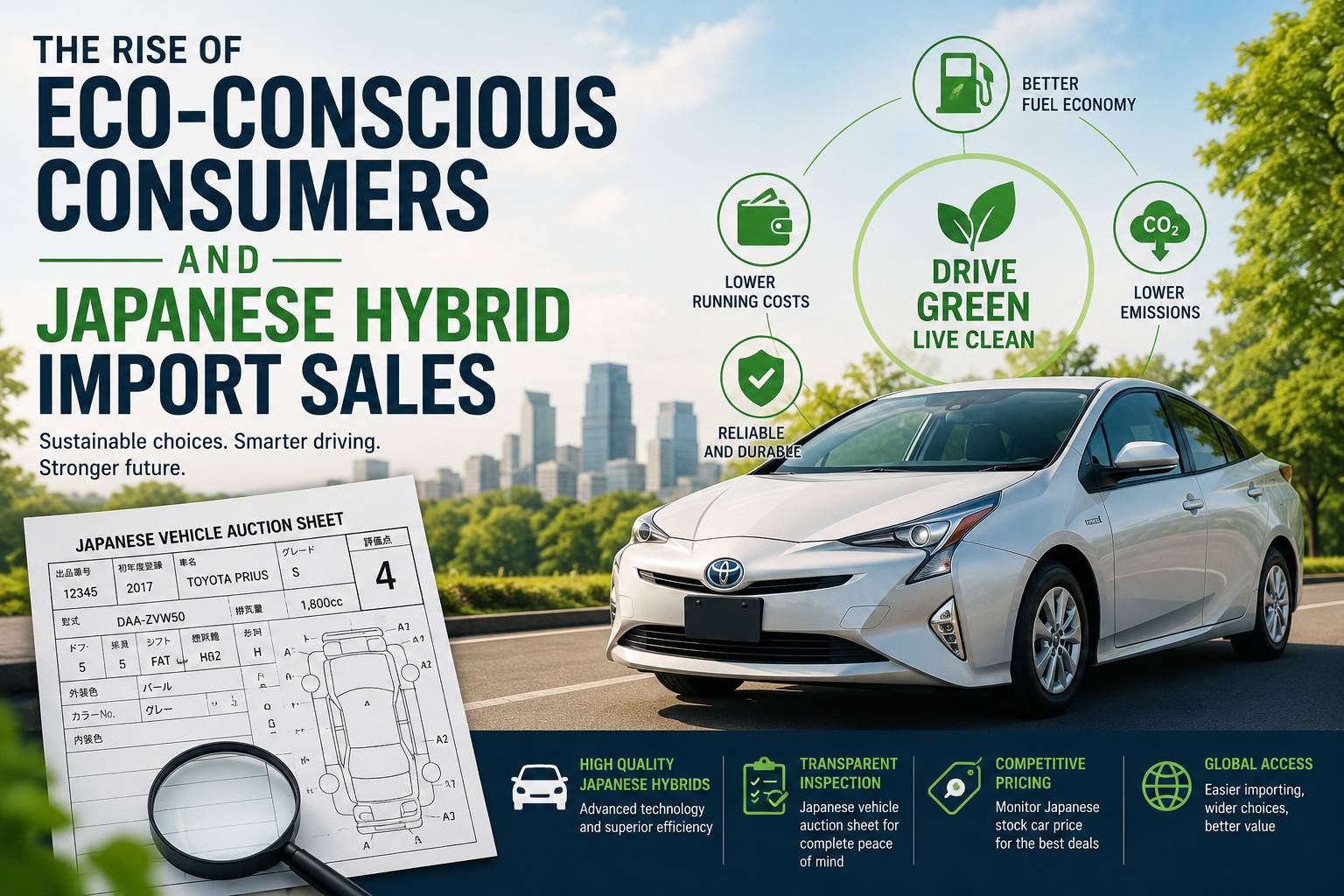
The global automotive market is changing rapidly as more consumers begin prioritizing sustainability, fuel efficiency, and lower emissions. Buyers are no longer focused solely on appearance or engine performance. Environmental awareness now plays a major role in vehicle purchasing decisions, especially among younger drivers and urban commuters. This transformation has created a substantial increase in demand for Japanese hybrid imports across international markets.
Japanese manufacturers were among the earliest pioneers of hybrid technology, and their experience continues to shape global consumer confidence. Today, imported hybrid vehicles from Japan are widely regarded as practical, economical, and dependable. Alongside this growing interest, tools such as the Japanese vehicle auction sheet have become essential for buyers seeking transparency before purchasing imported vehicles.
Why Consumers Are Choosing Hybrid Vehicles
Eco-conscious consumers are becoming more mindful of fuel consumption and environmental impact. Rising fuel prices, stricter emissions regulations, and increasing concerns about climate change have encouraged many people to explore alternatives to traditional petrol vehicles.
Hybrid cars provide a balanced solution. They combine electric motor technology with conventional engines, helping drivers reduce fuel consumption without relying entirely on charging infrastructure. This practicality makes hybrids attractive to both experienced motorists and first-time import buyers.
Japanese hybrid vehicles, in particular, have earned an excellent reputation for reliability and long-term durability. Buyers often associate Japanese engineering with consistency, advanced technology, and lower maintenance risks.
Japan’s Strong Position in the Hybrid Market
Japan has remained a global leader in hybrid vehicle production for decades. Automakers there invested heavily in fuel-efficient technologies long before sustainability became a worldwide priority. As a result, Japanese hybrid systems are now considered among the most refined in the industry.
Imported Japanese hybrids are especially popular because they often include advanced features at competitive prices. Many vehicles arriving from Japan come equipped with:
- Intelligent safety systems
- Fuel-saving driving modes
- Advanced infotainment technology
- High-quality interior materials
- Efficient battery management systems
Consumers appreciate the combination of innovation and affordability. In many regions, imported hybrids offer far greater value than locally available alternatives.
The Importance of the Japanese Vehicle Auction Sheet
One of the most important aspects of purchasing an imported hybrid is understanding the vehicle’s actual condition. This is where the Japanese vehicle auction sheet becomes extremely valuable.
Auction sheets contain detailed inspection information prepared before the vehicle enters auction. These reports usually include:
- Overall auction grade
- Mileage verification
- Exterior and interior condition
- Repair or accident history
- Inspector comments
- Mechanical observations
For hybrid vehicles, this information is especially important because buyers want reassurance regarding battery health and overall maintenance quality. A properly verified Japanese vehicle auction sheet can help reduce uncertainty and protect buyers from costly mistakes.
Importers and experienced dealers often rely heavily on these sheets when evaluating potential purchases.
Fuel Economy Is Driving Demand
Fuel efficiency has become one of the strongest selling points for Japanese hybrid imports. In countries where petrol prices fluctuate frequently, drivers are increasingly searching for vehicles capable of reducing everyday operating expenses.
Hybrid systems perform particularly well in urban traffic conditions. Frequent stopping and slow driving allow electric motors to operate more efficiently, significantly lowering fuel consumption.
For commuters and families, these savings can become substantial over time. Lower fuel usage also means fewer emissions, which aligns with the values of environmentally conscious buyers.
This combination of economic and environmental benefits explains why hybrid imports continue gaining momentum worldwide.
Younger Buyers Are Influencing the Market
A younger generation of consumers is also reshaping automotive demand. Many modern buyers research sustainability, efficiency, and ownership costs before purchasing a vehicle. They often prefer products that reflect environmental responsibility and long-term practicality.
Japanese hybrid imports appeal strongly to this demographic because they combine affordability with eco-friendly performance. Digital platforms have also made importing far more accessible than it once was. Buyers can now compare models, inspect reports, and evaluate Japanese stock car price trends online before making decisions.
This increased transparency has encouraged more people to consider importing vehicles directly from Japan rather than purchasing locally.
Japanese Stock Car Price Trends Remain Competitive
Affordability continues to play a major role in the popularity of imported hybrids. Monitoring the Japanese stock car price allows buyers to identify opportunities within a highly active export market.
Vehicle prices are influenced by several factors, including:
- Exchange rates
- Auction demand
- Seasonal buying trends
- Shipping availability
- Vehicle age and mileage
Despite increasing global demand, many imported Japanese hybrids still remain competitively priced compared to domestic alternatives. Buyers can often obtain newer technology and better fuel economy while staying within budget.
This value proposition has strengthened the appeal of Japanese imports among practical consumers seeking long-term savings.
Government Policies Supporting Cleaner Vehicles
Governments around the world are introducing stricter emissions regulations and encouraging cleaner transportation solutions. Some cities now impose environmental restrictions on older petrol and diesel vehicles, while others provide tax incentives for low-emission cars.
These policies have indirectly increased interest in hybrid imports from Japan. Consumers looking to reduce future operating costs are choosing vehicles that better align with evolving environmental regulations.
Japanese hybrids fit this transition perfectly because they offer improved efficiency without requiring major lifestyle changes. Drivers can enjoy lower emissions while maintaining the convenience of traditional refueling.
The Future of Japanese Hybrid Imports
The rise of eco-conscious consumers is reshaping the automotive industry at an extraordinary pace. Buyers are now seeking vehicles that deliver efficiency, reliability, affordability, and environmental responsibility all at once.
Japanese hybrid imports continue meeting these expectations remarkably well. Their reputation for durability, fuel economy, and advanced engineering has helped them become a preferred choice in many international markets.
As sustainability becomes even more important in the years ahead, demand for hybrid imports will likely continue growing. Buyers who carefully review the Japanese vehicle auction sheet and monitor Japanese stock car price trends will remain better equipped to secure dependable vehicles with strong long-term value.
