
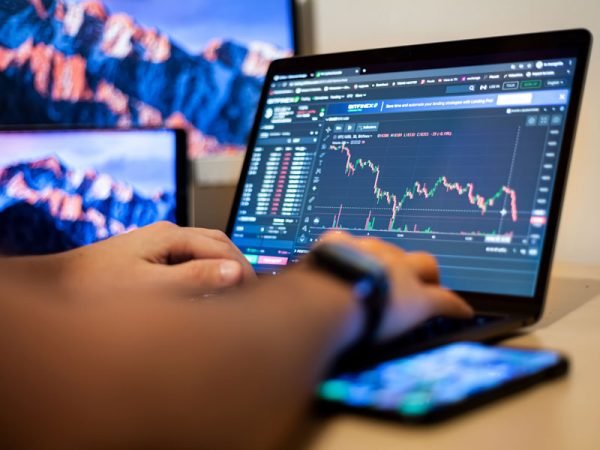
It is easy to understand why traders become obsessed with entry points.
The entry is where the action begins. It is the moment a trading idea turns into a real position. Because of this, many traders spend countless hours searching for better signals, better indicators, and better entry techniques.
Yet there is a flaw in that approach.
An entry can only be as good as the market conditions surrounding it.
A trader might identify a technically sound setup, but if the broader market environment does not support the idea, the trade can struggle from the very beginning. This is why experienced traders often spend more time reading the market than looking for entries.
The goal is not simply to find a place to enter an FX trade. The goal is to understand whether the market is providing a favourable environment for that trade in the first place.
Looking Beyond Individual Candles
A common mistake among newer traders is becoming too focused on small chart movements.
A bullish candle appears, a breakout occurs, or an indicator generates a signal, and the temptation to act immediately becomes difficult to resist.
However, markets are rarely defined by a single candle or a single pattern.
A setup that looks attractive on a lower timeframe may be moving directly against a larger trend. Likewise, a breakout may occur within a market that has spent days moving sideways without any clear direction.
Reading the market involves stepping back and asking what is really happening rather than reacting to every movement that appears on the screen.
Understanding the Mood of the Market
Financial markets have personalities.
There are periods when prices move confidently in one direction, and there are periods when uncertainty dominates. Sometimes markets respond strongly to news, while at other times major announcements seem to have little impact.
These changing conditions influence how traders approach an FX trade.
A strategy that performs well during strong trends may struggle when markets become unpredictable. Likewise, techniques designed for range-bound conditions may become less effective when volatility suddenly increases.
The ability to recognise these shifts can help traders make more informed decisions about when to participate and when to wait.
Why Patience Often Improves Trade Selection
Many traders assume that successful trading is about finding more opportunities.
In reality, it is often about filtering out poor ones.
Reading the market carefully helps traders avoid situations where conditions do not match their approach. This naturally reduces the number of trades taken, but it can improve the overall quality of those trades.
Patience plays a major role here.
Instead of forcing opportunities, traders learn to wait for situations that align with both their strategy and the broader market environment. The result is often a more disciplined and consistent approach.
The Bigger Picture Matters
An FX trade does not exist in isolation.
Interest rate expectations, economic data, geopolitical developments, and overall market sentiment can all influence currency movements. Even the strongest technical setup can be affected by factors beyond the chart itself.
This does not mean traders must analyse every economic event in detail. It simply means understanding that market conditions extend beyond technical signals.
When traders combine chart analysis with a broader understanding of the market environment, they often gain valuable context that supports better decision-making.
Reading First, Trading Second
One of the most useful habits traders can develop is viewing market analysis as a process rather than a search for entries.
The chart is not asking for a trade every time it moves. Sometimes it is simply providing information.
The traders who consistently improve are often those who learn to separate observation from action. They spend time understanding market conditions before thinking about entries.
That approach may not feel as exciting as jumping into the market at every opportunity, but it often leads to better decisions.
In the end, a successful FX trade usually starts long before the position is opened. It begins with understanding the market itself and recognising whether the conditions support the idea being considered.
