
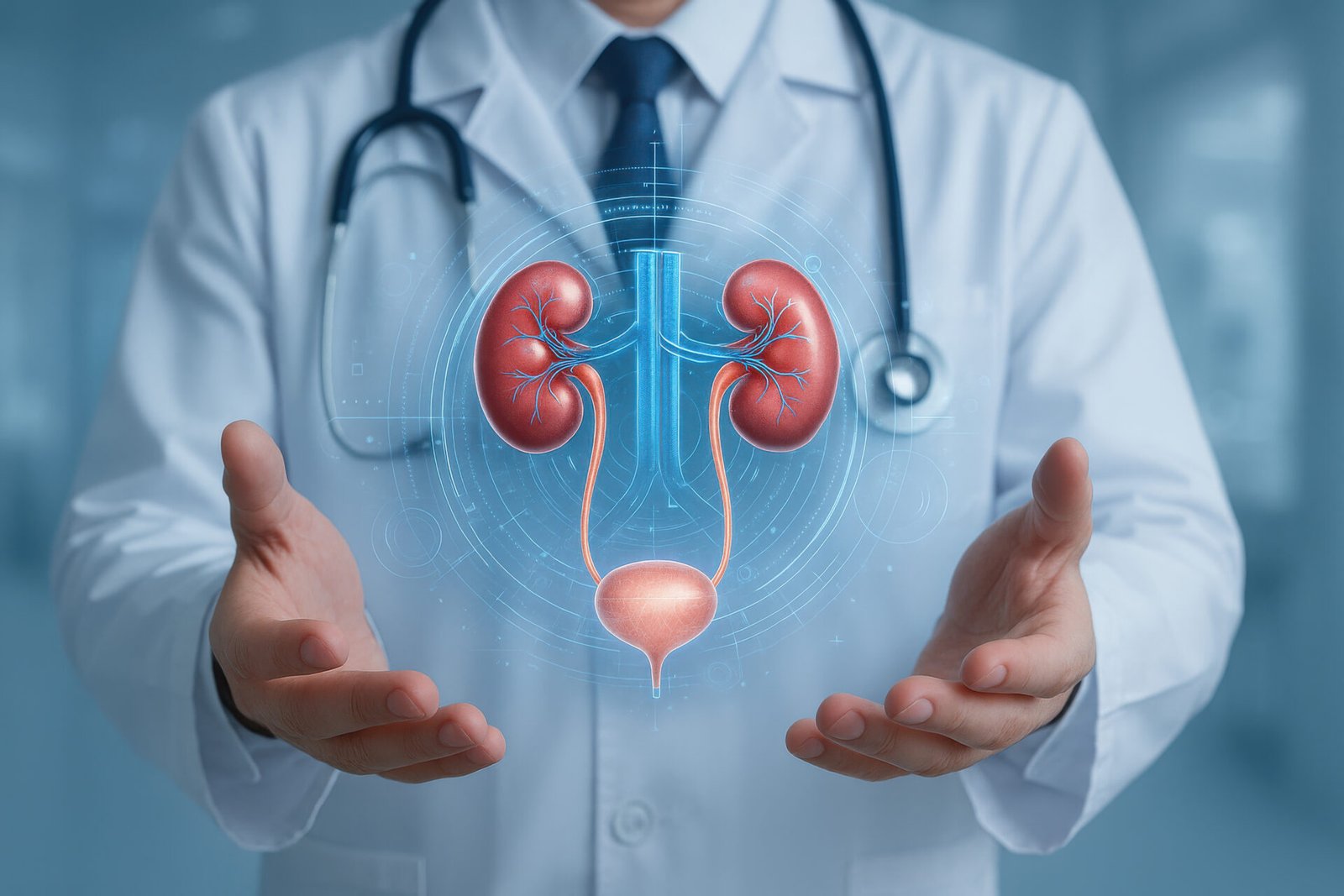
Children require specialised health care because children’s bodies grow and develop differently and react differently than adults’ bodies. So, this is especially for diseases of the urinary system and reproductive system . Paediatric urology is a subspeciality of urology which is concerned with the diagnosis and treatment of urologic problems in infants, children and adolescents. If there are problems related to kidney function, urinary infections, bladder control or birth defects, parents often look for a pediatric urologist in Chennai.
A full clinical approach in paediatric urology is not only symptom treatment It combines early detection, personalised care, family involvement, continuous monitoring and preventive health to improve a child’s overall health.
Paediatric Urology Demystified
Paediatric urology is a branch of medicine dealing with diseases of the kidneys, ureters, bladder, urethra and genital organs of children. Some are born with conditions and some develop conditions in childhood.
Paediatric urology is different from adult urology, not only in the physical symptoms but also in the growth patterns, emotional health, developmental stages and family support systems.
Children may not express discomfort well so prompt medical assessment is an important part of good care .
Common Paediatric Urology Conditions
1. Urinary Tract Infections (UTI)
Urinary tract infections (UTI) are among the most frequent urologic diseases in children. Repeated infections may sometimes suggest an underlying structural or functional defect.
Symptoms:
“fever of undetermined origin
Painful urination
Frequent urination
Upset stomach
Nocturnal enuresis in children who have been toilet trained
Get prompt treatment to help prevent kidney problems later.
2. Kidney dilatation (Hydro nephrosis)
Hydronephrosis is a swelling of a kidney because of a build-up of urine. It is often diagnosed before birth by routine prenatal screening.
Mild cases may clear up on their own, but more severe cases may need closer observation or treatment.
3. Vesicoureteral Reflux (VUR)
This condition occurs when urine flows backwards from the bladder to the kidneys. If left untreated it can lead to repeated infections and damage to the kidneys.
management is based on age severity and global kidney function
4. Hypospadiasis
Hypospadias is a birth defect in boys in which the opening of the urethra is not located at the usual place.
Modern surgical techniques are aimed at restoration of function and maintenance of normal development and appearance.
5. Dysfunction of the Bladder and Nighttime Enuresis
Bedwetting is common in younger children, but persistent cases may need evaluation.
Review by paediatric specialists:
Micturition
Fluid consumption
Sleep patterns
Behavioural reasons.
Causes Neurological:
The treatment usually includes a combination of lifestyle changes, behavioural training and medical help.
The importance of early diagnosis
Early intervention is one of the greatest strengths of paediatric urology.
Children who get timely evaluation often have:
Improved treatment results
Fewer Complications
Better growth & development
More self confidence, more emotional comfort
Today, with modern diagnostic techniques, doctors can detect problems with little discomfort.
Evaluation is often done by:
ultrasound imaging
Urinalysis
Evaluation of renal function
Uroflowmetry testing
Specialist paediatric imaging as needed
If symptoms persist, children should see a doctor rather than waiting to “outgrow” them.
Paediatric Urology Therapeutics Approaches
Depending on the age of the child, severity of the condition and long-term health objectives, a holistic clinical approach is the choice of treatment.
Health Care Administration
There are many paediatric urological problems that can be treated with:
Medicine
Antibiotic Therapy
Prompt emptying
Diet change
Tips for hydration
Non-Invasive Techniques
There have been advances in paediatric medicine to reduce the need for major surgery.
The advantages are:
Little cuts
Faster recovery
Reduced hospital stay
Surgical Care Less Pain After Surgery
Where surgery is needed, paediatric urology surgery is planned carefully to promote normal growth and preserve function in the long term.
The immediate results and the future development are the basis of the specialised surgical planning.
Paediatric Urology: A Family-Centered Approach
Involving parents and carers in the care process improves children’s response to treatment.
A family-centered model includes:
Clarity of communication.
Parenting training
Emotional support
Follow-up plans
Lifestyle Suggestions
Medical terms about your child’s health can be very worrying for parents. When conditions are explained in simple terms, families are empowered to make informed decisions.
Trust between families and health care providers improves adherence to treatment and long-term outcomes.
The Future of Paediatric Urology
The field of paediatric urology is constantly evolving with the development of new technologies, improved imaging techniques, minimally invasive procedures and greater knowledge of childhood development.
Young patients are benefiting from new treatments that are safer, more specific and more comfortable .
Earlier in the diagnostic process, specialist care and targeted support are available to families. A paediatric urologist with experience in Chennai can guide families on treatment options and help them plan care for their child.
Summary
Paediatric urology is an important discipline in the protection of the urinary and reproductive health of a child from infancy to adolescence. A comprehensive clinical approach emphasises early detection, individualised treatment, minimally invasive care, and active involvement of the family.
With greater awareness and advances in paediatric care, children with urological conditions have a better chance of healthy development and quality of life.
