
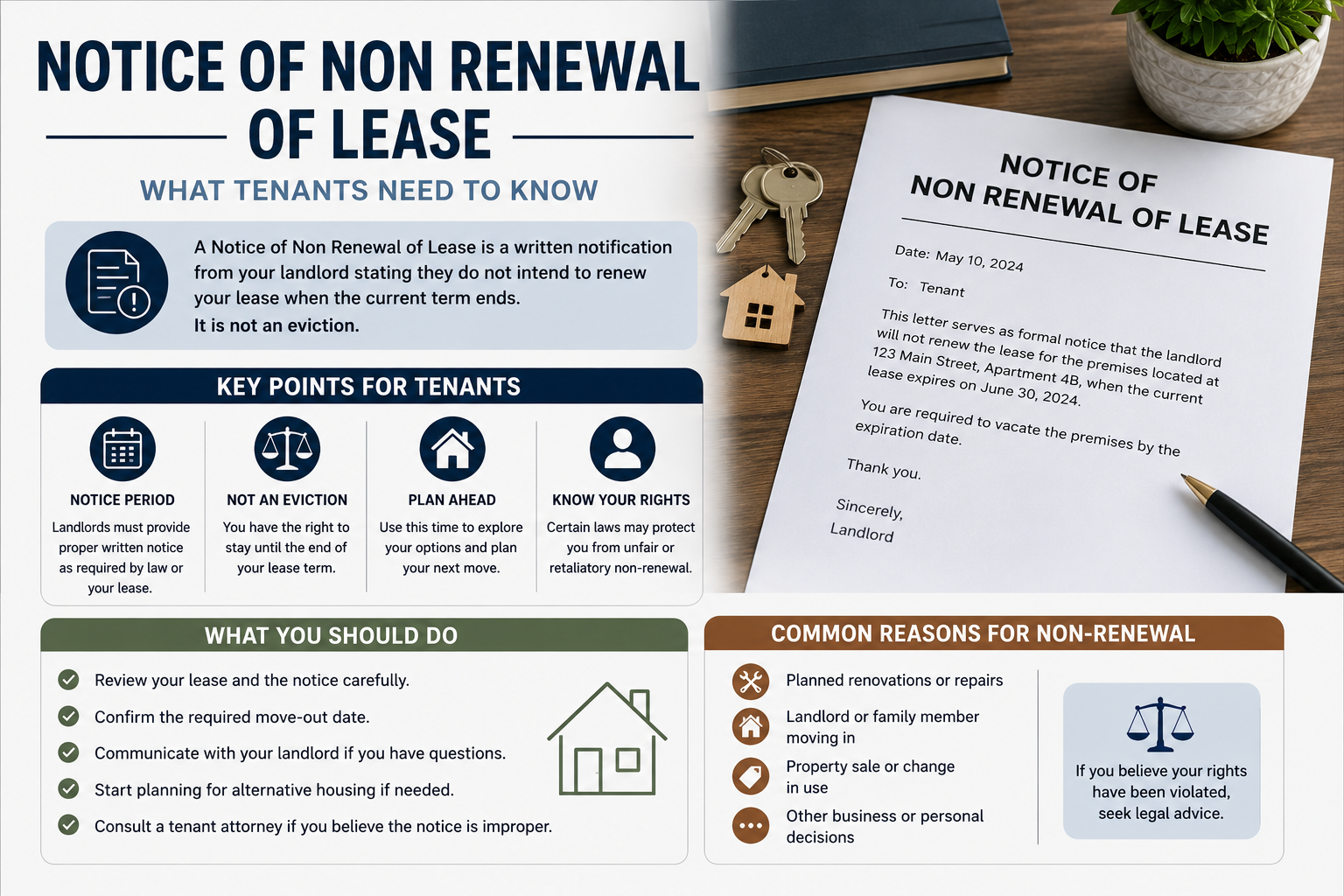
Receiving a Notice of Non Renewal of Lease can be stressful and confusing. Many tenants are unsure about what the notice means, why it was issued, and what steps they should take next. Understanding your rights and responsibilities can help you navigate the situation more confidently and make informed decisions about your housing future.
Whether you house, or commercial space, knowing how lease non-renewal works is essential for protecting your interests and avoiding unnecessary surprises.
What Is a Notice of Non Renewal of Lease?
A Notice of Non Renewal of Lease is a formal notification from a landlord indicating that they do not intend to renew the lease when the current rental term expires. Unlike an eviction notice, a non-renewal notice does not necessarily allege wrongdoing by the tenant.
Instead, it simply informs the tenant that the existing lease agreement will end on a specified date and will not be extended.
In many situations, landlords must provide advance notice before the lease term expires, although the required notice period may vary depending on local laws and the type of tenancy involved.
Why Landlords Issue Non-Renewal Notices
There are several reasons a landlord may decide not to renew a lease.
Common reasons include:
- Plans to sell the property
- Major renovations or redevelopment
- Changes in property use
- Personal occupancy plans
- Ongoing tenant disputes
- Business decisions regarding property management
In some cases, landlords may choose not to provide a specific reason if local laws allow them to decline renewal without cause.
Non-Renewal vs. Eviction
Many tenants mistakenly assume that a non-renewal notice is the same as an eviction. However, the two processes are very different.
Non-Renewal
A non-renewal notice informs the tenant that the lease will end at the expiration of the current term. The tenant remains legally entitled to occupy the property until the lease expires.
Eviction
An eviction generally involves allegations that the tenant violated the lease or failed to meet legal obligations, such as paying rent. Eviction proceedings typically require court involvement.
Understanding this distinction can help reduce unnecessary anxiety when receiving a notice of non-renewal.
Reviewing the Notice Carefully
When you receive a Notice of Non Renewal of Lease, review the document carefully.
Pay attention to:
- The stated termination date
- Required move-out deadlines
- Any instructions from the landlord
- Applicable notice periods
- Contact information for follow-up questions
Keeping copies of all documents and correspondence can be helpful if questions or disputes arise later.
Tenant Rights After Receiving a Notice
Receiving a non-renewal notice does not automatically eliminate your legal protections. Depending on local housing laws and the type of tenancy involved, tenants may have important rights.
These rights may include:
- Adequate advance notice
- Protection against unlawful discrimination
- Protection against retaliatory actions
- The ability to challenge improper notices
- Continued occupancy until the lease term ends
Understanding these protections can help tenants determine whether the notice complies with applicable legal requirements.
Steps Tenants Should Take
After receiving a notice of non-renewal, it is important to act promptly.
Review Your Lease
Examine your lease agreement for renewal provisions, notice requirements, and any clauses related to lease termination.
Communicate With the Landlord
If you have questions about the notice, contact the landlord for clarification. Open communication may help resolve misunderstandings or provide additional information about the landlord’s plans.
Explore Housing Options
Begin researching alternative housing as early as possible. Starting the search process early can reduce stress and provide more flexibility.
Keep Documentation
Maintain records of all communications, notices, and lease documents. Organized records can be valuable if legal issues arise.
Seek Legal Advice When Necessary
If you believe the notice is improper or violates your rights, consulting an attorney may help you understand available options.
Common Issues Associated With Non-Renewal Notices
Several challenges can arise during the non-renewal process.
Insufficient Notice
Landlords may occasionally fail to provide the amount of notice required by law.
Disputes Over Lease Terms
Questions regarding renewal rights, termination dates, or lease provisions can create disagreements.
Retaliation Concerns
Some tenants worry that a non-renewal notice was issued in response to complaints about repairs or housing conditions.
Discrimination Issues
Federal, state, and local laws prohibit housing decisions based on protected characteristics. Tenants who suspect discrimination should seek legal guidance promptly.
Landlord Considerations
Landlords should also approach lease non-renewals carefully.
Best practices include:
- Following all notice requirements
- Maintaining accurate records
- Providing written communication
- Avoiding discriminatory actions
- Complying with applicable housing laws
A properly handled non-renewal process can reduce misunderstandings and help avoid legal disputes.
When Legal Assistance Can Help
Some situations require professional legal guidance. An attorney may be helpful when:
- The validity of the notice is disputed
- Housing laws are unclear
- Retaliation concerns exist
- Discrimination is suspected
- Lease provisions are complex
Legal advice can provide clarity and help protect the rights of both tenants and landlords.
A Notice of Non Renewal of Lease marks the end of a rental agreement but does not necessarily indicate wrongdoing by either party. Understanding what the notice means, reviewing lease terms carefully, and knowing your legal rights can help you navigate the transition more effectively.
Whether you are a tenant preparing for a move or a landlord managing property decisions, clear communication and knowledge of applicable housing laws remain essential. Taking proactive steps early can help reduce stress and support a smoother transition when a lease comes to an end.
