
Amateur builders love to hide behind lowball estimates, but they routinely compromise on raw material quality, skip critical subgrade prep work, and use weak bracing that buckles under the weight of wet mud.
By the time the surface begins to pit, flake, or crack a few seasons later, these fly-by-night operations are long gone with your cash.
Protecting the premium that was put in and avoiding an expensive prospective reparation means filtering out the rookies during the initial consultation phase. Spotting the critical red flags early on is the only reliable way to dodge bad concrete pathway contractors.
Key Takeaways
- Subgrade Red Flags: Spotting crews who skip soil compaction and aggregate base installation.
- Formwork Shortcuts: Why thin wooden stakes and weak framing guarantee wavy, unaligned edges.
- Water Dilution Risks: The danger of adding excessive water to the mixer to make labor easier.
- Paperwork Gaps: Identifying companies that refuse to provide verifiable local business insurance.
How to Identify Shady Concrete Pathway Contractors Early On?
● Refusing To Dig Out the Soil & Install a Compacted Gravel Aggregate Base
Shady operators frequently try to save on labor by pouring their wet mix directly over raw, uncompacted topsoil or organic lawn grass.
Raw earth naturally holds onto water, expanding and shifting whenever the seasons change, which inevitably forces the thin stone sheet above to snap and crack.
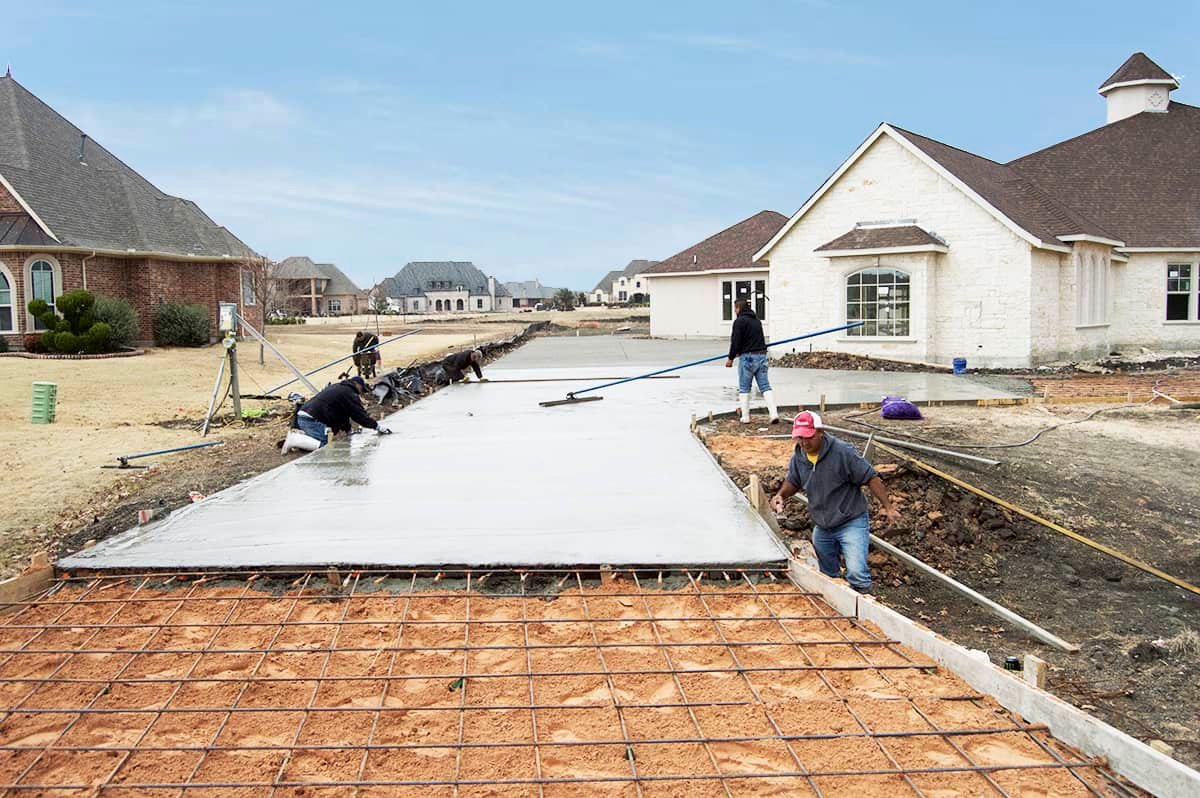
Professional crews always clear out the soft soil, roll down a stable geotextile fabric, and tightly pack at least four inches of crushed gravel aggregate base. Skipping this heavy excavation work is a glaring sign of subpar concrete pathway contractors.
● Utilizing Warped, Leftover Lumber & Flimsy Wooden Form Bracing Stakes
The wooden forms used to cage the wet concrete must stay perfectly straight, rigid, and level under immense outward hydraulic pressure. Amateurs often drag warped, split boards from previous jobs onto their lawn and try to pin them down with weak wooden twigs or scrap trim pieces.
When the heavy wet mud drops from the delivery truck chute, these weak frames twist, bend, and pull away from their alignments, leaving the client with wavy, bowing path edges.
Seeing sloppy, unbraced formwork on your lawn is a major red flag common with shady concrete pathway contractors.
● Drenching the Concrete Mixer with Excessive Water
Pounding, leveling, and finishing thick, low-slump concrete requires intense physical effort and quick movement before the mix sets in.
To make their jobs easier, lazy installers routinely spray massive amounts of extra water straight into the spinning mixer drum to turn the stone paste into a thin, soupy liquid that flows effortlessly.
While this trick speeds up the pouring process, it destroys the engineered chemical strength of the cement matrix, creating a brittle surface that scales and flakes away within its first year.
● Failing to Provide a Current, Verifiable Certificate of Insurance and Business License
The home construction landscape is filled with unverified handymen operating without valid local business licensing or property liability insurance.
If a contractor drops a heavy machine onto the main water line or a laborer gets injured on the property without coverage, you can be stuck holding the bill.
If a company manager gives excuses, changes the subject, or offers an unverified printout instead of showing a fresh certificate directly from their insurer, walk away. Demanding clean, transparent paperwork protects you from predatory concrete pathway contractors.
Conclusion
Letting an unverified operation skip deep subgrade compaction, use warped framing lumber, or water down the mixer is a guaranteed way to end up with a crumbling sidewalk that drags down a home’s curb appeal.
By sticking with local teams who openly share their active general liability insurance, build rock-solid braced forms, and pack down a heavy gravel base, it is possible to fully insulate the property from premature structural decay.
Taking the time to run through these operational checks leads one straight to an elite concrete forming contractor who handles the numbers and raw materials with precision, delivering a smooth, durable walkway built to last for decades.
