
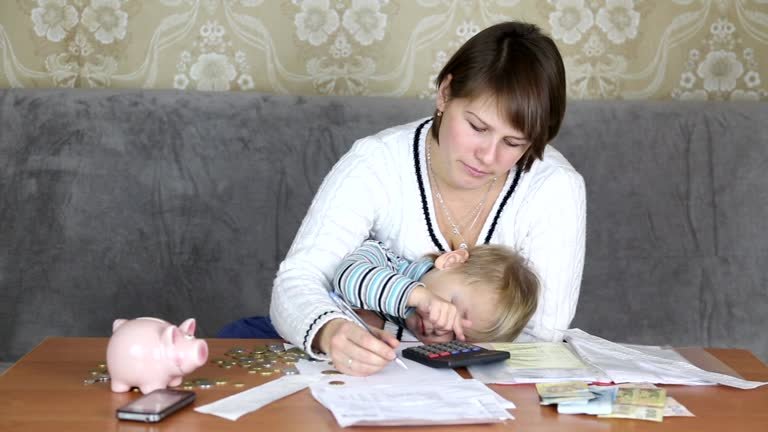
Hannah from Leeds put it off for weeks. Adding up the money, I mean — the real total, not the rough guess in her head.
When she finally did it one Sunday night, two kids asleep upstairs, the numbers stung. Rent, council tax, and the energy bill that kept creeping up. It felt impossible.
It wasn’t, though. A few months on she had a small savings pot and far fewer 3am worry sessions. Nothing dramatic happened. She just started.
That’s really the whole secret. Stability on one income isn’t about a big salary. It’s knowing exactly what you’ve got, claiming what’s yours, and chipping away.
Get the complete picture!
You can’t sort out money you’re not looking at. So look at it.
- Every penny coming in — wages, maintenance, child benefit, and universal credit.
- The bills that don’t move much: rent, council tax, energy, water, broadband.
- Two weeks of everyday spending. Groceries, bus fares, and the meal deal you forgot about.
- Any debts you’re carrying, and crucially, the interest rate next to each.
The first version will look rough. Mine did. It doesn’t matter; you’re after clarity, not a gold star. Once it’s written down, or sitting in a free budgeting app, you’ve got something solid to push against.
Don’t leave free money on the table!
Here’s the step loads of people skip, and it’s often worth hundreds a month. Properly worth doing.
- Child Benefit is £27.05 a week for your eldest or only child, plus £17.90 for each one after that, in 2026/27. As a single parent, you can ask to be paid weekly instead of every four weeks — handy for budgeting.
- Universal Credit might top up a low wage. Run your details through a free calculator from Turn2us or entitled Before you assume you don’t qualify. Plenty of parents do and never check.
- Healthy Start covers milk, fruit and veg if you’re pregnant or have little ones and you’re on certain benefits.
- Free school meals plus uniform grants exist in loads of areas. Your council will tell you.
- Skint because of one specific crisis? The Household Support Fund and Discretionary Housing Payments are built for exactly that energy arrears, a rent shortfall, that kind of thing.
But if you are still not able to manage your finances, then loans for single mothers can give a big support to manage your finances. This is how things become simple for you.
A budget that actually survives the month!
Why do strict budgets collapse? Because real life isn’t strict. Kids get ill. The school announces a trip with three days’ notice. Build the wobble in from the start.
Try something like this:
- Essentials get paid first. Always. Rent, utilities, food, getting to work.
- Keep a little “predictable surprises” pot for birthdays, Christmas, and the school shoes that wear out every term.
- Leave yourself a fiver a week that’s just yours. Not a luxury. Running on empty helps nobody.
Giving every pound a job – zero-based budgeting, if you want the term – works a treat when things are tight because nothing quietly disappears. Some people swear by cash in envelopes too. Bit old school. Still works.
Get a cushion going, however small!
Most money crises are really just a broken boiler with bad timing. A buffer is what turns “disaster” into “Ugh, annoying.”
Forget thousands for now. Aim for £100. Then build slowly towards a month of essentials.
- Switch on the round-up feature lots of banks offer and let the spare pennies stack.
- Any little windfall — a refund, a tenner off your nan — goes straight in.
- Keep it in a separate account. Out of sight, harder to raid on a tired Tuesday.
It feels glacial at first. Then one day there’s money in there, and the world doesn’t end when the washing machine packs up.
When you’re short before payday?
Even with a tidy plan, some months just won’t stretch. If you’re genuinely caught short, the order you do things in matters more than anything.
Try the free stuff first:
- Ring your energy or water supplier and ask about hardship schemes. Most have them. They rarely shout about it.
- Check whether a council crisis grant or the Household Support Fund fits.
- Talk to a free debt charity like StepChange or National Debtline — before you borrow a thing. It costs nothing and can stop a molehill becoming a mountain.
If borrowing does come into it, go in clear-eyed. Single mother loan gets sold as a quick fix, but a loan only helps if you can repay it without robbing the essentials to do so. Same with the speedy short-term stuff. Text loans from direct lenders push hard on convenience, and they can be useful for a genuine one-off gap, but they’re usually high-cost, so they’re no good as a regular crutch.
If you borrow, a few hard rules:
- Registered lenders with good reputations in the online landscape.
- Look at the total you’ll repay, not the friendly monthly figure.
- Never borrow to pay off another loan. That’s the spiral. Stay well clear.
- If repayment looks even slightly shaky, walk away. Free debt advice nearly always has a safer answer.
Borrowing isn’t shameful. It’s just a tool with sharp edges, and it belongs near the bottom of the list after grants, support and supplier help.
Earn a bit more where you can!
There’s a floor to cutting back. Earning has more headroom.
- Ask about extra hours, a review, or shifts that actually fit around childcare.
- Flog what the kids have grown out of. They grow out of everything.
- Flexible side income suits this life: tutoring, a bit of virtual admin, content work, whatever fits the quiet hours.
- Free training or a return-to-work scheme could lift your earnings further down the road. Worth a look.
It adds up faster than you’d think. An extra £40 a week is over two grand a year. That’s the line between treading water and slowly getting ahead.
Mind yourself, not just the money!
Money stress is heavy, and hauling it alone is heavier. Your head is part of your finances, whether the budget admits it or not.
- Chat to other single parents. Gingerbread’s forums are full of people who genuinely get it.
- Stop measuring your messy reality against everyone’s polished Instagram.
- Mark the wins. The first £100 saved is a proper achievement, so treat it like one.
The Bottom Note:
Hannah didn’t flip her finances overnight. She just kept turning up. One budget. One claimed benefit. One small saving. Repeat.
You can do that too. Know your numbers. Claim what’s yours. Build a cushion. And if you ever borrow, treat it as a careful last resort — never before you’ve checked the free help. A tight budget today isn’t a tight budget forever. Steady wins this one. Every time.