
Introduction
Manufacturing companies operate in a highly competitive environment where efficiency, quality, and cost control determine long-term success. Every production line generates large volumes of data related to machines, inventory, workforce productivity, quality inspections, and supply chain activities. However, collecting data alone is not enough. Businesses need the ability to convert that information into meaningful insights that support faster and more accurate decision-making.
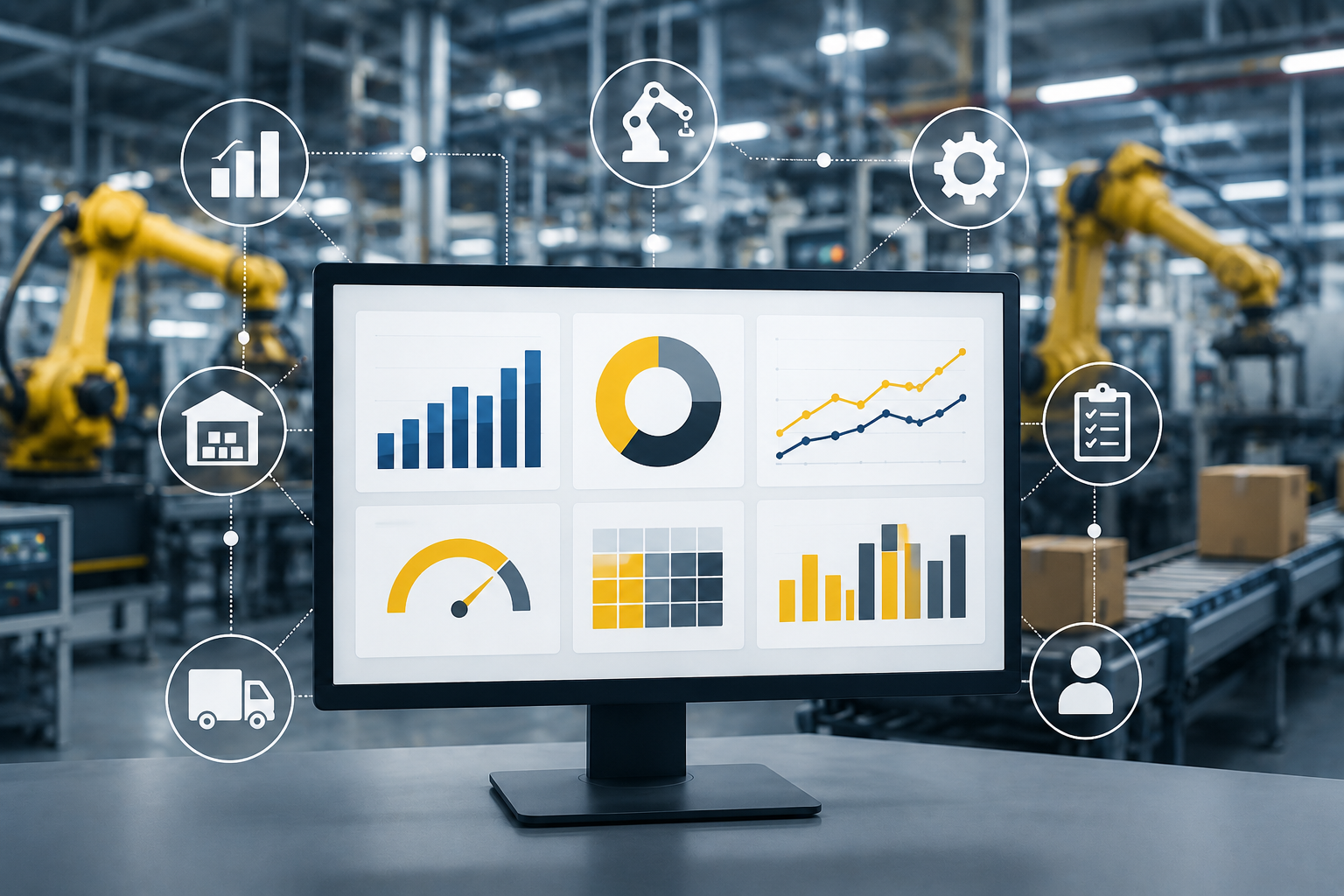
Using power bi manufacturing, organizations can visualize production data through interactive dashboards, monitor key performance indicators in real time, and identify improvement opportunities across the entire manufacturing process. This enables manufacturers to improve operational efficiency while reducing downtime and production costs.
The Importance of Data in Manufacturing
Modern manufacturing depends on data-driven decision-making. From raw material procurement to finished product delivery, every stage of production generates valuable information.
Without proper analytics, businesses often face challenges such as:
- Production delays
- Machine downtime
- Inventory shortages
- Quality issues
- Rising operational costs
- Poor forecasting
Business intelligence transforms complex manufacturing data into visual reports that help managers quickly identify trends and make informed decisions.
Real-Time Production Monitoring
One of the biggest advantages of modern reporting solutions is real-time visibility into manufacturing operations.
Production managers can monitor:
- Current production output
- Machine utilization
- Shift performance
- Production targets
- Equipment status
- Work order completion
Instead of waiting for daily or weekly reports, management teams receive live updates that enable immediate action whenever production issues arise.
Real-time monitoring improves responsiveness while minimizing costly production interruptions.
Improving Equipment Performance
Manufacturing equipment represents a major investment for every production facility. Unexpected machine failures often result in delayed deliveries, reduced productivity, and increased maintenance expenses.
Analytics helps businesses monitor machine performance by tracking:
- Equipment availability
- Downtime frequency
- Maintenance schedules
- Machine efficiency
- Repair history
These insights support preventive maintenance strategies that reduce unexpected breakdowns while extending equipment lifespan.
Better Production Planning
Production planning requires accurate demand forecasts and efficient resource allocation.
Analytics allows manufacturers to compare historical production data with current demand, helping planners determine:
- Production schedules
- Workforce requirements
- Material availability
- Equipment utilization
- Capacity planning
Better planning reduces production bottlenecks while ensuring customer orders are completed on time.
Inventory Optimization
Inventory management directly affects manufacturing profitability.
Excess inventory increases storage costs, while shortages interrupt production schedules.
Manufacturers can use analytics to monitor:
- Raw material inventory
- Work-in-progress inventory
- Finished goods inventory
- Stock turnover
- Inventory aging
- Material consumption
Accurate inventory visibility enables businesses to maintain optimal stock levels while reducing waste and carrying costs.
Quality Control Improvement
Product quality plays a critical role in customer satisfaction and brand reputation.
Analytics helps quality teams monitor production quality using measurable indicators such as:
- Defect rates
- Rework percentages
- Inspection results
- Product rejection trends
- Customer complaints
- Compliance metrics
By identifying recurring quality issues early, manufacturers can implement corrective actions before defects impact customers.
This leads to higher product consistency and reduced production losses.
Supply Chain Visibility
Manufacturing performance depends heavily on efficient supply chain operations.
Business intelligence helps organizations monitor:
- Supplier performance
- Delivery timelines
- Purchase orders
- Material availability
- Logistics efficiency
- Procurement costs
Improved supply chain visibility allows manufacturers to reduce delays while strengthening supplier relationships.
Better coordination across procurement and production results in smoother operations.
Workforce Productivity Analysis
Employees remain one of the most valuable resources in any manufacturing organization.
Analytics enables management to evaluate workforce performance by tracking:
- Employee productivity
- Shift efficiency
- Attendance trends
- Overtime utilization
- Training completion
- Labor costs
These insights help managers optimize staffing levels while improving employee performance and operational efficiency.
Cost Reduction Opportunities
Manufacturing companies continuously seek ways to reduce operational costs without sacrificing product quality.
Analytics identifies areas where expenses can be minimized, including:
- Material waste
- Energy consumption
- Maintenance expenses
- Labor utilization
- Production inefficiencies
With better cost visibility, executives can prioritize improvement initiatives that maximize profitability.
Executive Manufacturing Dashboards
Senior leadership requires high-level visibility into manufacturing performance.
Executive dashboards provide instant access to critical business metrics such as:
- Production output
- Revenue
- Manufacturing costs
- Inventory status
- Equipment efficiency
- Customer order fulfillment
Interactive dashboards eliminate manual reporting while helping executives make informed strategic decisions.
Instead of reviewing multiple spreadsheets, leaders gain a complete overview through a single reporting interface.
Performance Measurement Through KPIs
Key Performance Indicators (KPIs) help manufacturers evaluate operational success.
Common manufacturing KPIs include:
- Overall Equipment Effectiveness (OEE)
- Production efficiency
- First-pass yield
- Downtime percentage
- Order completion rate
- Inventory turnover
- Production cost per unit
Tracking these indicators enables continuous improvement across manufacturing operations.
Predictive Manufacturing Insights
Modern analytics goes beyond historical reporting by supporting predictive analysis.
Manufacturers can forecast:
- Future production demand
- Equipment maintenance requirements
- Inventory replenishment
- Capacity utilization
- Material shortages
Predictive insights allow organizations to proactively address challenges before they disrupt production.
This creates a more resilient and efficient manufacturing environment.
Better Collaboration Across Departments
Manufacturing requires coordination between multiple departments, including procurement, production, quality control, warehouse management, finance, and logistics.
Centralized dashboards improve collaboration by ensuring everyone works with consistent and up-to-date information.
Departmental communication becomes more effective because teams share the same operational insights, reducing misunderstandings and improving decision-making.
Scalability for Growing Manufacturers
As manufacturing businesses expand, they generate increasingly complex operational data.
Scalable reporting solutions support growth by handling larger datasets without sacrificing reporting performance.
Growing organizations benefit from centralized analytics that continue to deliver accurate insights across multiple production facilities, warehouses, and business units.
This allows leadership teams to maintain visibility while supporting long-term expansion.
Why Modern Manufacturing Requires Business Intelligence
Manufacturing has evolved significantly with automation, digital production systems, and connected equipment.
Business intelligence enables organizations to maximize these technological investments by transforming operational data into actionable business insights.
Manufacturers gain the ability to:
- Improve production efficiency
- Reduce operational risks
- Increase product quality
- Lower manufacturing costs
- Enhance customer satisfaction
- Support long-term strategic planning
Organizations that embrace analytics are better positioned to compete in rapidly changing markets.
Conclusion
Manufacturing success depends on making timely decisions based on accurate information. Business intelligence empowers organizations to monitor production performance, optimize inventory, improve quality control, reduce costs, and strengthen supply chain operations through data-driven insights.
From real-time production monitoring to predictive maintenance and executive reporting, analytics provides manufacturers with the visibility needed to improve operational performance continuously. When integrated with Microsoft technologies, these capabilities become even more accessible, enabling manufacturers to build smarter factories, increase efficiency, and achieve sustainable business growth.
