
The first thing athletes notice about high-performance compression wear is not the stitching, the logo, or even the fabric. It is the feeling. The sensation of a second skin that moves without resistance, supports without pressure, and performs without distraction.
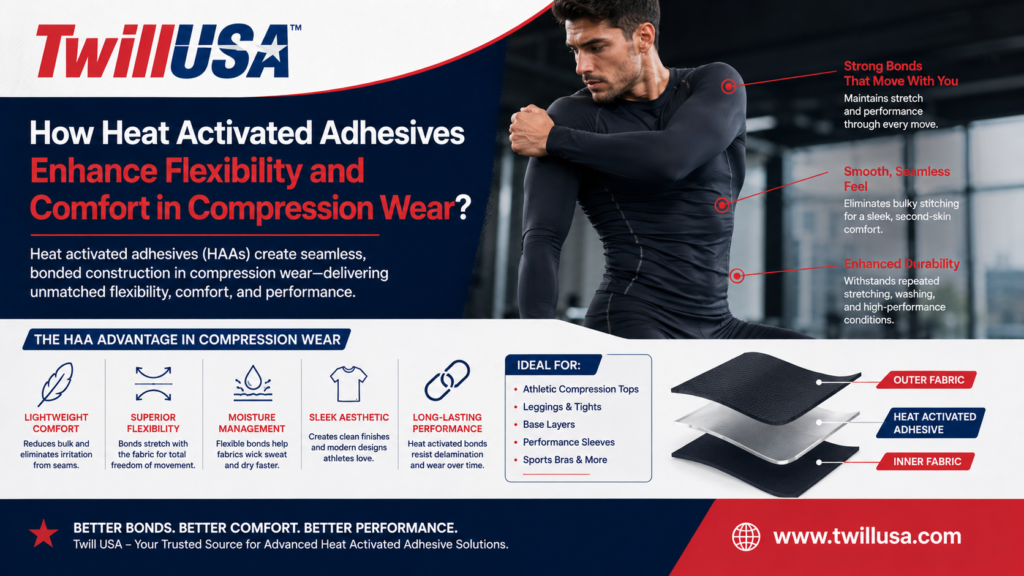
Behind that seamless experience lies a quiet revolution in garment engineering. Modern compression apparel is no longer built solely with threads and fabric panels. Advanced bonding technologies are transforming how these garments are designed, and at the center of this transformation are heat activated adhesives.
From elite sportswear to recovery garments and medical compression apparel, manufacturers are increasingly turning to adhesive-based construction to create lighter, more flexible, and more comfortable products. The result is apparel that adapts to movement naturally while reducing friction, bulk, and discomfort.
As compression wear continues to evolve, the role of adhesives has become more sophisticated than ever. What once served as a hidden industrial component is now a driving force behind innovation in wearable performance technology.
The Shift Away from Traditional Stitching
Traditional stitching has long been the standard in garment construction, but compression wear demands something more refined. Tight-fitting apparel places continuous stress on seams during stretching, bending, and repetitive movement. Over time, stitched seams can create pressure points, irritation, and restricted mobility.
This is where heat activated adhesives offer a major advantage.
Instead of relying entirely on needle-and-thread assembly, these adhesives bond fabric layers together using heat and pressure. The process creates flatter, smoother seams that reduce rubbing against the skin. For athletes engaged in long training sessions or endurance sports, this seemingly small improvement can dramatically enhance comfort.
The absence of bulky stitching also allows garments to contour more naturally to the body. Compression wear built with bonded seams feels less rigid and more adaptive during movement. Whether an athlete is sprinting, lifting, cycling, or recovering, the garment responds fluidly instead of resisting motion.
In performance apparel, comfort is not a luxury. It directly influences focus, confidence, and endurance.
Enhancing Stretch and Flexibility
Compression garments are engineered to stretch repeatedly while maintaining shape and support. Conventional seams can interrupt that elasticity because thread tension behaves differently from performance fabrics.
Heat activated adhesives solve this issue by creating bonds that move with the fabric rather than against it.
Modern adhesive films are specifically developed to maintain flexibility under stress. They stretch alongside technical textiles without cracking, stiffening, or losing integrity. This compatibility is especially important in compression zones around the shoulders, knees, hips, and elbows where constant motion occurs.
The improvement becomes even more noticeable in high-intensity environments. Athletes often describe bonded compression wear as feeling “invisible” because the garment moves as naturally as skin.
Manufacturers also benefit from greater design freedom. Adhesive bonding enables complex panel construction without adding seam bulk. This allows brands to engineer garments with targeted compression zones, ventilation mapping, and ergonomic shaping that would be difficult to achieve using traditional sewing methods alone.
Reducing Skin Irritation and Chafing
Anyone who has worn compression gear during long workouts understands how quickly discomfort can become a distraction. Even minor seam friction can lead to irritation after extended movement.
By eliminating raised stitching in critical areas, heat activated adhesives significantly reduce chafing. Flat bonded seams create smoother garment interiors that glide more comfortably against the skin.
This advantage is especially valuable in:
- Marathon and endurance sports.
- High-humidity environments.
- Medical compression garments.
- Recovery wear.
- Base layers worn for extended periods.
The smoother finish also improves the overall aesthetic of the garment. Compression apparel appears cleaner, more streamlined, and more modern when bonding techniques replace bulky seam construction.
Consumers increasingly associate seamless comfort with premium athletic wear, making adhesive technologies an important differentiator in the competitive sports apparel market.
Improving Breathability and Lightweight Performance
Athletes consistently seek apparel that delivers support without feeling heavy. Every additional layer, seam, or reinforcement contributes to weight and heat retention.
Because heat activated adhesives minimize the need for overlapping stitched materials, they help reduce garment weight. Bonded construction creates leaner profiles while preserving durability and support.
This streamlined construction also improves breathability. Many adhesive systems are engineered with micro-perforations or breathable structures that allow airflow and moisture transfer. When combined with moisture-wicking compression fabrics, the result is apparel that remains cooler and drier during activity.
The impact is substantial in high-performance environments where body temperature regulation directly affects athletic output.
Modern compression wear must balance multiple demands simultaneously:
- Flexibility.
- Compression accuracy.
- Moisture management.
- Durability.
- Comfort.
- Lightweight performance.
Adhesive bonding technologies help manufacturers achieve this balance more effectively than traditional assembly methods alone.
Durability Under Repetitive Motion
Compression wear undergoes extreme physical stress. Garments are stretched repeatedly, washed frequently, and exposed to sweat, friction, and environmental conditions.
Poorly constructed seams often become the first point of failure.
Advanced heat activated adhesives are engineered specifically for durability under dynamic conditions. They maintain strong bonds even after repeated stretching and laundering cycles. Many adhesive systems are tested extensively for:
- Elastic recovery
- Wash resistance
- Sweat resistance
- Temperature stability
- Long-term flexibility
This reliability is critical for both consumers and brands. Athletes expect performance garments to maintain compression support over time rather than degrade after a few uses.
The durability of bonded apparel also contributes to sustainability efforts by extending garment lifespan and reducing replacement frequency.
Supporting Innovative Design and Customization
Performance apparel is no longer purely functional. Consumers now expect technical wear to deliver visual identity, personalization, and style alongside athletic performance.
This is where technologies like glow in the dark HTV are becoming increasingly relevant.
Modern athletic brands are integrating reflective and illuminated design elements into compression apparel for both aesthetics and visibility. Glow in the dark HTV applications allow logos, graphics, and accents to remain visible in low-light environments, making them popular in:
- Running apparel
- Cycling gear
- Outdoor training wear
- Team uniforms
- Nighttime fitness apparel
The compatibility between heat activated adhesives and HTV technologies creates exciting opportunities for apparel designers. Because both rely on heat-based bonding methods, manufacturers can integrate decorative and functional elements without compromising garment flexibility.
Unlike heavier printed applications, advanced HTV solutions can maintain stretch compatibility with compression fabrics. This ensures that customization does not interfere with movement or comfort.
As wearable fashion continues merging with performance engineering, adhesive-based technologies are becoming essential to modern apparel innovation.
The Future of Compression Wear Engineering
Compression wear is evolving into a sophisticated intersection of biomechanics, textile science, and material engineering. Athletes today demand apparel that performs intelligently rather than simply fitting tightly.
Future innovations in heat activated adhesives are expected to include:
- Smarter stretch-responsive bonding systems.
- Ultra-light adhesive films.
- Eco-friendly adhesive formulations.
- Enhanced breathable bonding technologies.
- Integration with wearable sensors and smart textiles.
The industry is also investing heavily in sustainable manufacturing. Many apparel companies are exploring adhesive systems that reduce waste, improve production efficiency, and support recyclable textile solutions.
As these technologies advance, bonded construction may eventually become the dominant standard in high-performance sportswear manufacturing.
Why Comfort Technology Matters More Than Ever
The psychology of athletic performance is deeply connected to physical comfort. When apparel restricts movement, traps heat, or creates irritation, it competes for the athlete’s attention. When garments move naturally and feel effortless, athletes can focus entirely on performance.
That is the real value of heat activated adhesives.
They are not merely industrial materials hidden inside apparel construction. They are performance enablers that help compression wear function more intelligently and comfortably.
At the same time, innovations like glow in the dark HTV demonstrate how modern sportswear is blending technology, safety, and style into a unified experience.
Compression wear is no longer just about pressure and support. It is about engineered comfort, seamless movement, and apparel that disappears into performance itself.
And increasingly, that future is being bonded together through advanced adhesive technology.
