
Introduction
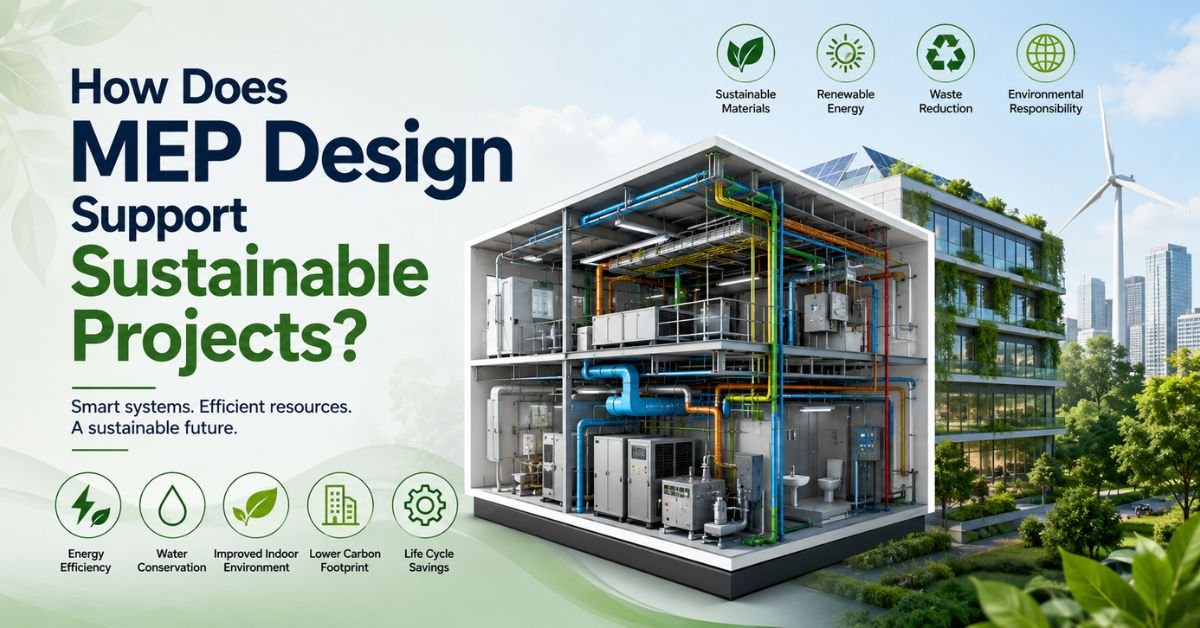
Sustainability has become a key focus in modern construction as building owners, developers, and occupants seek structures that consume fewer resources and create a healthier environment. While architectural design often receives much of the attention, the role of MEP (Mechanical, Electrical, and Plumbing) design is equally important. MEP systems influence how a building uses energy, manages water, maintains indoor comfort, and supports long-term operational efficiency.
Many Mep Design Companies in Chennai use advanced digital tools and coordinated workflows to identify potential conflicts before construction begins. This proactive approach reduces material waste, prevents costly rework, and improves project efficiency. As a result, sustainable objectives can be achieved more effectively and economically.
Building Efficiency Starts Behind the Walls
Many of the systems that determine a building’s performance are hidden behind walls, ceilings, and floors. Heating, ventilation, air conditioning, electrical distribution, and water supply networks all play a major role in resource consumption.
A well-planned MEP design ensures that these systems operate efficiently without wasting energy or water. For example, properly sized HVAC equipment prevents excessive energy use, while optimized lighting layouts reduce electricity consumption. When these elements are designed together from the beginning, the building can achieve better performance with fewer resources.
Smarter Energy Management for Long-Term Benefits
Energy efficiency is one of the primary goals of sustainable construction. MEP designers carefully evaluate a building’s energy needs and select systems that deliver optimal performance while minimizing consumption.
Modern solutions such as energy-efficient lighting, occupancy sensors, smart controls, and high-performance HVAC systems help reduce energy demand. These technologies not only lower utility costs but also decrease the building’s carbon footprint. By integrating energy-saving measures into the design phase, project teams can create facilities that remain efficient for years to come.
Water Conservation Through Intelligent Design
Water scarcity is becoming a growing concern in many regions around the world. Sustainable projects address this challenge through efficient plumbing design and water management strategies.
MEP professionals incorporate features such as low-flow fixtures, rainwater harvesting systems, and greywater reuse solutions to reduce water consumption. These measures help conserve valuable resources while lowering operating expenses. Effective water management also contributes to environmental protection by reducing the strain on local water infrastructure.
Creating Healthier Indoor Environments
Sustainability is not only about conserving resources; it is also about improving the quality of life for building occupants. Indoor environmental quality has a direct impact on comfort, productivity, and well-being.
Proper ventilation systems provide fresh air while removing indoor pollutants. Efficient temperature control maintains occupant comfort throughout the year. Adequate lighting design improves visibility and supports healthier working and living environments. Through careful planning, MEP systems help create spaces that are both comfortable and sustainable.
Supporting Green Building Goals
Many projects today aim to achieve green building certifications and meet environmental performance standards. Effective MEP design plays a significant role in reaching these objectives.
Professionals often collaborate with Sustainability Consultancy Firms to ensure that building systems align with sustainability targets. Their combined expertise helps projects maximize energy efficiency, reduce environmental impact, and comply with industry requirements. This collaborative approach strengthens the overall success of sustainable developments.
The Value of Early Coordination
Sustainability works best when it is considered from the earliest stages of a project. Early coordination between architects, engineers, and contractors allows building systems to be integrated more effectively.
Conclusion
MEP design is a critical component of sustainable construction. From reducing energy and water consumption to improving indoor comfort and supporting environmental goals, MEP systems directly influence a building’s long-term performance. By focusing on efficiency, resource conservation, and smart system integration, MEP design helps create buildings that are environmentally responsible, cost-effective, and comfortable for occupants. As sustainability continues to shape the future of construction, the importance of well-planned MEP design will only continue to grow.