
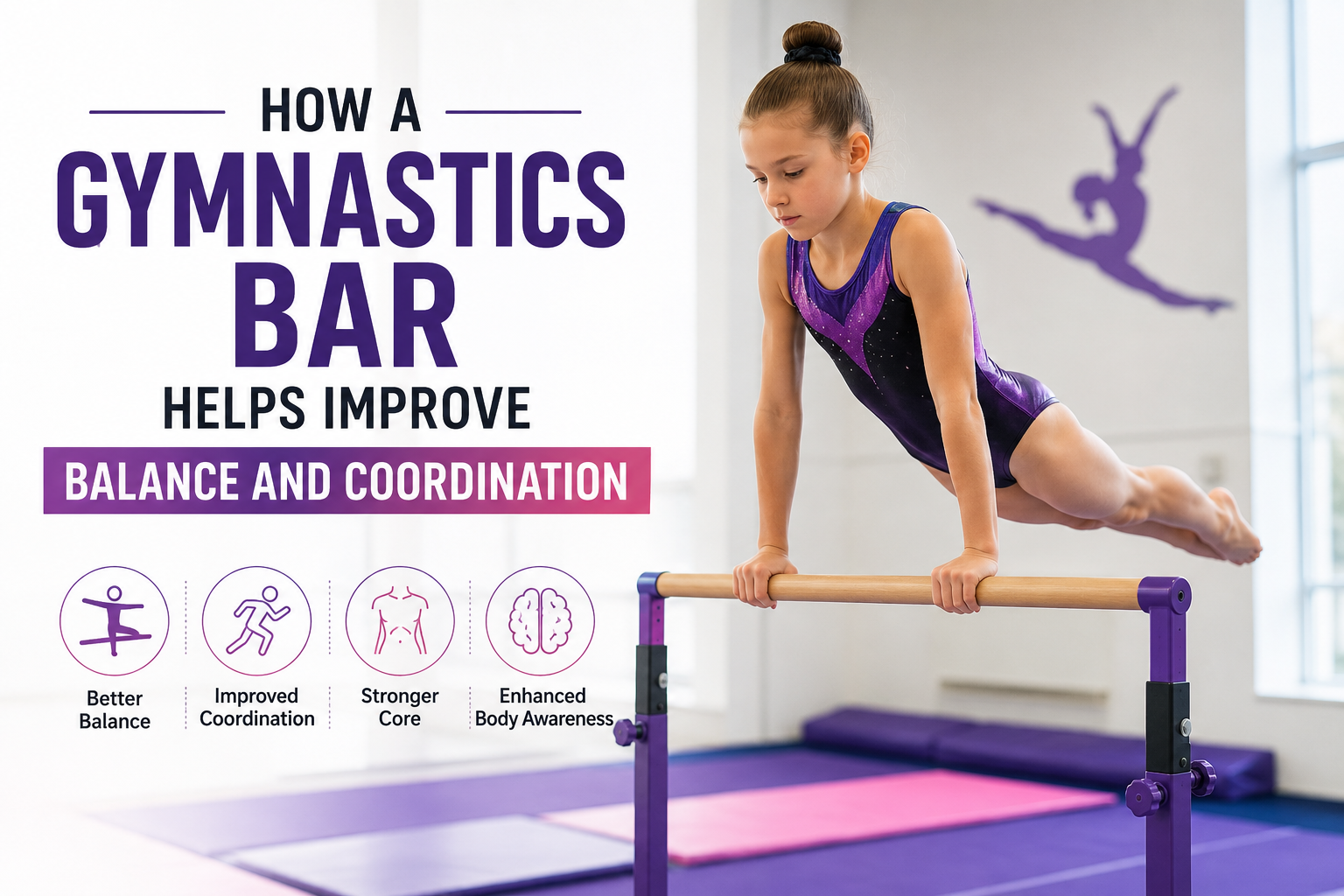
Balance and coordination are two of the most important physical skills that athletes develop through regular training. Whether someone is just starting gymnastics or looking to refine existing techniques, the right equipment can make a noticeable difference. One of the most effective training tools for building these abilities is a Gymnastics Bar. It encourages body awareness, improves muscle control, and helps gymnasts gain confidence while practicing fundamental movements.
Home gymnastics has become increasingly popular as families look for safe and convenient ways to support skill development outside the gym. Modern training bars are designed to provide stability, adjustability, and durability, making them suitable for beginners and developing athletes alike. Many quality products also feature space-saving designs and safety-focused engineering to support regular practice at home. These features are highlighted in products such as those offered by AirTumble, which include adjustable heights, folding frames, secure locking systems, and stable rubber feet for home use.
Why Balance and Coordination Matter
Balance is the ability to maintain body control during movement or while holding a position. Coordination involves the smooth interaction between muscles, joints, and the nervous system to perform controlled actions. Together, these abilities influence nearly every gymnastics skill, from basic swings to advanced routines.
Developing these qualities at an early stage provides benefits beyond gymnastics. Improved balance and coordination contribute to better posture, greater body awareness, enhanced athletic performance, and reduced risk of injury in many sports and everyday activities.
Consistent practice on properly designed equipment creates an environment where athletes can gradually strengthen these essential skills.
Building Core Strength Through Practice
Core strength plays a significant role in maintaining balance. Every time a gymnast hangs, swings, or supports their body weight, the abdominal muscles, lower back, shoulders, and hips work together to stabilize movement.
Training on a Gymnastics Bar naturally encourages activation of these muscle groups. Unlike many traditional exercises, bar training combines strength with movement control, allowing athletes to improve stability while developing functional fitness.
As core muscles become stronger, gymnasts find it easier to maintain proper posture during routines and perform skills with greater precision.
Enhancing Body Awareness
Body awareness, often referred to as proprioception, is the ability to understand where the body is positioned without constantly looking at it.
Bar exercises challenge athletes to control their movements while adjusting their grip, shifting body weight, and maintaining alignment. These repeated actions teach the brain and muscles to work together more efficiently.
Over time, improved body awareness helps gymnasts perform smoother transitions, maintain better control during swings, and react more quickly when correcting balance.
Developing Better Hand-Eye Coordination
Gymnastics requires excellent hand placement and timing. During bar practice, athletes constantly coordinate their vision with upper-body movements.
Simple drills such as support holds, controlled swings, and transitions help improve reaction speed while reinforcing accurate movement patterns. As confidence grows, athletes become more comfortable attempting increasingly complex techniques under proper supervision.
These improvements often carry over into other sports that require precise timing and coordination.
Strengthening Stability Through Progressive Training
One advantage of modern home training equipment is the ability to adjust difficulty levels as skills improve.
Many folding and adjustable bars allow users to modify height settings, making them suitable for beginners while continuing to challenge developing gymnasts. Features such as dual-lock adjustment systems, durable fiberglass crossbars, and stable bases support gradual progression while maintaining safety during practice.
This progression allows athletes to focus on mastering proper technique before advancing to more demanding exercises.
Encouraging Safe Skill Development
Confidence grows when athletes feel secure during training. Equipment stability plays an important role in reducing unnecessary movement that can interfere with learning.
Manufacturers such as AirTumble design folding training bars with sturdy frames, adjustable heights, rubber feet for improved grip, and compatibility with protective mats to support safer home practice. Safety recommendations also include using additional appropriate landing mats, warming up properly, and regularly inspecting equipment before each session.
A safe training environment encourages consistent practice while helping gymnasts focus on improving technique rather than worrying about equipment stability.
Improving Coordination Through Repetition
Coordination develops through repetition. Every controlled swing, hold, or transition reinforces communication between the brain and muscles.
Rather than rushing into advanced skills, successful gymnasts spend considerable time mastering basic movements. Repeating these exercises helps improve rhythm, timing, and precision.
Some effective beginner drills include:
- Straight-arm support holds
- Hanging exercises
- Controlled forward and backward swings
- Tuck holds
- Knee raises
- Simple dismount practice
These foundational exercises create the coordination necessary for more advanced gymnastics skills later.
Benefits Beyond Gymnastics
Although gymnastics bars are designed primarily for gymnastics training, the physical improvements they promote extend well beyond the sport itself.
Regular practice may contribute to:
- Improved posture
- Increased upper-body strength
- Better flexibility
- Enhanced concentration
- Greater confidence
- Improved athletic performance across multiple sports
Children especially benefit from activities that challenge balance and coordination because these abilities continue developing throughout their growing years.
Creating Consistent Home Training Habits
One challenge many athletes face is maintaining regular practice between coaching sessions. Home equipment provides opportunities to reinforce skills in a familiar environment.
Foldable designs make storage easier for families with limited space, while adjustable heights allow equipment to grow with developing athletes. These practical features encourage consistency, which is often the key to long-term improvement.
Parents should always supervise younger children and ensure exercises are appropriate for the gymnast’s age and skill level.
Conclusion
Improving balance and coordination requires patience, consistent practice, and reliable training equipment. Home Gymnastics Bar provides an effective platform for strengthening the core, improving body awareness, enhancing coordination, and building confidence through progressive skill development.
When paired with proper coaching, safe practice habits, and gradual progression, quality equipment can support long-term athletic growth while making training both enjoyable and productive. Whether practicing simple support holds or refining more advanced techniques, athletes who invest time in structured bar training develop physical abilities that benefit both gymnastics performance and everyday movement.
FAQs
1. At what age can children begin using a gymnastics training bar?
Many children begin using beginner-level bars around ages 3–6 under adult supervision, provided the equipment is appropriate for their size and skill level.
2. How often should beginners practice?
Two to four sessions per week with proper rest between workouts is generally sufficient for developing strength, balance, and coordination.
3. Do gymnastics bars help improve overall fitness?
Yes. Regular practice strengthens the upper body, core, grip, flexibility, and overall body control.
4. Is protective matting necessary?
Yes. Appropriate landing mats are strongly recommended to reduce impact and improve safety during training.
5. Can adults also benefit from gymnastics bar training?
Absolutely. Adults can use training bars for strength exercises, mobility work, bodyweight fitness, and improving coordination, provided the equipment supports their weight capacity.
