
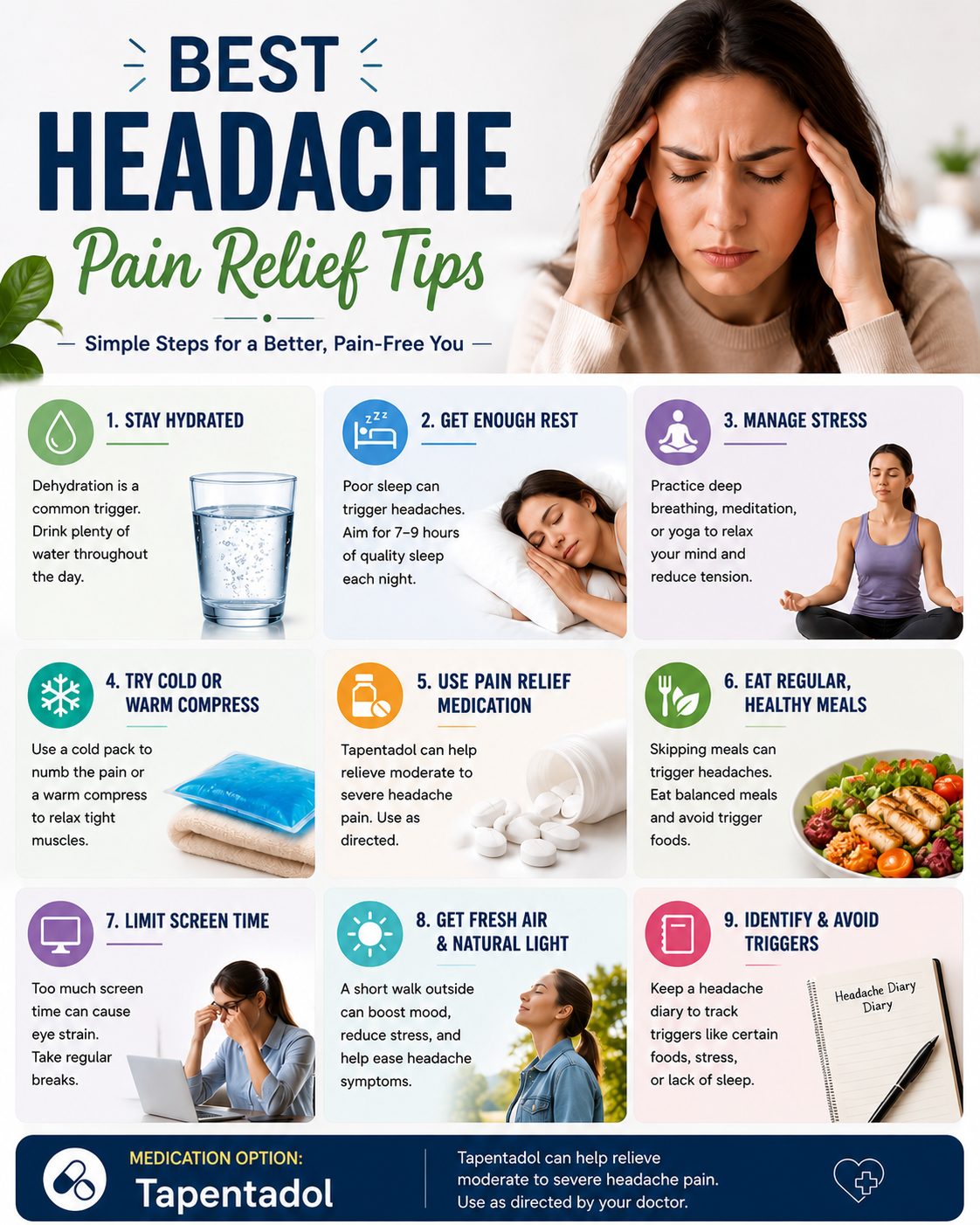
Headache is among the most frequent ailments that people experience on a day-to-day basis. Having a headache may cause difficulty at work, affect sleep patterns, change your mood, and hinder many other everyday activities. While some headaches may be insignificant, others may become unbearable. Many patients who live in America, Canada, and Australia tend to look for rapid solutions for getting rid of their headaches.
Patients with chronic pain tend to discuss the possibility of using prescription pain relief medicines such as tapaday 200. Medications such as Tapaday 100mg are used by some patients as pain relief medicine when ordinary ways of relieving pain do not help.
Common Causes of Headaches
Understanding the cause of your headache can help you find the right treatment quickly. Different factors can trigger headaches in adults and even children.
Stress and Anxiety
Mental stress is one of the biggest causes of headaches. Long working hours, emotional pressure, and poor sleep can tighten muscles and create tension headaches.
Dehydration
Not drinking enough water can lead to headaches. Your body needs proper hydration for healthy blood circulation and brain function.
Lack of Sleep
Poor sleep habits may increase headache frequency. Sleeping less than 6–7 hours regularly can make headaches worse.
Eye Strain
Too much screen time from laptops and mobile phones may strain your eyes and cause pain around the forehead and temples.
Poor Diet
Skipping meals or eating unhealthy foods may trigger headaches. Processed foods, caffeine, and alcohol can also increase symptoms in some people.
Quick Relief Tips for Headache Pain
There are many easy ways to reduce headache pain naturally and safely. These simple methods may help provide fast comfort.
Drink More Water
Dehydration is a common trigger for headaches. Drink water slowly throughout the day to keep your body hydrated. Coconut water and fresh juices may also help restore fluids.
Rest in a Quiet Room
Bright lights and loud sounds may worsen headaches. Sit or lie down in a calm and dark room for 15–30 minutes to relax your mind and body.
Use a Cold Compress
Applying a cold cloth or ice pack on your forehead can help reduce swelling and numb pain. Keep the compress on for 10–15 minutes for better comfort.
Massage Your Head and Neck
Gentle massage improves blood circulation and relaxes tight muscles. Focus on the temples, neck, and shoulders for tension headache relief.
Practice Deep Breathing
Slow breathing exercises can lower stress levels and relax your nervous system. Meditation and yoga may also help reduce headache frequency.
Best Foods for Headache Relief
Healthy eating habits support better brain and body health. Certain foods may help reduce headache symptoms naturally.
Magnesium-Rich Foods
Spinach, almonds, bananas, and avocados contain magnesium, which may help prevent migraines.
Fresh Fruits
Watermelon, oranges, and berries provide hydration and vitamins that support overall wellness.
Ginger Tea
Ginger has anti-inflammatory properties that may help reduce migraine pain and nausea.
Whole Grains
Brown rice, oats, and whole wheat bread provide steady energy and may help prevent headaches caused by low blood sugar.
When to Use Medicines
Some headaches respond to simple home treatments, but some headaches may need medication. Painkillers such as ibuprofen and acetaminophen are some common over-the-counter drugs that are administered to treat mild cases of headache.
In case of painful conditions, the doctor will give the patient prescriptions for more powerful pain killers. However, it is important to use painkillers under strict guidance, because misuse of painkillers results in rebound headaches.
It is advisable to purchase prescription drugs from reputable pharmacies in the USA, Canada and Australia.
Lifestyle Changes That Help Prevent Headaches
Preventing headaches is often easier than treating them repeatedly. Small daily habits can make a big difference.
Follow a Sleep Schedule
Go to bed and wake up at the same time every day. Quality sleep helps your brain recover and reduces stress-related headaches.
Reduce Screen Time
Take breaks while using digital devices. Follow the 20-20-20 rule: every 20 minutes, look 20 feet away for 20 seconds.
Exercise Regularly
Walking, cycling, and stretching improve blood flow and reduce stress hormones. Regular physical activity may lower headache frequency.
Avoid Trigger Foods
Some people develop headaches after eating processed meats, chocolate, caffeine, or artificial sweeteners. Track your symptoms to identify triggers.
Manage Stress Naturally
Relaxation techniques such as meditation, breathing exercises, and listening to calming music can improve mental wellness.
Types of Headaches
Knowing the type of headache can help you choose the best treatment.
Tension Headaches
These are the most common headaches. They create pressure around the forehead or back of the head.
Migraines
Migraines cause intense throbbing pain, nausea, and sensitivity to light or sound.
Cluster Headaches
These headaches are severe and usually affect one side of the head near the eye.
Sinus Headaches
Sinus infections may cause facial pressure, congestion, and headache pain.
When to See a Doctor
You should contact a healthcare provider if headaches become severe or frequent. Medical attention is important if you experience:
- Sudden intense headache pain
- Vision problems
- Fever with headache
- Weakness or numbness
- Head injury symptoms
- Persistent vomiting
Early diagnosis can help prevent serious health complications.
Final Thoughts
However, when headaches happen, several options may be available that would ease the pain almost instantly. These include having enough water, getting good quality sleep, managing your stress, and even eating healthy foods. In some instances, people might need to undergo treatment from their physicians due to severe headaches such as migraines.
It is always recommended to take prescription medicines responsibly and consult your doctor about stronger pain relievers. With the help of trusted healthcare advice and healthy practices, staying fit without feeling any pain would definitely become easy. Buyrxsafe.com will keep on helping its readers find more answers to pain management questions.
