
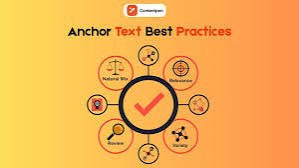
Search engine optimization has evolved significantly over the past few years. In 2026, ranking a website is no longer just about publishing quality content or building backlinks. Search engines now pay closer attention to how your pages connect with one another and how users navigate your website.
One of the most overlooked yet powerful ranking factors is internal linking. When implemented correctly, internal links create a logical content structure, guide visitors naturally, and help search engines understand the relationship between your pages.
This is where Google Search Central internal links descriptive anchor text best practices become essential for every website owner, blogger, and SEO professional.
Why Internal Links Matter More Than Ever
Think of your website as a city. Every page is a building, while internal links are the roads connecting them. Without proper roads, visitors struggle to reach important locations. Search engines experience the same challenge.
Internal links help Google discover new pages, understand content hierarchy, distribute authority throughout the website, and identify which pages deserve greater visibility.
In 2026, Google’s algorithms place greater emphasis on contextual relationships instead of isolated pages.
The Importance of Descriptive Anchor Text
Anchor text is the clickable text inside a hyperlink.
Many websites still use vague phrases such as:
- Click Here
- Learn More
- Read This
- Visit Page
Although these links function correctly, they provide little context about the destination.
Instead, descriptive anchor text tells both users and search engines exactly what they will find after clicking.
For example:
Instead of:
“Click here for our SEO guide.”
Use:
“Explore our complete guide to technical SEO optimization.”
This approach aligns perfectly with Google Search Central internal links descriptive anchor text best practices, making your website easier to understand for both humans and search engines.
Build Topic Clusters Instead of Random Links
Modern SEO focuses on topical authority rather than isolated keywords.
A well-structured website contains:
- Pillar pages
- Supporting articles
- Related resources
- Contextual internal links
For example, a digital marketing website might have one comprehensive page about SEO and multiple supporting articles covering technical SEO, keyword research, local SEO, content optimization, and link building.
Each article naturally links to the others whenever relevant.
This structure strengthens topical relevance and improves crawling efficiency.
Write for Readers First
Many websites still force keywords into anchor text.
That approach no longer works.
Natural writing is more valuable than keyword stuffing.
A sentence like:
“Understanding Google Search Central internal links descriptive anchor text best practices can help organize your website more effectively while improving user navigation.”
sounds natural because it flows within the discussion instead of interrupting it.
Google increasingly rewards content that feels authentic and useful.
Improve User Experience Through Smart Navigation
Visitors appreciate websites that answer their next question before they even ask it.
Imagine someone reading an article about technical SEO.
At the perfect moment, you provide links to related topics like:
- XML sitemaps
- Crawl budget
- Core Web Vitals
- Structured data
- Website architecture
These contextual recommendations keep readers engaged longer and encourage deeper exploration of your content.
Longer sessions often signal higher content quality.
Avoid Common Internal Linking Mistakes
Even experienced website owners make avoidable mistakes.
Some of the most common include:
- Using identical anchor text for unrelated pages.
- Adding dozens of unnecessary links on one page.
- Linking without considering user intent.
- Creating orphan pages with no incoming links.
- Over-optimizing keywords in every anchor.
A balanced internal linking strategy always prioritizes relevance over quantity.
Keep Your Content Fresh
SEO isn’t a one-time task.
Whenever you publish a new article, revisit older content and connect it naturally.
Likewise, update existing articles with links to your latest resources.
This ongoing maintenance improves crawl efficiency while keeping your content ecosystem connected.
Final Thoughts
As Google’s algorithms continue evolving in 2026, websites that prioritize structure, relevance, and user experience gain a significant advantage.
Following Google Search Central internal links descriptive anchor text best practices is not simply about adding hyperlinks. It’s about building meaningful pathways that help readers discover valuable information while enabling search engines to understand your website more effectively.
When every internal link serves a purpose and every anchor text clearly describes its destination, your website becomes easier to navigate, easier to crawl, and better positioned for sustainable organic growth.