
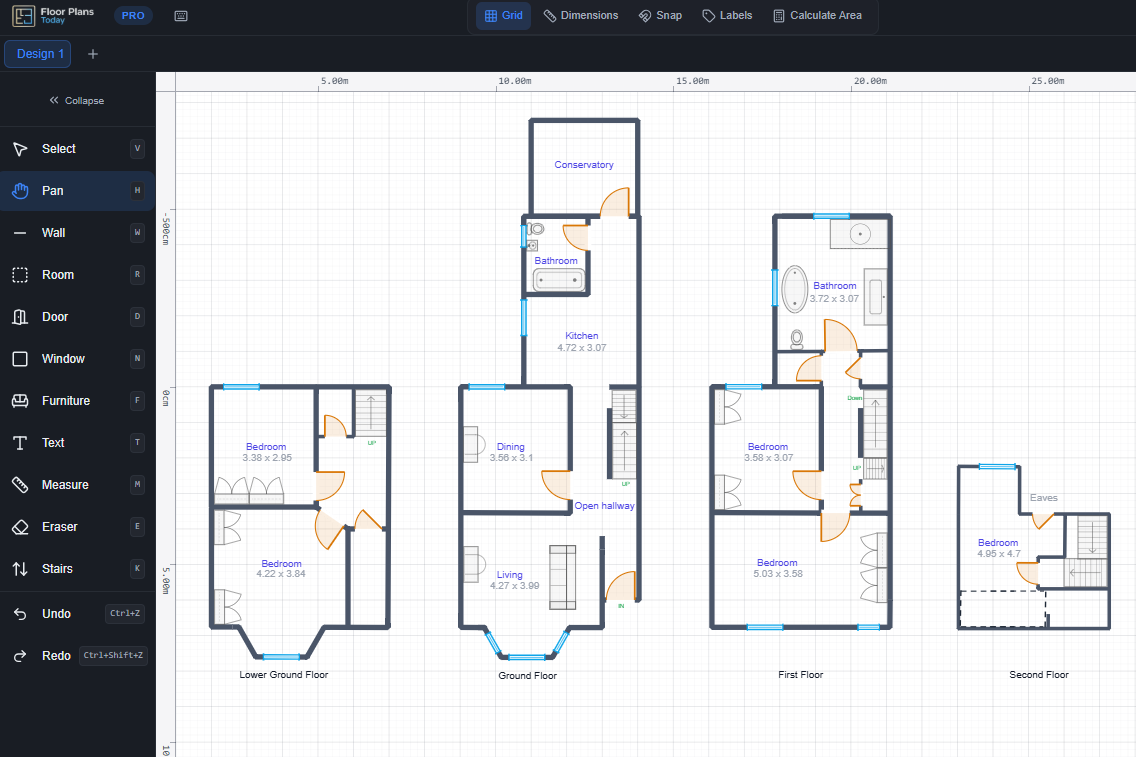
Creating a floor plan for a planning permission application is an important step in many residential construction, renovation, and extension projects. Planning authorities often require clear and accurate drawings to understand how proposed changes may affect a property and its surrounding environment. Whether you are building an extension, converting a loft, remodeling interior spaces, or constructing a new residential property, a well-prepared floor plan helps communicate your proposal effectively. Understanding the requirements, measurements, and layout details needed for planning applications can help reduce delays and ensure that submitted documents contain the necessary information.
What Is a Floor Plan for Planning Permission?
A floor plan is a scaled drawing that illustrates the arrangement of rooms, walls, doors, windows, and other structural elements within a building. For planning permission purposes, floor plans provide local planning authorities with a visual representation of existing and proposed layouts. These drawings allow reviewers to assess how a project may affect the property and determine whether it complies with relevant planning regulations.
Most planning applications require both existing and proposed floor plans. Existing plans show the current condition of the property, while proposed plans illustrate the intended modifications. Together, these documents provide a complete picture of the planned development.
When Is a Floor Plan Required?
Floor plans are commonly required for a variety of residential projects, including home extensions, loft conversions, garage conversions, internal remodeling, and new-build construction. Even relatively small projects may require detailed drawings if they alter the building’s structure, footprint, or overall layout.
Before beginning a project, property owners should review local planning authority requirements, as documentation standards may vary between jurisdictions. Accurate floor plans can help demonstrate compliance with local regulations and support a smoother application review process.
Planning Permission Floor Plan Requirements
Although requirements differ by location, most planning authorities expect floor plans to contain several key elements. Drawings should clearly identify room layouts, dimensions, walls, windows, doors, staircases, and other permanent features. Plans should also indicate the drawing scale used and distinguish between existing and proposed layouts.
- Accurate room dimensions
- Clearly labeled spaces
- Doors and window locations
- Wall positions and structural elements
- Scale information
- Existing and proposed layouts
- Consistent drawing presentation
For projects involving extensions or significant alterations, planning authorities often require both floor plans and supporting elevation drawings.
How to Measure Your Property Correctly
Accurate measurements form the foundation of any planning permission drawing. Before creating a floor plan, carefully measure each room and structural feature within the property. A tape measure or laser measuring device can help improve accuracy.
Begin by measuring the exterior dimensions of the building. Next, record the dimensions of each interior room, including wall lengths, window openings, door positions, and fixed installations. It is important to double-check measurements before transferring them to a drawing.
Many homeowners use digital tools and an online floor plan creator to organize measurements and generate accurate layouts that can be reviewed and revised before submission.
Step-by-Step Process for Creating a Planning Permission Floor Plan
1. Sketch the Existing Layout
Begin by creating a simple sketch of the property’s current layout. Include all rooms, hallways, staircases, windows, and doors. This initial sketch serves as the foundation for the final drawing.
2. Record Precise Measurements
Transfer all measurements to the sketch. Ensure room dimensions are accurate and clearly documented. Consistent measurements improve the reliability of the finished floor plan.
3. Add Structural Features
Include walls, support columns, built-in fixtures, and other permanent structural elements. These details help planning officers understand how the property is currently configured.
4. Show Doors and Windows
Clearly indicate the location and swing direction of doors, along with window positions. These elements are important when evaluating accessibility, lighting, and circulation.
5. Label Every Room
Each room should be clearly identified. Labels such as kitchen, bedroom, bathroom, office, and utility room improve readability and assist with application review.
6. Apply a Consistent Scale
Most planning applications require drawings to be produced at a recognized scale. Following local guidance helps ensure that submitted plans meet technical requirements.
7. Create Proposed Floor Plans
After documenting the existing layout, prepare a separate drawing showing the proposed changes. These may include extensions, room reconfigurations, conversions, or structural modifications.
When preparing a floor plan for planning permission, maintaining consistency between existing and proposed drawings helps reviewers identify modifications quickly.
Existing vs Proposed Floor Plans
Existing floor plans document the current state of the property, while proposed floor plans illustrate future changes. Planning authorities rely on both versions to assess the impact of development and determine whether approval requirements are satisfied.
For example, a proposed extension may increase the footprint of a property, alter room layouts, or introduce new access points. By comparing both plans, planning officers can better understand the project’s scope and implications.
Using Digital Floor Plan Tools
Digital floor plan software has simplified the process of producing planning application drawings. Modern tools allow users to create scaled layouts, adjust dimensions, and export drawings in commonly accepted formats.
Many homeowners researching the best floor plan software options look for tools that provide accurate measurements, intuitive editing features, and easy document export capabilities.
Digital solutions can also help users revise plans efficiently when project requirements change during the planning process.
Common Mistakes That Delay Planning Applications
Several common errors can lead to requests for revisions or additional documentation. Avoiding these mistakes can help improve the quality of your application.
- Incorrect room measurements
- Missing dimensions
- Unclear room labels
- Inconsistent drawing scales
- Omitting existing floor plans
- Poor-quality drawings
- Failing to show structural changes
Reviewing all drawings carefully before submission can help identify and correct potential issues.
Benefits of Accurate Floor Plans
Accurate floor plans provide several advantages throughout the planning process. They help planning officers evaluate proposals efficiently, reduce misunderstandings, and improve communication between property owners, contractors, architects, and local authorities.
Well-prepared drawings can also support budgeting, construction planning, and project coordination. Homeowners who understand how to draw a floor plan often find it easier to visualize design changes and communicate project objectives.
Preparing Floor Plans for Home Extensions
Home extensions represent one of the most common reasons for planning permission applications. Whether adding a rear extension, side extension, or additional living space, floor plans help demonstrate how the proposed work integrates with the existing property.
Extension drawings should clearly identify new walls, room layouts, access points, and structural modifications. Accurate dimensions and consistent scaling remain essential throughout the submission process.
Property owners who wish to create floor plan online free often begin with a simple layout and gradually refine the design as project requirements become clearer.
Conclusion
Creating a floor plan for planning permission applications requires careful measurement, accurate documentation, and attention to local requirements. By preparing clear existing and proposed layouts, property owners can present their projects effectively and support a more efficient review process. Whether planning a home extension, renovation, conversion, or new build, detailed floor plans remain an essential component of successful planning applications.
Frequently Asked Questions
What is a floor plan for planning permission?
A floor plan for planning permission is a scaled drawing that shows the layout and dimensions of a property to help planning authorities evaluate proposed development projects.
Do floor plans need to be to scale?
In most cases, planning authorities require floor plans to be drawn to an appropriate scale so measurements can be accurately assessed.
Can homeowners create their own planning permission floor plans?
Many homeowners prepare their own floor plans, provided the drawings are accurate, clearly labeled, and comply with local submission requirements.
Why are existing and proposed floor plans required?
Existing plans show the property’s current layout, while proposed plans illustrate intended modifications. Both are necessary for comparing changes.
What information should be included on a planning permission floor plan?
Floor plans should include room layouts, dimensions, doors, windows, structural elements, labels, and scale information.
How accurate should planning permission drawings be?
Planning permission drawings should be as accurate as possible, with dimensions and structural details clearly represented to support application review.
