
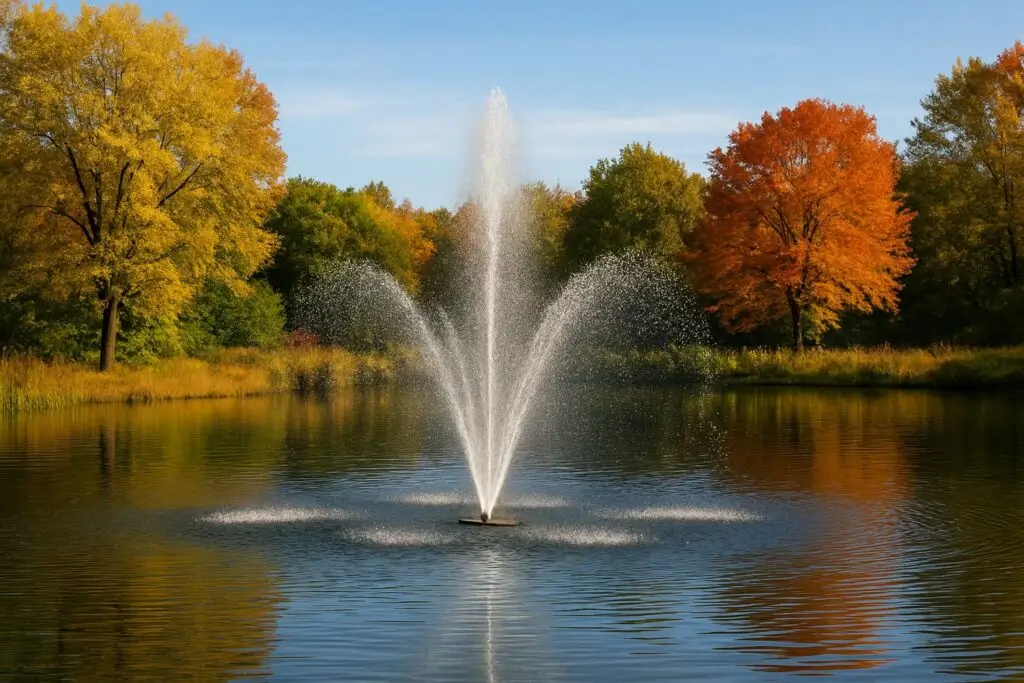
Water features have become an essential part of modern landscaping, combining aesthetics with functional benefits like aeration and circulation. One of the most effective options for medium to large water bodies is the 3 4 hp pond fountain, which provides strong water movement and visually appealing spray patterns.
In the middle of pond design and maintenance planning, the pond fountain is often selected for its balance of power and efficiency. These systems are widely used in residential estates, parks, and commercial landscapes where consistent water circulation is required. A well-installed pond fountain not only enhances visual appeal but also supports healthier pond ecosystems through improved oxygen exchange.
What Are Floating Fountains for Ponds?
Floating fountains for ponds are surface-mounted water circulation systems that draw water from below and spray it into the air. This movement improves oxygen levels, reduces stagnation, and helps control algae growth. According to pond system guides, floating fountains also enhance water quality by promoting surface agitation and circulation.
A key advantage of floating systems is their mobility and ease of installation. Unlike fixed fountains, floating fountains for ponds can be placed in different areas of a pond without complex construction work. This makes them a flexible solution for both decorative and functional water management.
Why 3/4 HP Fountain Systems Are Popular?
A 3 4 hp pond fountain is considered a mid-to-large power system suitable for ponds that require stronger circulation. These fountains typically generate higher water flow rates, allowing them to cover larger surface areas and create more impactful spray displays.
Industry data shows that 3/4 HP fountain systems are commonly used for ponds up to medium-large sizes where both aeration and visual performance are important.
Compared to smaller units, a 3 4 hp pond fountain provides:
- Stronger spray height and coverage
- Better oxygen distribution across the pond
- Improved control of stagnant water zones
- Enhanced visual presence in landscaping designs
These benefits make it a preferred choice for property owners looking to combine functionality with aesthetics.
How Floating Fountain Systems Work?
Floating fountains operate using a submerged pump that pulls water from beneath the surface and pushes it upward through a nozzle system. The water is then sprayed into the air in decorative patterns before returning to the pond.
This circulation process is important because it increases oxygen transfer and reduces thermal layering in the water. Studies on pond aeration systems highlight that surface agitation is one of the most effective ways to maintain water health in stagnant environments.
A floating fountains for ponds setup typically includes:
- Floating platform
- Submersible pump
- Spray nozzle system
- Electrical cable and anchoring system
The simplicity of this design makes it easy to install while still delivering strong performance.
Benefits of Floating Fountains in Ponds
Using floating fountains for ponds offers both environmental and visual advantages. One of the primary benefits is improved water quality through continuous movement and oxygenation.
Key benefits include:
- Reduced algae growth due to better circulation
- Improved oxygen levels for fish and aquatic life
- Prevention of stagnant water zones
- Enhanced landscape aesthetics
- Temperature regulation in surface water
In addition to ecological benefits, floating fountains also add a dynamic visual element, making ponds more attractive in both daytime and nighttime settings.
Choosing the Right Fountain Size
Selecting the correct fountain size is important for achieving optimal performance. A 3 4 hp pond fountain is generally suitable for medium to large ponds where smaller units may not provide sufficient coverage.
Guidelines for fountain sizing often consider pond surface area rather than depth, since aeration mainly occurs at the surface level.
A properly sized fountain ensures:
- Balanced spray height relative to pond width
- Efficient energy use
- Even water circulation
- Reduced risk of overspray or underperformance
Installation and Maintenance Considerations
Installing floating fountains is relatively straightforward, but proper placement is essential for best results. The fountain should be anchored securely to prevent drifting and positioned in a way that maximizes water circulation.
Regular maintenance includes:
- Cleaning pump intake screens
- Checking electrical connections
- Inspecting nozzles for debris
- Ensuring proper float stability
A 3 4 hp pond fountain requires routine care to maintain performance, especially in ponds with heavy organic matter or seasonal debris.
Conclusion
Floating fountains are an effective solution for improving both the health and appearance of decorative and functional ponds. Floating fountains for ponds provide a balanced combination of aeration, water quality improvement, and landscape enhancement, making them a valuable addition to modern pond management systems.
