
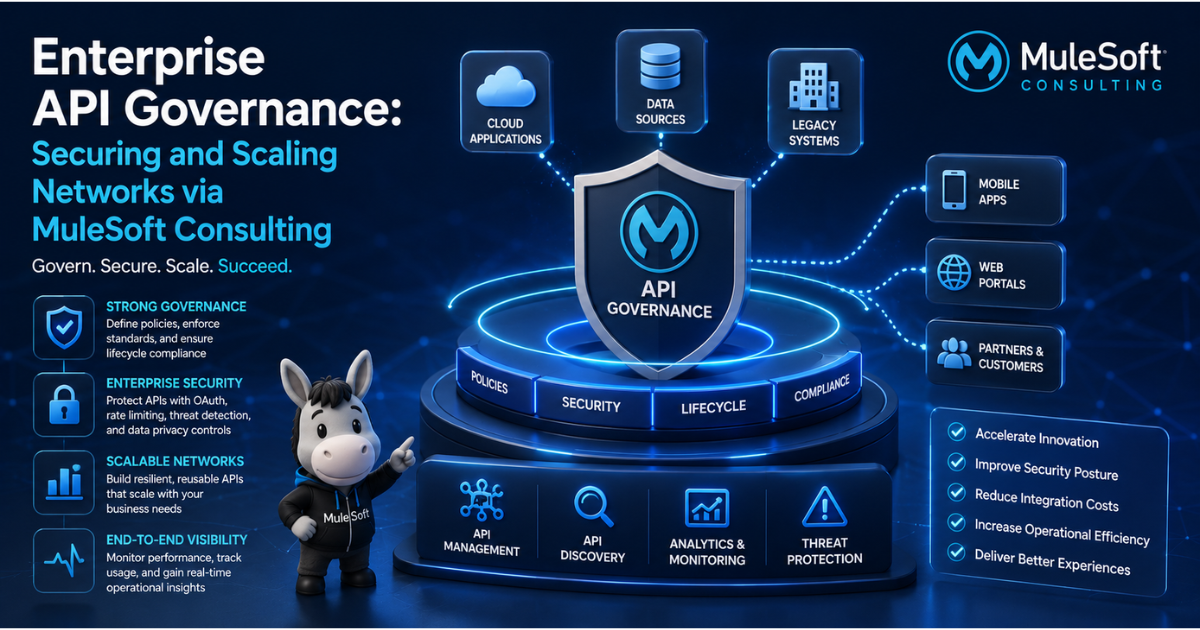
Modern enterprises rely heavily on Application Programming Interfaces (APIs). These assets connect vital business units, drive cloud applications, and fuel intelligent autonomous networks. However, rapid growth creates complex technical challenges.
Unmanaged endpoint expansion increases security risks and system vulnerabilities. Enterprises need structured design rules and solid enforcement to scale safely.
This requirement introduces the concept of enterprise API governance. Specialized consulting partners provide the technical path to build secure, scalable network architectures.
The True Scale of Modern API Complexity
A typical large corporation manages hundreds or thousands of distinct integration points. These interfaces span legacy on-premises servers, regional databases, and diverse public clouds.
Without uniform management, this landscape turns into a tangled, unmanageable architecture. Developers build duplicate pathways, which wastes infrastructure budget and complicates maintenance.
Security concerns multiply when organizations lack comprehensive oversight. Untracked endpoints lack standardized authentication protocols, making them prime targets for malicious actors.
According to the 2026 MuleSoft Connectivity Benchmark Report, 95% of organizations report facing major integration challenges across their modern IT systems. Furthermore, APIs now account for roughly 40% of corporate revenue for modern businesses. This financial reality makes strict security governance a critical commercial priority.
Core Pillars of Enterprise API Governance
Comprehensive governance involves more than enforcing rigid compliance checklists. It establishes an active technical framework that spans the entire asset lifecycle. Experienced MuleSoft Consulting Services guide organizations through establishing three fundamental structural pillars.
1. Standardized Design and Reusability
Good governance starts before engineers write any backend code. Consultants help architecture teams build centralized registries for API specifications.
- API-Led Architectural Layers: Engineers organize assets into specific tiers, including System, Process, and Experience layers. This structure separates core backend databases from public-facing applications.
- Reusable Asset Templates: Teams publish approved interface fragments and schemas within a shared portal like Anypoint Exchange.
- Uniform Schema Enforcement: Developers use standard modeling languages, like RAML or OAS, to guarantee consistent data structures across the company.
2. Zero-Trust Security Architecture
Securing an enterprise perimeter requires applying consistent defensive policies directly to every deployed endpoint. Teams must secure data both in transit and at rest.
- Edge and Resource Protection: Gateways apply standard security policies, including OAuth 2.0 validation, IP whitelisting, and strict rate limiting.
- Automated Threat Detection: Advanced management tools continuously inspect incoming traffic payloads to identify and block SQL injection attempts.
- Tokenization and Encryption: Gateways mask sensitive customer details and proprietary identifiers before passing payloads to secondary backend targets.
3. Comprehensive Runtime Observability
An unmonitored integration ecosystem is fundamentally insecure. Operations teams require immediate visibility into system performance metrics to resolve issues proactively.
- Distributed Transaction Tracing: Technical leads track execution paths across multiple microservices using correlated transaction identifiers.
- Anomalous Traffic Detection: Monitoring systems flag unexpected spikes in request volumes, identifying potential security breaches or code loops.
- Historical Compliance Reporting: Dashboards compile detailed logs to prove adherence to strict regulatory standards, such as GDPR or HIPAA.
The Technical Framework for Universal Governance
Modern organizations use varied computing environments, runtimes, and gateway software. Applying a uniform security policy across this fragmented footprint requires a universal management plane.
Professional consulting services install a central control tier using the Anypoint Platform. This setup provides comprehensive enforcement across all environments.
1. Deploying the Anypoint Flex Gateway
The ultra-lightweight Flex Gateway operates within containerized environments like Kubernetes, Amazon ECS, or local data centers. It controls non-Mule microservices with minimal performance latency.
Consultants configure these decentralized proxies to intercept incoming traffic, evaluate authorization states, and record usage logs. This design ensures that every asset conforms to global corporate security profiles, regardless of the underlying runtime language.
2. Automating Design-Time Inspections
Governance tools should identify structural compliance issues early in the delivery lifecycle. Anypoint API Governance automatically scans specification documents when developers check code into source control.
If a designer omits required HTTPS encryption tags or standard error-handling parameters, the system blocks publication to the registry. This automated verification eliminates human auditing delays and reduces vulnerabilities before deployment.
Overcoming Complex Governance Implementation Challenges
Deploying a comprehensive integration framework can introduce organizational friction and technical challenges. Experienced consultants use proven methodologies to overcome these typical deployment hurdles.
1. Addressing Performance Latency Concerns
Applying multiple security checks at the gateway layer can increase network response times. Security policies must execute efficiently to maintain optimal application speed.
Architects resolve performance drops by caching token validation responses close to the network edge. They also choose lightweight cryptography standards.
Engineers use non-blocking input-output profiles inside the gateway layer. This configuration allows the system to process high concurrent traffic volumes without exhausting server memory.
2. Solving the Universal Data Integration Obstacle
Many enterprises use older legacy endpoints that cannot process modern security tokens or JSON payloads. The 2026 Connectivity Benchmark Report notes that half of advanced digital assets operate in isolated silos without unified coordination. This fragmentation creates severe maintenance challenges.
Consultants use the gateway layer to normalize incoming traffic. The proxy validates modern OAuth tokens, sanitizes the payload, and converts the data into the older XML or SOAP formats that legacy systems require. This process protects old backend applications without requiring expensive source code modifications.
3. Shifting Organizational Culture toward a Center for Enablement (C4E)
Imposing rigid top-down compliance rules often causes software delivery delays. Developers may bypass standard procedures to meet aggressive project deadlines.
To prevent this issue, consulting teams help organizations build an internal Center for Enablement (C4E). This group shifts the focus from strict policing to active technical support.
The C4E builds reusable integration templates, creates shared code modules, and provides training paths. This approach encourages teams to adopt governance standards voluntarily because reuse reduces development timelines.
Real-World Security and Scaling Example
Consider a large, multinational retail banking institution operating across multiple countries.
1. The Original Operating Environment
The bank managed an uncoordinated integration footprint. Different engineering teams built custom data connections for credit scoring, profile management, and transaction histories.
The bank used over 400 unique integration points without centralized access controls. This architecture made it difficult to verify regulatory compliance, and audit preparations required weeks of manual effort.
2. Transitioning with Professional Consulting Services
The banking group engaged a partner specializing in MuleSoft Consulting to overhaul their integration model.
- Architecture Standardization: The consultants designed a three-tier API-led framework to decouple core account databases from consumer mobile web applications.
- Automated Policy Deployment: The team implemented standard security rules across all environments. This setup required multi-factor OAuth authorization, strict rate limiting, and automated data tokenization for sensitive citizen identification numbers.
- Universal Proxy Rollout: The bank deployed lightweight Flex Gateways in front of legacy on-premises web services, bringing old systems under the central management console.
- Continuous Design Validation: The team activated automated governance rules within the central portal to scan design files for compliance before deployment.
3. Resulting Operational Improvements
The bank established a fully secure, transparent integration ecosystem. Compliance teams use a single dashboard to audit access logs across all business units.
The automated validation tools cut new interface deployment timelines from months to days. This governance foundation allowed the bank to scale its digital services safely while maintaining regulatory compliance.
Preparing Governance Frameworks for the AI Era
- The rapid growth of artificial intelligence requires enterprises to adapt their integration management strategies. Autonomous systems and Large Language Models (LLMs) connect to corporate internal networks using standard interfaces. This trend introduces new technical challenges for security teams.
- The 2026 Connectivity Benchmark Report highlights this shift, showing that 88% of organizations are actively moving toward autonomous systems. However, 86% of IT leaders warn that without deep data integration, autonomous tools add more complexity than value. Unmanaged autonomous tools can easily overwhelm backend systems with high request volumes or leak sensitive operational data.
- Modern governance frameworks address these risks by treating AI agents as distinct, authenticated consumers. Implementation experts configure specialized security rules to inspect dynamic queries from AI tools.
- Gateways apply semantic rate limiting to prevent backend server overload and redact sensitive personal information before it reaches public LLM endpoints. This comprehensive approach allows companies to adopt advanced technology while maintaining total data control.
Conclusion
Enterprise API governance is a fundamental requirement for scaling modern digital infrastructure safely. Leaving endpoints unmanaged creates significant security risks and operational friction.
By working with certified MuleSoft Consulting partners, organizations can build structured, automated governance models that span their entire technology footprint. Using tools like the Anypoint Platform and Flex Gateway allows enterprises to secure sensitive data, ensure regulatory compliance, and build a scalable foundation for future AI expansion.
