
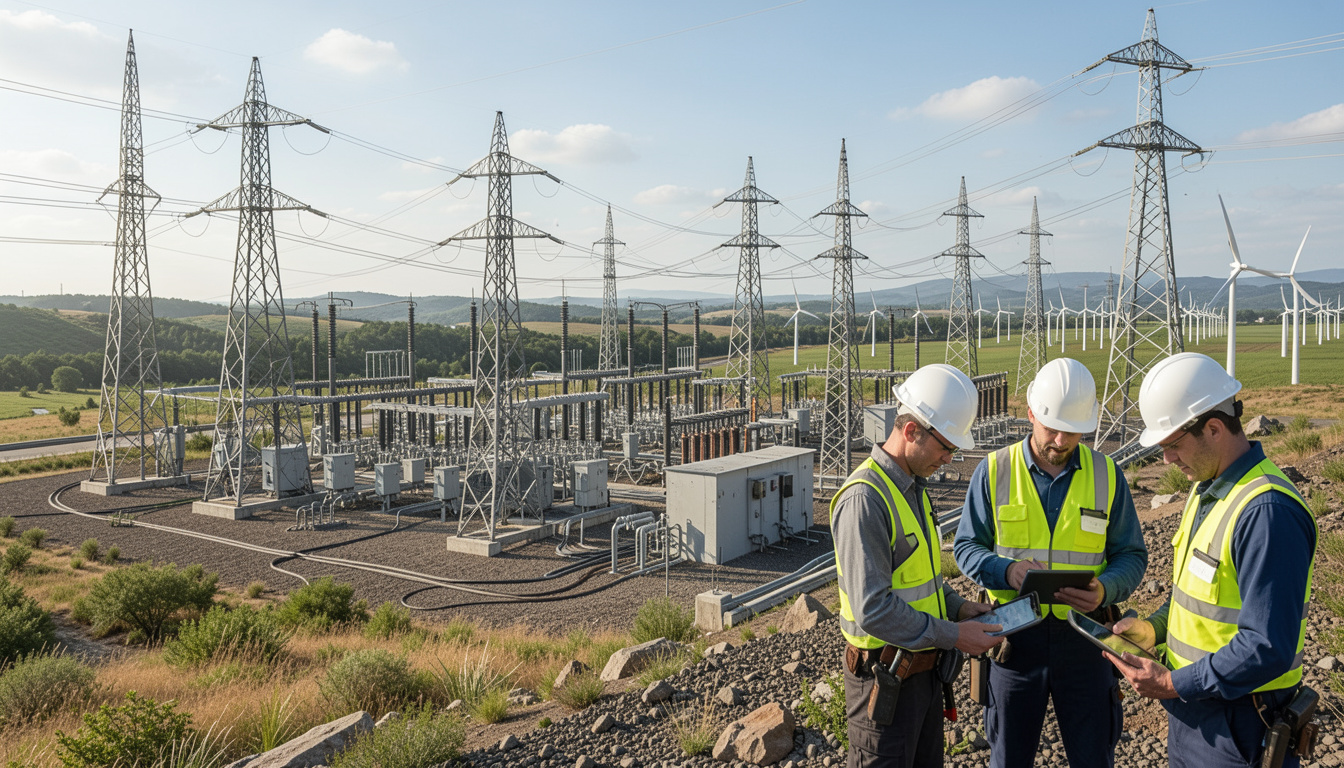
High-voltage substations are critical components of modern power infrastructure. They enable the transmission and distribution of electricity across vast distances while ensuring reliability, safety, and operational efficiency. As electrical networks continue to expand and integrate renewable energy sources, the complexity of substation projects has increased significantly. Successful project execution requires a deep understanding of engineering principles, industry standards, and advanced technologies.
From planning and design to commissioning and operation, engineers face numerous technical and logistical challenges. This article explores the most significant engineering challenges in high-voltage substation projects and highlights how effective planning and expertise can help overcome them.
1. Managing Complex Electric Substation Design Requirements
One of the primary challenges in high-voltage projects is developing an effective electric substation design that meets operational, safety, and regulatory requirements. Modern substations must accommodate increasing power demands while maintaining system reliability and flexibility.
Engineers must consider multiple factors during the design phase, including:
- Voltage levels and transformer capacities
- Equipment selection and layout optimization
- Future expansion requirements
- Environmental and site-specific constraints
- Grid interconnection standards
Balancing these requirements often involves trade-offs between cost, performance, and long-term scalability. Poor planning at this stage can lead to operational inefficiencies, increased maintenance costs, and expensive redesigns later in the project lifecycle.
2. Conducting Accurate Electrical Power System Studies
Before construction begins, comprehensive electrical power system studies are essential to evaluate system behavior under various operating conditions. These studies help engineers identify potential issues that could affect reliability and safety.
Key studies typically include:
- Load flow analysis
- Short-circuit studies
- Arc flash analysis
- Protection coordination studies
- Transient stability assessments
- Harmonic analysis
The challenge lies in accurately modeling complex electrical networks and predicting system performance under normal and fault conditions. As power systems become more interconnected and renewable generation increases, system dynamics become more difficult to analyze. Engineers must use advanced simulation tools and maintain accurate system data to ensure reliable study results.
Failure to perform thorough electrical power system studies can result in equipment failures, protection system malfunctions, and reduced network stability.
3. Site Constraints and Environmental Considerations
Every substation project presents unique site-related challenges. Geographic, environmental, and regulatory factors can significantly impact project planning and execution.
Common site constraints include:
- Limited land availability
- Difficult terrain conditions
- Flood-prone locations
- Seismic activity risks
- Extreme weather conditions
- Environmental protection regulations
Engineers must design facilities that can withstand local environmental conditions while minimizing ecological impact. This often requires specialized foundation designs, drainage systems, grounding solutions, and equipment protection measures.
Environmental approvals and compliance requirements can also extend project timelines. Therefore, early site assessments and environmental studies are crucial for successful project delivery.
4. Equipment Integration and Technology Compatibility
Modern substations incorporate a wide range of sophisticated equipment, including transformers, circuit breakers, protection relays, communication systems, and digital monitoring technologies. Ensuring seamless integration among these components is a significant engineering challenge.
The increasing adoption of digital substations introduces additional complexities such as:
- IEC 61850 communication implementation
- Cybersecurity requirements
- Intelligent Electronic Device (IED) integration
- Remote monitoring and control systems
- Data management and interoperability
Engineers involved in substation engineering design must ensure that all equipment functions reliably as a unified system. Compatibility issues between equipment from different manufacturers can create operational challenges and increase commissioning time.
A well-planned integration strategy helps improve reliability, reduce downtime, and enhance operational visibility throughout the substation lifecycle.
5. Protection, Safety, and Reliability Requirements
Safety remains one of the most critical aspects of high-voltage substation engineering. Electrical faults can cause severe equipment damage, extended outages, and safety hazards for personnel.
Engineers must develop robust protection schemes that rapidly detect and isolate faults while minimizing disruption to the power network. This requires careful coordination between protective devices, circuit breakers, and communication systems.
Key safety considerations include:
- Grounding system design
- Arc flash mitigation
- Equipment clearances
- Emergency shutdown procedures
- Personnel safety standards compliance
The design of electrical substation protection systems must account for future network changes and varying operating conditions. Achieving optimal reliability while maintaining selectivity and coordination remains a complex engineering task.
Advanced protection technologies and continuous monitoring systems are increasingly being used to improve system resilience and reduce operational risks.
6. Project Management and Future Expansion Planning
Beyond technical challenges, large-scale substation projects involve significant project management complexities. Multiple stakeholders, contractors, utility companies, and regulatory agencies must work together to achieve project objectives.
Common project management challenges include:
- Budget control
- Schedule management
- Supply chain disruptions
- Regulatory approvals
- Resource allocation
- Quality assurance
Additionally, substations are long-term infrastructure assets that must support future growth. Engineers must incorporate expansion capabilities into the initial design to avoid costly upgrades later.
Effective substation engineering design includes provisions for:
- Additional transformer bays
- Future transmission line connections
- Equipment upgrades
- Increased system capacity
- Emerging technology integration
Forward-thinking planning ensures that substations remain reliable and adaptable as power system requirements evolve over time.
Conclusion
High-voltage substation projects are among the most complex undertakings in the power industry. Successful implementation requires expertise in electric substation design, comprehensive electrical power system studies, and a strategic approach to the design of electrical substation infrastructure.
Engineers must navigate challenges related to system analysis, equipment integration, environmental conditions, protection requirements, and long-term expansion planning. By applying industry best practices and leveraging advanced technologies, organizations can develop reliable, efficient, and future-ready substations that support growing energy demands.
As electrical networks continue to modernize, the importance of high-quality substation engineering design will only increase, making experienced engineering partners essential for project success.
