
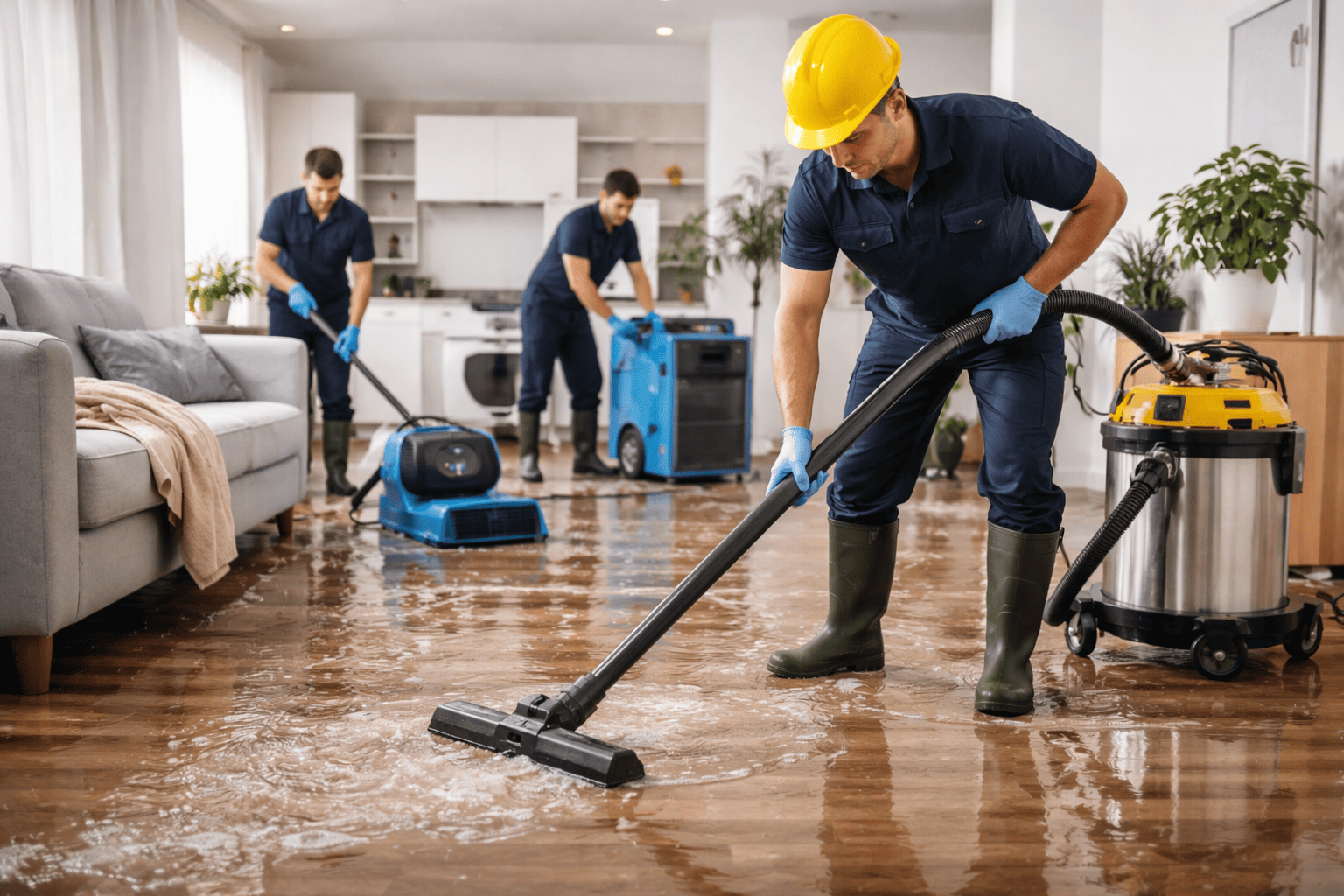
Water damage can happen suddenly; sewage backups, burst pipes, heavy rains, and appliance leaks can all quickly compromise a property’s structural integrity and safety. If not addressed right away, what frequently starts out as a minor incident can turn into an expensive restoration project. Emergency water damage restoration becomes crucial in this situation. In addition to preventing obvious damage, prompt action also stops hidden problems like electrical hazards, mold growth, and weakened foundations. Professional intervention during the first 24 to 48 hours is crucial and frequently determines whether a property can be fully restored or sustain irreversible damage. Homeowners and business owners can make prompt, well-informed decisions in stressful situations by knowing how rapid response operates.
Why Immediate Action Matters in Water Damage Events
Water spreads through flooring, walls, insulation, and even structural beams almost immediately after it enters a building. Porous materials, such as wood and drywall, begin to absorb moisture within hours, leaving them susceptible to deterioration and swelling. This moisture, if untreated, provides the ideal conditions for mold spores to grow, frequently in a matter of 24 to 72 hours.
Rapid water extraction and moisture control are the main goals of expert emergency water damage restoration services. This includes powerful pumps, industrial air movers, and dehumidifiers that are made to remove water far more efficiently than home appliances. The risk of long-term structural weakening decreases with the speed at which this process starts.
Hidden moisture is another important factor. Water can stay trapped in walls or under flooring even when surfaces seem dry. To find hidden damp areas, restoration specialists use thermal imaging equipment and moisture meters. Future problems like warping, paint damage, and persistent odor issues can be avoided by addressing these hidden pockets as soon as possible.
Preventing Mold Growth and Structural Decay
Mold infestation is one of the most dangerous effects of postponed water cleanup. Mold can grow rapidly after being exposed to moisture and prefers moist, dark conditions. Once it spreads, it poses health risks, particularly for those with allergies or respiratory conditions, in addition to damaging building materials.
Professionals use controlled drying methods and antimicrobial treatments in emergency water damage restoration to prevent mold growth. Compared to handling a large-scale mold remediation project later, this proactive approach is far more efficient and economical.
Another important issue is structural integrity. Water can erode metal fixtures, weaken wooden support beams, and jeopardize the stability of ceilings and floors. This may eventually cause structures to sag or, in severe situations, collapse. The building’s strength and safety are guaranteed by prompt drying and stabilization.
Protecting Property Value and Reducing Costs
Repair costs are often much higher when restoration is postponed. What could have been a straightforward drying procedure can become a complex reconstruction that includes mold removal, flooring installation, and drywall replacement. If damage is not promptly repaired, insurance claims also become more complex.
In addition to preserving property value, prompt professional restoration reduces business downtime and homeowner inconvenience. Early intervention lessens the need for complete replacements by preserving original building materials wherever possible.
Conclusion
Although the reaction to water damage is unpredictable, it doesn’t have to be. The best way to prevent long-term deterioration of a property is to take immediate action through emergency water damage restoration. Homeowners and businesses can avoid expensive repairs and health hazards by promptly addressing moisture, stopping the growth of mold, and maintaining structural integrity. Prompt restoration is about protecting the property’s future state and worth, not just cleaning it up.
