
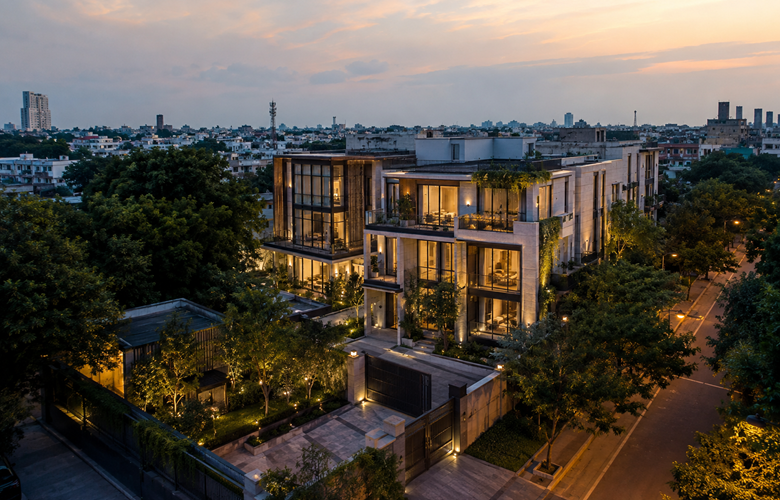
Kamla Nagar Luxury Real Estate: Delhi’s Mill-Land Revival Driving Premium Property Demand
For decades, the land behind Kamla Nagar’s busy markets carried the quiet weight of industrial history. The former Birla Cotton Mills, a fixture of North Delhi’s old economy, had stood largely idle while the city grew up around it. That chapter is closing. The roughly 10-acre site is now being redeveloped into a residential-led, mixed-use project by a consortium that includes Texmaco Infrastructure and Holdings, the US developer Hines, HDFC Capital and Conscient, according to the developers’ own announcements and filings with the Delhi Real Estate Regulatory Authority.
The plan matters beyond one address. North Delhi rarely sees large parcels open up for new construction. When a 10-acre plot in an established, land-starved pocket like Kamla Nagar changes use, it tends to reset expectations for the whole micro-market. This is less a single launch and more a test of whether old mill and industrial land can carry the next phase of Delhi’s premium housing.
North Delhi’s Land Scarcity and the Mill-Land Opportunity
North Delhi is one of the most built-out parts of the capital. Around Kamla Nagar, Civil Lines and the university belt, most plots were locked into use generations ago. New supply usually arrives as small redevelopments of older buildings, not as planned communities. That scarcity is the backdrop for why a single large parcel draws so much attention.
Mill and industrial land is one of the few release valves left. When a factory closes in a central location, its plot often holds more value as housing or mixed-use space than as idle industrial ground. Mumbai went through this with its textile mills in Lower Parel, which turned a tired industrial belt into one of the city’s priciest addresses over two decades. Delhi has had fewer such conversions, which makes each one consequential. The Birla Cotton Mills redevelopment puts a rare, contiguous site back into circulation in a pocket where buyers have had almost nothing new to consider.
Kamla Nagar’s Location Pull Around Delhi University
Kamla Nagar’s value has always been tied to what surrounds it. The University of Delhi’s North Campus is within walking distance, along with colleges such as Hindu, Hansraj and St. Stephen’s. The Vishwavidyalaya metro station on the Yellow Line connects the area to central and south Delhi, and the Hudson Lane and Kamla Nagar markets keep the neighbourhood busy through the day.
That mix supports steady housing demand. Faculty, students’ families and long-term residents compete for limited stock, which keeps rental interest firm in a way that newer, less established suburbs cannot always match. For buyers who weigh rental potential alongside lifestyle, proximity to a major university campus is a durable demand driver rather than a seasonal one. The caveat is that asking prices in well-known central pockets are already high, so yields depend heavily on the entry price a buyer secures.
What Institutional Backing Changes for the Project
The Kamla Nagar redevelopment is notable for who is involved, not only where it is. Hines is a global developer with a long record across office, residential and mixed-use assets since 1957. HDFC Capital brings institutional real estate funding, while Texmaco Infrastructure and Holdings, part of the Adventz Group, holds the land legacy and Conscient adds local development experience. That combination tends to raise the bar on design discipline, construction quality and delivery accountability compared with a typical standalone launch.
The residential phase is being brought to market as Elevate Delhi 7, planned as 3 and 4 BHK apartments across the site, with a large share of the land kept as open green space. For a market used to older walk-ups and piecemeal redevelopment, a planned high-rise community with structured amenities is a clear departure. Whether that translates into a price premium will depend on the final pricing, which had not been made public at the time of writing.
The Risks Buyers Should Weigh
A high-profile redevelopment is not a guarantee of returns. The project is at a pre-launch stage, so prices, floor plans and possession timelines are still to be confirmed. Redevelopment of legacy industrial land can also carry longer approval and construction cycles than a greenfield plot, and buyers should track the project’s Delhi RERA registration before committing.
Pricing is the other variable. Central North Delhi already commands strong rates, and a branded, amenity-led product will likely launch at a premium to the surrounding resale market. At a high entry price, rental yields can compress even when demand is healthy. The sensible approach is to treat first-mover positioning as one factor among several, alongside the developer’s delivery record, the registered carpet areas and the actual launch price.
Public reporting on the project strikes a measured note on timing. Institutional partners and a global developer improve confidence on delivery, but a pre-launch purchase still prices in a future that has to be built. That tension, between a strong sponsor group and an unbuilt product, is the real story for anyone weighing an early commitment.
The Wider Signal for North Delhi
The Birla Cotton Mills redevelopment will be judged on more than its brochure. If it delivers on time and finds its price, it could show that North Delhi’s older industrial pockets are viable ground for the city’s next phase of premium housing. If it stumbles on cost or timelines, it will serve as a reminder that legacy land carries legacy complications. For now, the more useful question for buyers and watchers is not whether Kamla Nagar is changing, but how quickly the rest of North Delhi’s idle parcels follow once the first modern tower goes up.
FAQ
What is being built on the former Birla Cotton Mills site in Kamla Nagar?
A roughly 10-acre, residential-led mixed-use development by Texmaco Infrastructure and Holdings, Hines, HDFC Capital and Conscient. The residential phase is marketed as Elevate Delhi 7, Kamla Nagar. with 3 and 4 BHK apartments.
Why is Kamla Nagar considered a strong residential location in North Delhi?
It is close to the University of Delhi’s North Campus, the Vishwavidyalaya metro station and established markets, which supports steady housing and rental demand in a land-starved part of the city.
What should buyers check before investing in a pre-launch Kamla Nagar project?
Confirm the Delhi RERA registration, the launch price and registered carpet areas, the developer’s delivery record, and the expected possession timeline before committing.
