
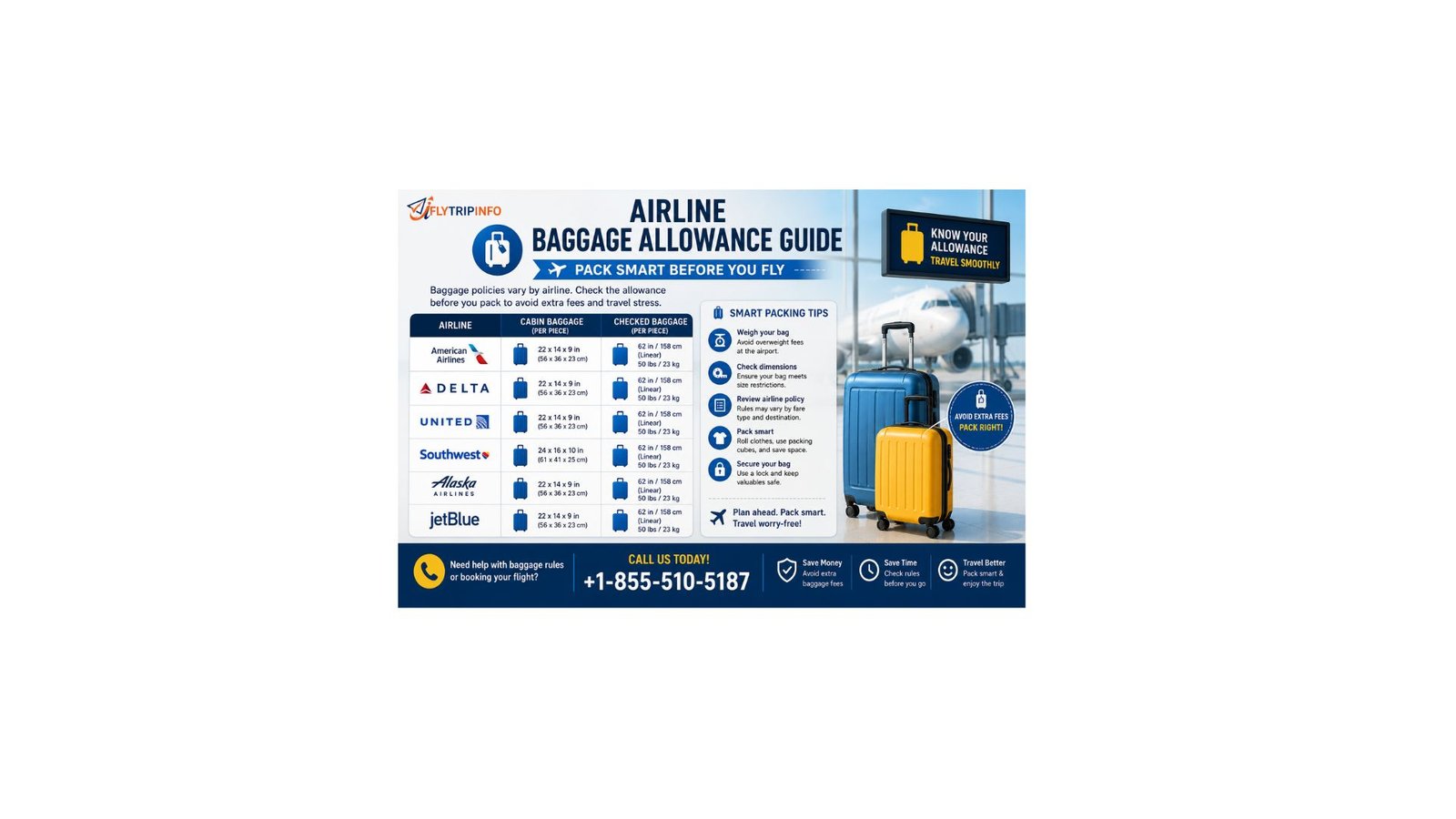
Packing for a flight is easier when you understand the airline baggage allowance before heading to the airport. Every traveler should know how baggage rules work because they can affect what you pack, how much you carry, and whether you pay additional fees.
This guide explains the basics of baggage allowance in simple language, helping you travel with confidence and avoid common packing mistakes.
What Is an Airline Baggage Allowance?
An airline baggage allowance is the amount of luggage a passenger is permitted to bring on a flight. It usually includes:
- Carry-on baggage
- Personal item
- Checked baggage
The exact allowance depends on your ticket, travel route, cabin class, and other booking conditions. Reviewing your baggage details before your trip can help prevent unexpected issues during check-in.
Types of Baggage You Can Bring
Carry-On Baggage
Carry-on luggage stays with you in the cabin. It should meet the size and weight requirements set for your flight. Most travelers use it for essential items such as clothing, electronics, travel documents, and medications.
Personal Item
A personal item is a smaller bag that fits beneath the seat in front of you. Common examples include:
- Laptop bag
- Small backpack
- Handbag
- Briefcase
Keeping your essentials in your personal item makes them easy to access throughout the journey.
Checked Baggage
Checked baggage is stored in the aircraft’s cargo hold. It is ideal for longer trips or when carrying larger items that cannot be taken into the cabin.
Always attach a luggage tag with your contact information before checking your bag.
Why Understanding Baggage Rules Matters
Knowing the baggage allowance before you travel can help you:
- Pack efficiently
- Reduce the risk of additional baggage charges
- Avoid repacking at the airport
- Speed up the check-in process
- Enjoy a smoother travel experience
A few minutes spent reviewing baggage rules can save time and unnecessary stress.
Tips for Packing Within Your Allowance
Here are some practical packing tips that work for almost every trip:
- Weigh your luggage before leaving home.
- Choose lightweight luggage to maximize packing space.
- Roll clothes instead of folding them.
- Keep important documents and valuables in your carry-on bag.
- Leave extra room for souvenirs or shopping.
- Use packing cubes to stay organized.
Simple planning can make your luggage easier to manage during your journey.
Items That Usually Require Special Attention
Some belongings may have separate travel guidelines, including:
- Sports equipment
- Musical instruments
- Medical devices
- Baby travel equipment
- Oversized luggage
If you’re carrying unusual or oversized items, it’s a good idea to check the applicable baggage policy before your travel date.
Common Baggage Mistakes to Avoid
Many travelers experience delays because of avoidable packing mistakes, such as:
- Assuming all tickets include the same baggage allowance.
- Forgetting to check baggage size restrictions.
- Packing prohibited items.
- Exceeding weight limits.
- Waiting until airport check-in to verify baggage rules.
Planning ahead helps you avoid these common problems.
Frequently Asked Questions
Does every flight include checked baggage?
Not always. Baggage allowance varies depending on your ticket and booking conditions.
Can baggage rules change?
Yes. Airlines may update baggage policies over time, so it’s best to review the latest information before your departure.
What happens if my bag is too heavy?
If your baggage exceeds the permitted limit, you may need to remove items or pay an additional baggage fee before your flight.
Should I measure my luggage before traveling?
Yes. Checking both the size and weight of your luggage helps ensure it meets the required limits.
Final Thoughts
Understanding your airline baggage allowance is one of the easiest ways to prepare for a stress-free journey. By knowing the difference between carry-on, personal items, and checked baggage, you can pack more efficiently and avoid surprises at the airport.
If you’re looking for general information about baggage policies and travel tips, this guide can serve as a starting point.
