
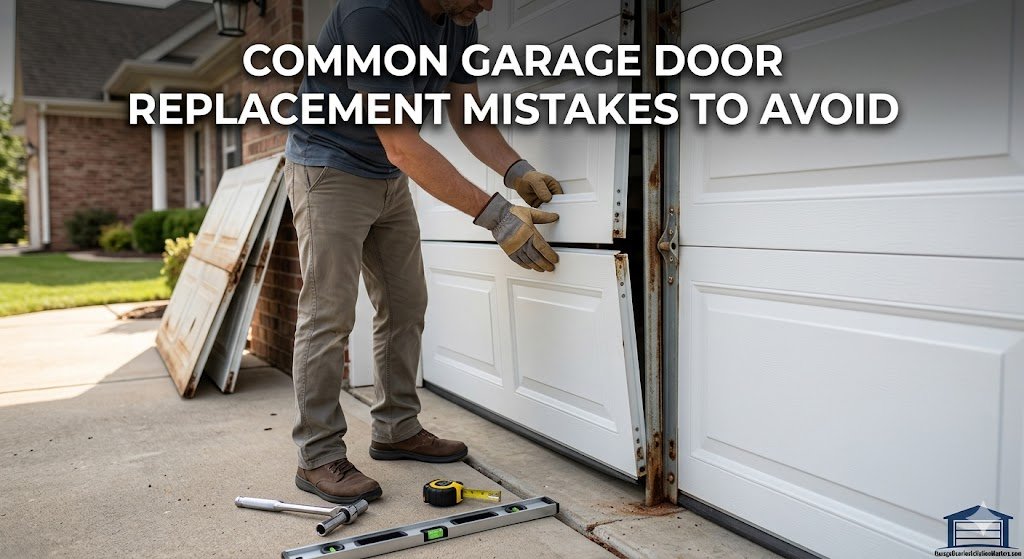
A garage door makes up a massive portion of your home’s exterior. Upgrading it is one of the smartest investments you can make, routinely yielding one of the highest returns on investment (ROI) of any home improvement project.
However, because a garage door is also the largest moving mechanical object in your home, replacing it isn’t as simple as swapping out an old front door or painting your shutters. It requires precision, specialized tools, and a solid understanding of structural mechanics.
Unfortunately, many well-meaning homeowners fall into predictable traps during the replacement process. Let’s take a candid look at the most common mistakes made during garage door replacements and how you can sidestep them to protect your property and your wallet.
1. Treating It Like a Casual DIY Project
Look, we get it—the satisfaction of fixing up your own home is real, and saving a quick buck is always tempting. But a garage door system is definitely not the place to try out your DIY wings.
The heavy-duty torsion springs that counterbalance the weight of the door operate under an immense, bone-crushing amount of tension. One slip of a winding bar can lead to severe structural damage or catastrophic physical injury. Beyond the safety hazards, an improperly balanced door will quickly burn out your opener and ruin your brand-new panels.
2. Reusing the Old Tracks and Hardware
When you buy a new garage door, it comes with its own specifically engineered tracks, springs, and cables. A classic mistake is assuming that because your old tracks “look fine,” you can save time by just hanging the new door on the old hardware.
Every garage door model has specific weight distributions, thickness levels, and operational tolerances. Forcing a new door to run on old, slightly warped, or mismatched tracks is a recipe for binding, noisy operation, and premature wear. If you are updating your home’s exterior, investing in a professional garage door installation plymouth mn ensures that every track, roller, and bracket is perfectly synchronized with your new door.
3. Forgetting About the Local Climate
It’s easy to get distracted by beautiful faux-wood finishes and elegant window layouts, but a garage door must be functional before it is fashionable. Homeowners frequently make the mistake of buying an uninsulated door to save on upfront costs, forgetting just how brutal regional weather can be.
If your garage is attached to your home, a lack of insulation acts as a giant thermal bridge, sucking freezing air into your house during winter and turning your garage into an oven during summer.
| Feature | Uninsulated Garage Door | Insulated (Polyurethane/Polystyrene) |
| Energy Efficiency | Poor (High thermal transfer) | Excellent (Lowers household energy bills) |
| Noise Reduction | Loud, hollow operation | Dampens street noise and vibrations |
| Durability | Prone to denting and warping | Highly rigid and impact-resistant |
4. Matching a New Door to an Outdated Opener
If your garage door opener is pushing a decade old, trying to pair it with a brand-new door is rarely a good idea. Modern doors often have different weight profiles, and an aging opener motor might struggle to lift the new load safely.
Furthermore, older openers lack modern security protocols (like rolling code technology) and smart-home integration features. If your existing unit is showing signs of lag or heavy strain, coordinating a comprehensive garage door opener replacement in Minneapolis, MN, alongside your new door will save you from paying for a separate service call just a few months down the road.
5. Failing to Measure Correctly
“Measure twice, cut once” applies heavily to garage doors. Homeowners often measure only the old door panel itself, completely overlooking the crucial surrounding clearances.
To install a garage door properly, you must take accurate account of:
- Sideroom: The space on both sides of the opening required to mount the vertical tracks.
- Headroom: The space between the top of the door opening and the ceiling (essential for the springs and the opener rail).
- Backroom: The depth of the garage required for the door to retract fully overhead.
Without these exact dimensions, you risk ordering a gorgeous door that physically cannot operate within your garage’s spatial constraints.
Pro Tip: Once your new door is successfully installed, remember that it still requires a little routine care. Annual tune-ups and professional balance checks prevent minor track misalignments from turning into major structural issues.
If you notice your newly installed door squeaking, shaking, or moving unevenly, skipping the guesswork and scheduling a certified checkup for garage door repair in Minnetonka will protect your investment and keep your home’s largest moving asset operating safely for years to come.