
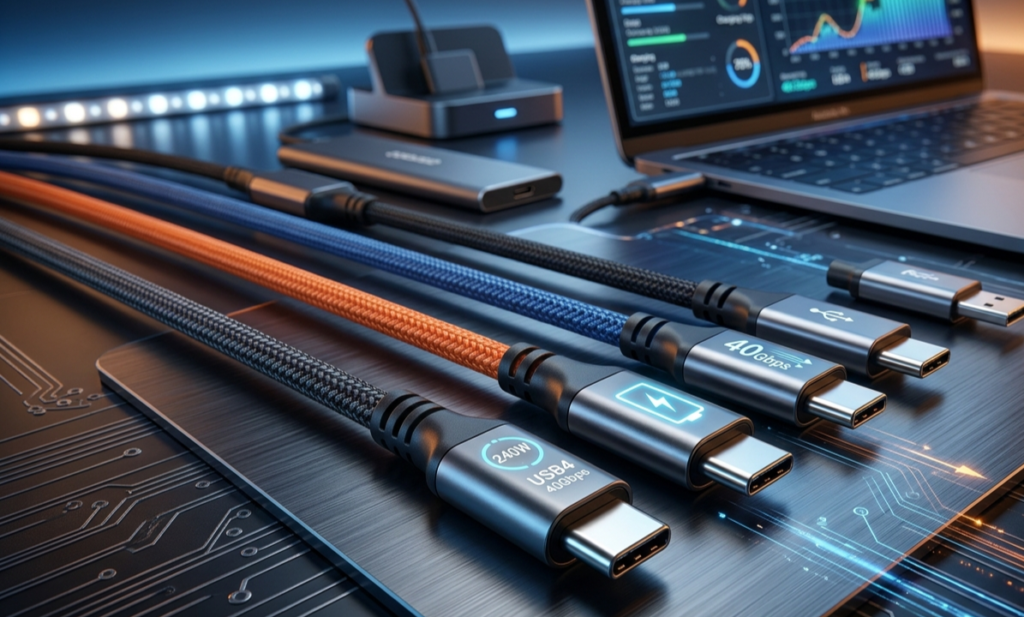
With the advent of the digital era, it is even more crucial now than ever to have USB cables. From charging the smartphone, transferring files, to adding peripherals, knowing the various types of USB cable available can save you time, money and frustration. This in-depth USB cable guide got every detail you need about the current USB connectivity norms in 2026.
Now you can understand what is the technology in a USB Cable.
In the last 20 years, USB cables have come a long way. Whether they were some of the chunkier connectors of days gone by, or today’s more streamlined, they’ll be on top of tech essentials. With all the choices you have, picking the right cable can be difficult. Find out the various standards and learn how to choose the right one for you with this USB cable guide.
USB technology is always advancing and upgrading its products to fit today’s technologies. With the USB-C connector, the way people talked about connectivity changed. Unlike with the other cables, USB-C cables do not need to be inserted in a specific direction since they are reversible.
The USB-C Cables are the New Standard.
Today, USB-C cables are the benchmark technology for connecting new devices. You’ll likely find a USB-C cables connection, whether in your smartphone, laptop, tablet or even gaming console. Thanks to the universal characteristics of the USB-C cable, it can be used for a wide variety of devices, making it an added convenience and efficiency.
However there are many benefits to using USB-C cables:
- With reversible design, you won’ t have to worry about inserting the card the wrong way around.
- Lower Power Delivery: Supports up to 128W of power
- Up to 10Gbps Data Transfer Speed (USB 3.1)
- Support for a variety of devices: Compatibility with many devices from various manufacturers.
- Easy installation: Better connector installation than previous standards
The great thing about investing in quality cables with the USB C end is that they contain greater than one functionality. It’s all possible in a single USB-C cables connection, enabling a USB-C cable to supply power, data transfer, and audio/video output.
Fast Charge USB Cables: You and your devices.
The current lifestyle is fast-paced and waiting for hours to charge the devices is not accepted. The invention of fast charging USB cables has changed the way that we charge up our devices. But charging speeds aren’t the same with all cables.
The idea behind fast charging USB cords is that they feature greater voltage and amperage that can be provided to the plugged-in device. A quality, fast charging USB cable and the optimum power adaptor transfer the ideal level of power for fast charging.
Here’s what to look for in fast charging USB cables:
- Power Rating: Purchasing cables with a rating of 60W or more for your smartphones and as high as 240W for laptops are worthwhile.
- Resistance and heat generation are minimised using Premium materials in Quality Materials
- Certification: Make sure the cable is certified to industry specifications such as PD (Power Delivery)
- Share of Appropriate Length: The longer the cables may yield less performance
This is a huge difference between the normal and the faster charging USB cables.Smartphones may be able to charge with a regular USB cable in 2 hours but with a good quality high-speed charging cable the time can be reduced to 45 minutes.
This is USB Data Transfer Cables Moving Your Files.
This is what USB Data Transfer Cables is about: Moving Your Files.
In addition to the charge, data transfer cables are essential for transferring data between devices. From backing up photos from your phone to transferring big videos from one computer to another to document syncing, there’s absolutely nothing that will come in handy more than reliable USB data transfer cables.
With today’s USB data transfer cables with either of the USB-C or USB4 standard, the data transfer speeds are impressive:
- USB 3.0: Up to 5Gbps
- USB 3.1: Up to 10Gbps
- USB 3.2: Up to 20Gbps
- USB4: Up to 40Gbps
For large files, the difference in speed will be significant. It could take less than 30 seconds to transfer a 10GB video file known as a megavideo via USB4 USB data transfer cables, but several minutes using older USB 2.0 cables.
Market Leader’s Fifth Edition: USB4: The Future of Connectivity.
USB4 is the cream of the crop for USB technology in 2026. It is developed with Thunderbolt 3 technology and is the most speedy and flexible USB technology ever produced. For maximum future proofing, opt for USB4 cables.
When used with a USB4 USB cable, you can experience:
- 40Gbps Transfer Speed: Ultra-fast 40Gbps transfer speed which is double of that of USB 3.2.
- 240W Power Delivery: Charges even the powerful laptops if they are.
- Thunderbolt Devices: Compatible with THUNDERBOLT devices
- Mixed protocol support, capability to process video, data and power at the same time.
- For future proofing; made to last for years.
Even though USB4 cables are pricier than regular USB-C cables, in case you have multiple modern gadgets or work with large files on a daily basis, the money invested will be worthwhile.
Selecting the correct type of USB cable for your requirements.
Given the great number of possibilities, it is essential to choose the right kind of USB cable that suits your needs:
For Daily Users:
A good USB-C cables cable is ideal for the average consumer, such as for charging and transferring basic files.
For Content Creators:
Buy Quality and Fast Cables for USB charging as well as high speed data transfer. Fast charging and all files are transferred in no time.
Go for quality cables and avoid the cheap ones.
Not all USB cables are created equal. The risks of cheap and knock-off cables are:
- Risk of Fire: Cables of poor quality are prone to becoming hot when charging
- Devices getting damaged: Some devices could get damaged due to improper power supply.
- Data lost: The quality of the USB transfer cables can make a difference, and result in the loss of data if it is substandard.
- Takes a lot of replacing parts: They are easily damaged and need regular maintenance.
Your devices and optimal performance depend on investing investment in the USB cables of good quality and certified brand.
Conclusion
In 2026, knowing even the new arrivals of this USB-C cable is a necessity. From quick charging USB cables to powerful USB data transfer cables, there’s a cable for each occasion. If you’re looking for the maximum performance or versatility, then USB4 is the king.
Choose USB cables wisely by considering quality, compatibility, and your requirements. Guide yourself through these unanswered questions with ease to enjoy faster charging, quicker transfers and seamless connectivity across all your devices, with this USB Cable Guide.
