
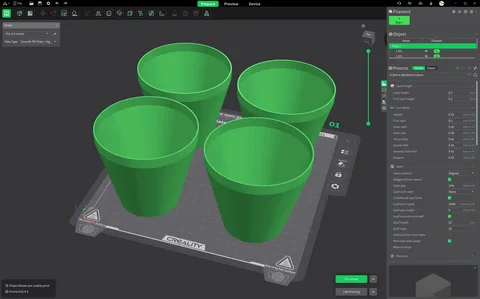
Choosing the right slicing software is one of the most important decisions for achieving high-quality 3D prints. Many users often compare creality print vs creality slicer to determine which software best suits their printing needs. While both programs are developed for Creality 3D printers, they offer different features, interfaces, and levels of functionality.
Understanding the differences between these two applications can help beginners and experienced makers improve print quality, reduce failures, and streamline their workflow. This guide explores every major aspect of creality print vs creality slicer to help you make an informed decision and achieve better 3D printing results.
Understanding Creality Print and Creality Slicer
Creality Slicer was one of the earliest slicing programs offered by Creality. It is based on the popular Cura engine and provides users with a familiar interface for preparing 3D models for printing. The software allows users to import STL files, adjust print settings, generate supports, and create G-code files for compatible printers.
Creality Print, on the other hand, is Creality’s newer slicing platform designed to offer a more modern and integrated experience. It includes improved printer management, enhanced user interfaces, cloud connectivity features, and optimized profiles for newer Creality machines. When comparing creality print vs creality slicer, the newer software represents Creality’s effort to create a more comprehensive printing ecosystem.
User Interface and Ease of Use
One of the most noticeable differences in the creality print vs creality slicer comparison is the user interface. Creality Slicer follows the traditional Cura-style layout with menus, settings panels, and basic visualization tools. Many users appreciate its simplicity because it feels familiar and easy to navigate.
Creality Print introduces a cleaner and more modern design. The software organizes settings more efficiently and offers a smoother workflow for printer setup and model preparation. Beginners often find Creality Print easier to learn because important features are presented in a more intuitive manner. The improved visual design helps users quickly locate tools and settings without feeling overwhelmed.
Print Quality and Slicing Performance
Print quality is often the deciding factor when evaluating creality print vs creality slicer. Creality Slicer delivers reliable results because it is based on Cura’s well-established slicing engine. Users can access a wide range of settings and fine-tune their prints for detailed projects.
Creality Print has made significant improvements in slicing algorithms and profile optimization. Many newer Creality printers come with pre-configured profiles that help users achieve excellent print quality with minimal adjustments. The software also benefits from ongoing updates that improve support generation, layer processing, and print speed optimization. For many users, Creality Print provides slightly better out-of-the-box results, especially with modern Creality hardware.
Features and Customization Options
Feature availability is another important aspect of the creality print vs creality slicer discussion. Creality Slicer includes essential slicing features such as support generation, infill adjustments, layer height control, temperature settings, and print speed customization. These tools are sufficient for most hobbyists and beginner users.
Creality Print expands upon these capabilities by offering additional tools for printer management, model repair, and cloud integration. Users can access advanced visualization features, monitor print jobs more effectively, and benefit from enhanced compatibility with newer Creality devices. While Creality Slicer remains highly customizable, Creality Print provides a broader feature set that appeals to users seeking a more complete workflow solution.
Compatibility and Hardware Support
Printer compatibility is a key factor when deciding between creality print vs creality slicer. Creality Slicer supports a wide range of Creality printers and many third-party machines. Since it is built on Cura technology, users often find it easier to configure for custom printer setups.
Creality Print is specifically optimized for modern Creality hardware. New printer releases typically receive support within Creality Print before older software platforms. Users with printers such as the Ender series, K1 series, and other recent models often experience better integration and performance when using Creality Print. The software is designed to take full advantage of the latest hardware capabilities and firmware updates.
Which Software Is Best for Your Needs?
The answer to the creality print vs creality slicer question largely depends on your experience level and printing goals. Beginners who want a straightforward setup process and optimized profiles may find Creality Print to be the better option. Its modern interface and integrated features make it easy to start printing quickly.
Experienced users who prefer extensive customization and are already familiar with Cura-based workflows may continue to enjoy Creality Slicer. It provides a proven slicing environment with reliable performance and a familiar layout. However, many advanced users are gradually transitioning to Creality Print because of its continuous development and enhanced feature set.
Conclusion
The comparison of creality print vs creality slicer shows that both programs are capable tools for preparing high-quality 3D prints. Creality Slicer remains a dependable option thanks to its Cura-based foundation, simple interface, and extensive customization features. It continues to serve many users who value stability and familiarity.
Creality Print, however, represents the future direction of Creality’s software ecosystem. With its modern design, improved printer integration, optimized profiles, and advanced features, it offers a more streamlined experience for many users. If you own a newer Creality printer or want access to the latest developments, Creality Print is often the stronger choice. Ultimately, experimenting with both programs can help you determine which software best supports your workflow and leads to greater 3D printing success.
