
Increasingly, communities are interested in recycling plastic waste and how to do so continues to influence their waste management and landfill reduction efforts. There are many people who put containers in recycling bins without a complete understanding of what happens after they put them out. The journey from use to disposal and back to reuse includes sorting, processing and manufacturing activities which turn waste into a useful product. In the process, the technology recycling systems contribute to increasing efficiency and material recovery at recycling facilities.
This process can be understood, and by then consumers can make informed decisions that can improve the recycling results and better manage resources.
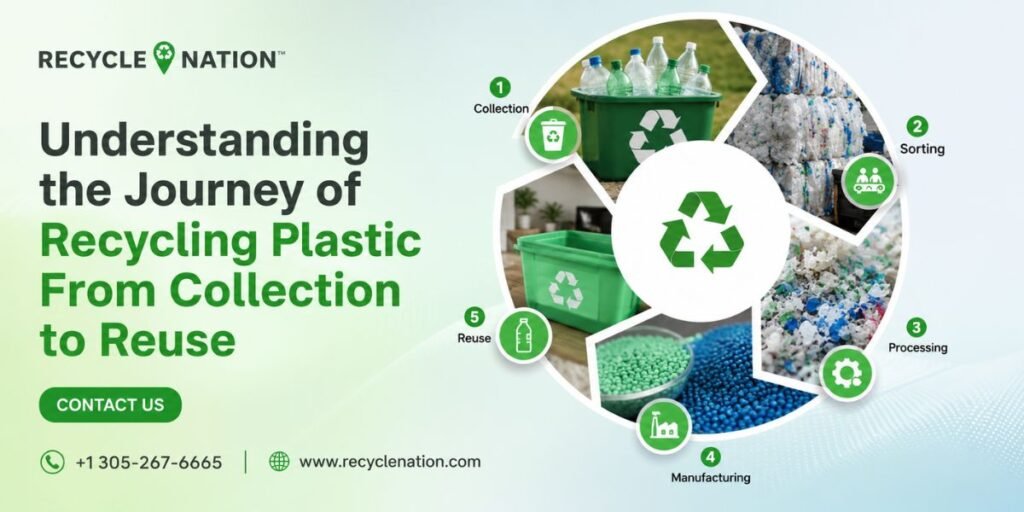
How Plastic Collection Starts the Recycling Process
The first and foremost step to recycle plastic waste into recycled material is to collect it. Plastics are collected from residential and commercial collectors daily through municipal programs, commercial services and drop-off centers. Good collection systems minimise contamination and quality of materials that go into the recycling centre. Effective collection systems help to facilitate recycling plastics and provide valuable data, frequently featured in recycling news reports.
Residential collection programs and participation
Household recycling programs promote residents separating materials before dropping them off at the recycle centre, which makes the recycle centre cleaner. Regular participation enhances the recycling statistics and contributes to the overall recycling plastic targets. Having clear information minimizes contamination that may disrupt the processing process. Homeward sorting boosts the benefits along the recycling stream.
Commercial and institutional collection efforts
There are many items that are made that can be recycled at a business such as packaging, shipping supplies and daily business waste. Technology recycling programs are assisted by organized collection programs, which enable processing of greater quantities of materials at an efficient rate.
Sorting Systems That Separate Recyclable Materials
Once collected, materials are transported to sort facilities where various recyclable materials are sorted. Good sorting ensures plastics are delivered to the right processing streams for re-use. Accurate sorting with modern equipment and increasing volumes of recycling. The effective sorting enables the recycling operations of plastic to be carried out efficiently, and the contamination to downstream operations is reduced.
Automated sorting technology and equipment
Advanced sorting systems use sensors, scanners and mechanical separation to detect materials. The technology recycling tools help to increase material recovery rate and improve processing speed. As waste volumes increase, automation supports the facility to keep track without compromising accuracy. Improved sorting improves recycling performance in many areas.
Separating plastics from other recyclables
Plastics are sorted from other materials (recycling paper, metals, glass) prior to further processing at facilities. The accurate separation yields better product quality and prevents contamination during the production process. Sorting enables separate recycling streams for each material stream. Successful recycling plastic outcomes can be achieved by cleaner outputs.
Processing Plastic Into Reusable Raw Material
After sorting, the plastics are processed to be used for production purposes. Facilities clean, shred and process materials to reuse. The value and usefulness of plastic products that are recycled depends directly on their processing quality. By handling carefully to maximize the benefits of recycling plastic across industries.
Cleaning and contaminant removal
Plastics need to be cleaned of labels, food residue and foreign materials before they can be used in manufacturing processes. Cleaning enhances product uniformity and minimizes defects. Processing facilities use efficient procedures to ensure quality standards. Cleaner materials facilitate better end-use applications.
Shredding and pellet production
Shredded forms of processed plastics, known as flakes, are sometimes ground into pellets, which are then fed into plastics manufacturers. Many new products are made from these pellets, which are used as raw material in those products. Production efficiency and product performance are improved with consistent pellet quality. As one of the key components of the recycling plastic value chain, reliable processing adds to the supply chain.
Manufacturing New Products From Recycled Plastic
When manufacturers process recycled plastic into valuable products, it becomes valuable. Recycled content is increasingly being used in industrial products, packaging and consumer products. There is demand for recycled materials, which helps justify further investment in recycling facilities. Product development helps to put recycling of plastic to use.
Packaging and consumer product applications
Containers and packages and other household products are manufactured using recycled plastic by many manufacturers. This technique helps reduce the need for virgin materials and aids in conservation of resources. Continued demand for recycled content leads to more use. Favorable markets are essential to developing robust recycling systems.
Industrial and construction uses
Plastics that have been recycled are also used in building materials, transportation and industrial parts. The additional demand for recovered materials is generated through these applications. Wider markets increase recycling economics and help to address sustainability issues. The more the uses are diverse the more valuable are the recycling programs.
The role of Technology in modern Recycling systems.Role of technology in modern Recycling systems.
The Role of Technology in Modern Recycling Systems
The way facilities collect, sort and process recyclable materials is constantly improving. New systems help to make the recycling process more efficient and reduce waste in the recycling chain. Technologies that promote investment in recycling solutions help achieve higher recovery rates and quality of materials. However, the recycling market is growing and innovation is still significant.
Data tracking and operational improvements
Data systems are used for facilities monitoring performance and processing opportunities. They facilitate the operational improvements and reporting more accurately of recycling stats. Improved information enables organisations to optimise recycling programmes. Decision making is based on data and optimizes resource recovery.
Emerging innovations in recycling infrastructure
The potential for recycling continues to grow with the advent of new technologies for various materials. More efficient equipment enhances the sustainability of the business. Continuous development ensures facilities can respond to evolving waste streams. The strength of recycling operations in the future will be enhanced by innovation.
FAQs
What happens to plastic after it is collected for recycling?
Facilities will sort, clean, process and purify materials into raw materials used by the manufacturers for new applications.
Why is contamination a problem in recycling programs?
Contaminated materials make processing less efficient or even make the material unsuitable for recycling.
How does technology improve recycling operations?
Modern systems boost sorting accuracy, enhance processing efficiency and offer information for operational improvements.
Conclusions
Recycling plastic is more than just putting plastic into a recycling bin. The processes include collection, sorting, processing and manufacturing, all of which add to the process of turning waste into useful products. As technology recycling keeps developing and communities monitor progress with accurate recycling information, recycling systems are more efficient for resource conservation and environmental reduction. This process of understanding enables people to gain insight into the relationship between their daily activities and their broader sustainability objectives.
