
Introduction
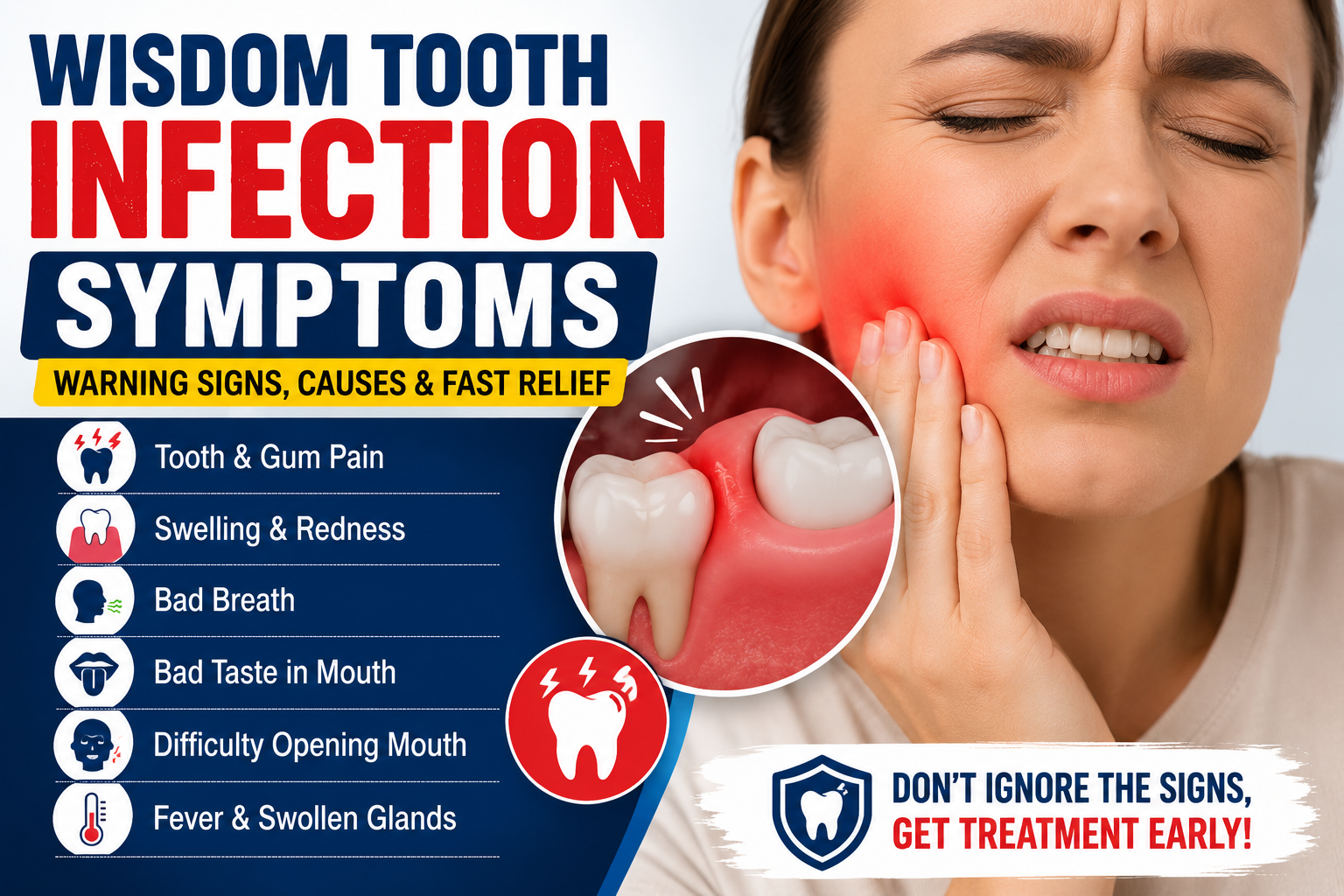
A wisdom tooth infection can quickly turn from mild discomfort into severe pain that affects your daily life. Many people ignore early symptoms, assuming the pain will disappear on its own. Unfortunately, untreated wisdom tooth infections can lead to serious dental complications, including abscesses, gum infections, and damage to nearby teeth.
Wisdom teeth are the last set of molars to emerge, usually between the ages of 17 and 25. Because these teeth often don’t have enough room to grow properly, they can become impacted, partially erupted, or trapped beneath the gums. This creates an ideal environment for bacteria to accumulate and cause infection.
In this guide, you’ll learn the top 10 wisdom tooth infection symptoms, how to stop wisdom tooth pain, available treatment options, prevention strategies, and answers to common questions.
What Is a Wisdom Tooth Infection?
A wisdom tooth infection occurs when bacteria enter the tissue surrounding a wisdom tooth. This often happens when a wisdom tooth is partially erupted, leaving an opening where food particles and bacteria can become trapped.
The condition, commonly known as pericoronitis, can range from mild gum inflammation to a serious infection requiring immediate dental treatment.
Top 10 Wisdom Tooth Infection Symptoms
Recognizing the early signs of an infected wisdom tooth can help prevent complications.
1. Persistent Tooth Pain
One of the earliest symptoms is continuous pain near the back of the mouth. The discomfort may be mild initially but often worsens over time.
Common signs include:
- Throbbing pain
- Sharp pain when chewing
- Pain that radiates to the jaw
2. Swollen Gums Around the Wisdom Tooth
Inflamed or swollen gum tissue surrounding the wisdom tooth is a common sign of infection.
You may notice:
- Redness
- Tenderness
- Puffy gums
Swelling can make brushing and eating uncomfortable.
3. Jaw Pain and Stiffness
As the infection progresses, inflammation may spread into the jaw muscles.
Symptoms may include:
- Difficulty opening the mouth
- Jaw tenderness
- Pain when speaking or chewing
4. Bad Breath (Halitosis)
Bacteria trapped around an infected wisdom tooth can produce foul-smelling compounds.
Persistent bad breath that doesn’t improve after brushing may indicate an underlying infection.
5. Unpleasant Taste in the Mouth
Many patients report a bitter or metallic taste caused by pus draining from the infected area.
This symptom often accompanies swelling and pain.
6. Difficulty Chewing Food
Inflamed gum tissue can make chewing painful.
People with wisdom tooth infections may avoid certain foods due to discomfort and sensitivity.
7. Swollen Lymph Nodes
Your body’s immune system responds to infection by enlarging nearby lymph nodes.
You may notice tenderness under:
- The jaw
- The neck
- Around the ears
8. Ear Pain
The nerves surrounding wisdom teeth are closely connected to facial structures.
As a result, infection-related pain may radiate toward the ear even when no ear problem exists.
9. Fever
A fever may indicate that the infection is becoming more severe.
Seek dental care promptly if wisdom tooth pain is accompanied by:
- Fever
- Chills
- Fatigue
10. Pus Around the Tooth
Pus is one of the clearest signs of an active infection.
Symptoms include:
- White or yellow discharge
- Swelling
- Foul odor
- Severe pain
Immediate dental treatment is recommended.
What Causes Wisdom Tooth Infections?
Several factors increase the risk of infection.
Impacted Wisdom Teeth
When wisdom teeth cannot fully emerge, bacteria can become trapped beneath gum tissue.
Poor Oral Hygiene
Food particles and plaque buildup create an environment where harmful bacteria thrive.
Partially Erupted Wisdom Teeth
A flap of gum tissue covering part of the tooth can trap debris and bacteria.
Crowded Teeth
Limited space in the jaw may cause wisdom teeth to grow at an angle, increasing infection risk.
How to Stop Wisdom Tooth Pain
While professional dental treatment is often necessary, several methods may provide temporary relief.
1. Warm Salt Water Rinse
Salt water helps reduce bacteria and soothe inflamed gums.
How to Use
- Mix one teaspoon of salt in warm water.
- Swish for 30 seconds.
- Repeat several times daily.
2. Cold Compress
Applying ice can reduce swelling and numb pain.
Instructions
- Wrap an ice pack in a cloth.
- Apply to the cheek for 15–20 minutes.
- Repeat as needed.
3. Over-the-Counter Pain Relievers
Non-prescription medications may help reduce discomfort.
Examples include:
- Ibuprofen
- Acetaminophen
Always follow label directions.
4. Maintain Good Oral Hygiene
Gentle brushing and flossing help remove bacteria around the affected area.
Use a soft-bristled toothbrush to avoid irritating swollen gums.
5. Stay Hydrated
Drinking water helps wash away food particles and bacteria.
Avoid sugary beverages that can contribute to bacterial growth.
6. Avoid Trigger Foods
During an infection, avoid:
- Hard foods
- Crunchy snacks
- Extremely hot foods
- Sticky candies
Soft foods are often easier to tolerate.
Professional Wisdom Tooth Infection Treatments
Home remedies may provide temporary relief, but they do not eliminate the underlying infection.
Antibiotics
Dentists may prescribe antibiotics to control bacterial infections.
Common options include:
- Amoxicillin
- Metronidazole
- Clindamycin
Professional Cleaning
Your dentist may clean the area beneath the gum flap to remove trapped debris and bacteria.
Drainage of Abscess
If pus has accumulated, drainage may be necessary.
Wisdom Tooth Extraction
Many infected wisdom teeth are eventually removed to prevent recurring problems.
Extraction is often the most effective long-term solution.
When Should You See a Dentist?Seek immediate dental care if you experience:
- Severe pain
- Fever
- Facial swelling
- Difficulty swallowing
- Difficulty breathing
- Pus discharge
Delaying treatment may allow the infection to spread.
How to Prevent Wisdom Tooth Infections
Prevention is easier than treatment.
Maintain Excellent Oral Hygiene
Brush twice daily and floss regularly.
Use Antibacterial Mouthwash
Mouthwash can help reduce bacterial buildup around partially erupted wisdom teeth.
Schedule Regular Dental Checkups
Routine examinations help identify potential problems before they become serious.
Remove Impacted Wisdom Teeth When Recommended
Preventive extraction may reduce future infection risks.
Wisdom Tooth Infection Recovery Timeline
Recovery depends on the severity of the infection and treatment provided.
Mild Infection
Recovery may occur within several days after treatment.
Moderate Infection
Symptoms often improve within one to two weeks.
After Wisdom Tooth Removal
Most people recover within 7–14 days.
Following your dentist’s instructions can speed healing.
Frequently Asked Questions
What are the first signs of a wisdom tooth infection?
Early symptoms often include gum swelling, tooth pain, jaw discomfort, bad breath, and tenderness near the back of the mouth.
Can a wisdom tooth infection go away on its own?
No. While symptoms may temporarily improve, the underlying infection often requires professional treatment.
How do I know if my wisdom tooth pain is serious?
Pain accompanied by fever, swelling, pus, difficulty swallowing, or facial swelling should be evaluated immediately.
What is the fastest way to stop wisdom tooth pain?
Salt-water rinses, cold compresses, and over-the-counter pain relievers may provide temporary relief until dental treatment is obtained.
Is a wisdom tooth infection dangerous?
Yes. Untreated infections can spread to nearby tissues and, in rare cases, become serious medical emergencies.
Should I remove an infected wisdom tooth?
Many dentists recommend extraction when infections are recurring or severe.
Can an infected wisdom tooth cause headaches?
Yes. The inflammation and nerve irritation associated with wisdom tooth infections can trigger headaches and facial pain.
How long can a wisdom tooth infection last?
Without treatment, infections may persist for weeks or months and often worsen over time.
What foods should I eat during a wisdom tooth infection?
Choose soft foods such as:
- Yogurt
- Mashed potatoes
- Soup
- Smoothies
- Scrambled eggs
Can wisdom tooth infections affect nearby teeth?
Yes. Infection and pressure from impacted wisdom teeth can damage neighboring teeth and gums.
Final Thoughts
Wisdom tooth infections are common but should never be ignored. Early recognition of symptoms such as pain, swelling, bad breath, and difficulty chewing can help prevent serious complications. While home remedies may provide temporary relief, professional dental evaluation is often necessary to eliminate the infection and protect your oral health.
If your wisdom tooth pain persists or worsens, schedule a dental appointment as soon as possible. Early treatment is the best way to avoid unnecessary pain, complications, and costly procedures.
Read More Informative Blogs
https://mushlovesocial.com/blogs/240836/7-Early-Signs-of-a-Wisdom-Tooth-Infection-You-Should