
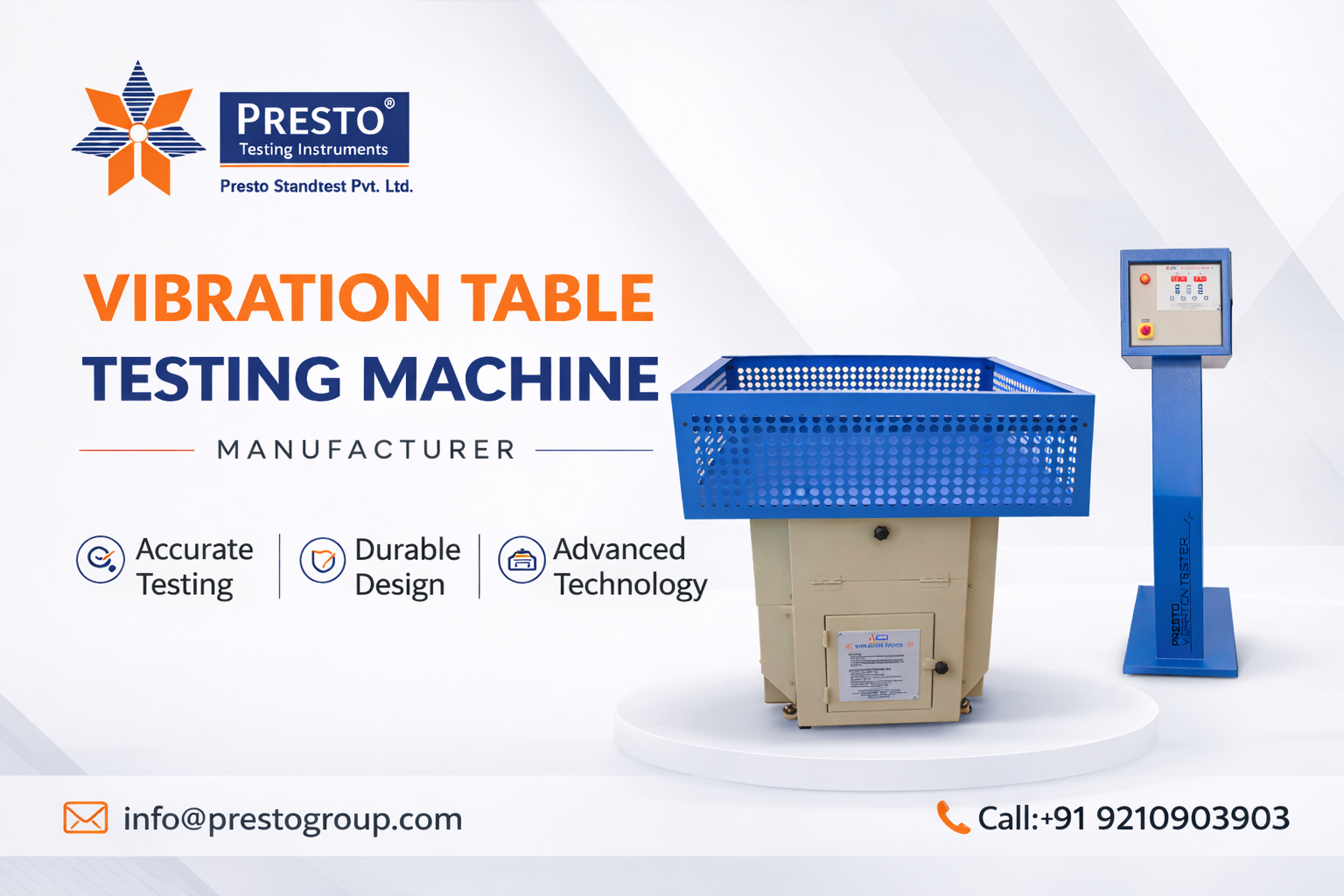
When industries talk about packaging quality or product durability testing, one machine that always comes up in discussion is the vibration table. It looks simple from the outside, but it plays a very important role in checking how a product or packaging behaves during transportation and handling. Naturally, one of the most asked questions is about the vibration table cost and what actually affects it.
At Presto Group, we often get queries from labs, manufacturers, and packaging companies asking why prices are different for every model. The answer is not very straightforward because cost depends on many practical factors like size, capacity, control system, and testing requirements.
What is a Vibration Table?
A vibration table is a testing machine used to simulate real transport conditions. When goods are shipped, they face continuous vibration from trucks, railways, and handling systems. This machine helps to recreate that same environment in a controlled lab.
It is mostly used for:
- Packaging testing
- Carton strength evaluation
- Product stability check
- Electronics safety testing
- Material durability studies
So, before final dispatch, companies can understand if their packaging is strong enough or not.
Vibration Table Cost Overview
The Vibration Table Cost is not fixed. It varies depending on technical features and application needs. A basic model will obviously cost less, while advanced digital or high-load models will be on the higher side.
In general, price depends on:
- Table size and load capacity
- Type of vibration (electromagnetic or mechanical)
- Control system (manual or digital)
- Frequency range and amplitude control
- Build quality and the material used.
So instead of looking only at price, industries should focus on what they actually need for testing.
Key Factors Affecting Vibration Table Cost
1. Load Capacity
Higher load capacity tables cost more because they need a stronger structure and motor systems. Small labs may use low-capacity models, but heavy packaging industries require high-load versions.
2. Control System
Manual control models are more affordable, but digital controllers give better accuracy. Digital systems also allow repeatable testing, which is important for quality labs.
3. Table Size
A bigger table means more material and a stronger frame, which directly increases cost. Packaging companies testing large cartons usually prefer bigger platforms.
4. Frequency and Performance Range
Machines with a wide frequency range provide more testing flexibility. This feature adds to the overall Vibration Table Cost, but improves accuracy.
5. Build Quality
A vibration table must handle continuous stress. Strong industrial-grade build ensures long life, but it also increases investment.
Types of Vibration Tables
Different industries need different types of vibration testing systems.
Mechanical Vibration Table
- Simple operation
- Cost-effective option
- Suitable for basic packaging tests
Electromagnetic Vibration Table
- High precision testing
- Digital control system
- Used in advanced R&D labs
Each type has its own price range and application value.
Why Companies Invest in Vibration Tables
Even if the cost looks like an investment, industries still prefer buying vibration tables because they directly reduce product damage risk.
Main benefits:
- Reduces transit damage
- Improves packaging design
- Saves replacement cost
- Increases customer satisfaction
- Helps in quality certification
So in the long term, the machine actually saves more money than it costs.
Vibration Table Cost in Relation to Quality
Many buyers think lower cost is better, but in testing equipment, accuracy matters more. A cheap machine may not give consistent results, which can affect product quality decisions.
Presto Group always focuses on:
- Accurate vibration simulation
- Stable performance
- Long-term durability
- Easy operation for lab users
So instead of only comparing prices, it is better to compare performance and reliability.
Maintenance and Long-Term Value
Another point that affects real cost is maintenance. A well-built vibration table requires less repair and gives stable results for years.
Simple maintenance includes:
- Regular checking of bolts and fittings
- Calibration of vibration settings
- Cleaning of the table surface
- Motor inspection at intervals
Proper care increases machine life and reduces long-term cost.
Final Thoughts
The Vibration Table Cost depends on many technical and practical factors, not just one fixed number. Every industry has different testing needs, so choosing the right model is more important than just looking at price.
At Presto Group, vibration testing systems are designed to meet industrial standards with reliable performance and easy handling. Whether it is packaging, manufacturing, or R&D, a good vibration table helps ensure that products reach customers safely without damage.
In simple terms, a vibration table is not just a testing machine; it is a protection step for your product quality and brand reputation.
