
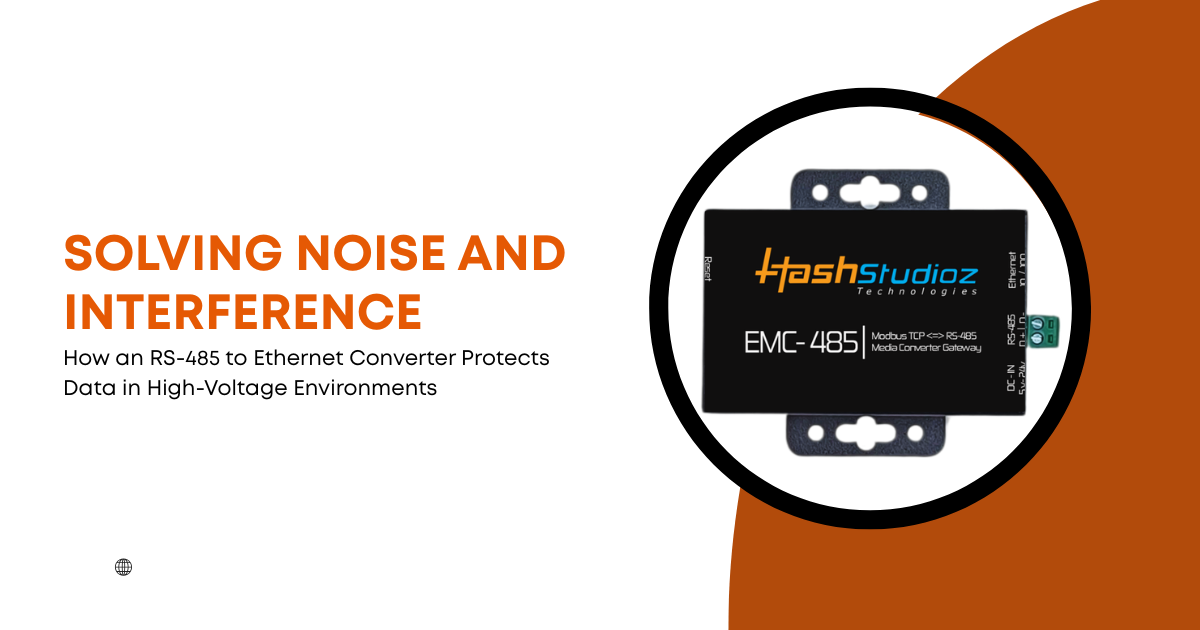
Industrial environments present severe challenges for data communications. Factory floors contain massive electrical equipment, high-voltage lines, and large motor drives. These systems generate massive amounts of electrical noise. This noise regularly corrupts data packets moving across standard communication cables.
Engineers deploy an RS-485 to Ethernet converter to solve this interference problem. This specialized hardware isolates fragile serial networks from high-voltage spikes. It converts weak electrical signals into stable digital packets for local area networks. Using an RS-485 to Lan converter preserves existing serial hardware while protecting data integrity. This article explores the technical mechanisms that shield industrial data from electrical noise.
The Nature of Industrial Noise and Interference
High-voltage environments create distinct types of electrical disruptions. Automated systems face continuous exposure to these invisible forces. Technicians categorize industrial interference into two main groups.
1. Electromagnetic Interference
Electromagnetic interference occurs when magnetic fields create unwanted currents in nearby wires. Large electric motors draw massive amounts of current during startup. This sudden draw creates a expanding magnetic field around the power cables. If a serial cable runs parallel to these power lines, the magnetic field induces a voltage spike inside the data wires. This induced voltage corrupts the active data stream.
2. Radio Frequency Interference
Radio frequency interference stems from high-frequency wireless signals. Switching power supplies, wireless routers, and arc welding equipment emit radio waves. These waves penetrate unshielded communication lines. High-frequency noise alters the shape of digital data pulses. The receiving device reads these altered pulses as transmission errors.
Why RS-485 Alone Struggles in High-Voltage Areas
The RS-485 standard uses a differential signaling method to transmit data. It utilizes two wires, usually labeled A and B. The transmitter sends equal but opposite voltage signals down these wires.
The receiver calculates the difference between the two voltages. It ignores noise that affects both wires equally. Engineers call this attribute common-mode rejection.
However, differential signaling has physical limits. The RS-485 standard permits a maximum common-mode voltage range of negative 7 volts to positive 12 volts. High-voltage environments easily exceed these limits.
A large industrial motor can induce sudden voltage spikes over 50 volts on a serial cable. These massive surges overwhelm the receiver circuit. The chip cannot process the differential signal correctly. This limitation results in packet errors, dropped connections, and fried microcontrollers.
The Role of an RS-485 to Ethernet Converter
An RS-485 to Ethernet converter bridges the gap between fragile serial lines and robust network infrastructure. The device sits physically close to the serial equipment. It shortens the vulnerable RS-485 cable run to just a few inches or feet.
The converter receives the incoming serial data pulses. It decodes the serial bytes immediately. Then, the onboard processor packages those bytes into standard network frames. The device transmits these frames over standard network cables via its integrated local area network port.
Using an RS-485 to Lan converter modifies the physical medium of data transmission. Ethernet technology includes native structural defenses against electrical interference. This transition eliminates the weaknesses of extended serial bus lines.
Technical Defenses of an RS-485 to Lan Converter
Industrial network adapters incorporate specific hardware features to block electrical noise. These components prevent high voltage from destroying communication networks.
1. Magnetic Isolation Protection
Standard local area network ports contain tiny isolation transformers. These components provide magnetic isolation between the copper network wire and the internal controller chips.
The transformer transfers data signals using magnetic fields across a physical gap. It blocks direct electrical currents completely. Most industrial network converters provide 1.5 kilovolts of magnetic isolation protection. A voltage spike on the network cable stops at the transformer. It cannot cross the gap to burn out internal components.
2. Galvanic Isolation on the Serial Port
High-grade converters feature galvanic isolation on the RS-485 terminal block. Optocoupler chips split the internal circuitry into separate sections. The chip converts the incoming serial electrical pulses into beams of light.
A light-sensitive receiver chip on the other side of the gap turns the light back into electrical signals. There is no physical wire connection between the two sides. This optical gap stops high-voltage ground loops from traveling down the serial bus.
3. Transient Voltage Suppression Diodes
Lightning strikes and power switching cause transient voltage surges. Industrial converters place transient voltage suppression diodes on the data lines. These diodes act as ultra-fast electrical relief valves.
The diodes remain open during normal operation. They close instantly when voltage exceeds a safe threshold. The closed diode redirects the dangerous voltage surge safely into the ground wire. This action protects the delicate communication chips from melting.
Statistical Impact of Noise on Industrial Productivity
Data errors cause measurable financial losses in manufacturing plants. Industrial statistics reveal the true cost of network instability:
- Manufacturing Downtime Costs: Studies show that unexpected downtime costs large industrial plants an average of 22,000 dollars per minute.
- Root Causes of Failures: Automated systems experts attribute 35 percent of unexplained field equipment failures directly to data corruption from electrical noise.
- Signal Degradation Realities: Unshielded RS-485 lines operating near heavy variable frequency drives experience up to a 40 percent drop in data throughput due to packet retransmissions.
- Lifespan Enhancements: Installing isolated network converters reduces field hardware replacement rates by 65 percent over a five-year service cycle.
Real-World Deployment Examples
The following instances illustrate how field engineers solve real interference problems using network converters.
1. Steel Manufacturing Facilities
Steel mills operate massive electric arc furnaces. These furnaces consume megawatts of electrical power. They generate intense electromagnetic fields throughout the facility.
A major steel producer struggled with automated crane control. The cranes used long RS-485 cables to send position data back to a control room. The intense furnace noise continually corrupted the serial telemetry data. The cranes stopped moving unexpectedly due to packet errors.
Engineers installed an RS-485 to Ethernet converter directly inside the crane control panel. They converted the position data to network packets right at the sensor site. They ran shielded Cat6 network cable from the crane to the switchboard. The magnetic isolation inside the converter eliminated the noise issue. The cranes achieved continuous operation without further data loss.
2. Utility-Scale Solar Arrays
Solar power plants feature hundreds of individual photovoltaic inverters spread across miles of land. Each inverter tracks power production metrics. The units connect via an RS-485 network loop to report data to a central office.
High-voltage direct current lines run alongside the communication cables. These power lines induce large ground loop currents across the long serial wires. Lightning strikes on distant solar panels regularly fried the inverter communication chips.
The plant operators resolved this vulnerability by deploying an RS-485 to Lan converter at each inverter cluster station. The galvanic isolation inside the converters blocked the ground loop currents entirely. The transient voltage suppression diodes absorbed lightning surges safely. This deployment saved thousands of dollars in annual hardware repair costs
Software Protocols and Packet Optimization
An RS-485 to Ethernet converter does more than change electrical pins. It translates communication protocols inside its central processor.
1. Modbus RTU to Modbus TCP Translation
Most legacy serial hardware uses the Modbus RTU protocol. This protocol sends raw binary bytes with a simple checksum validation. Modbus RTU lacks advanced error recovery mechanisms. If a byte changes due to noise, the whole packet drops.
The network gateway converts these serial streams into Modbus TCP packets. Modbus TCP wraps the serial data inside standard transmission control protocol layers.
The transmission control protocol guarantees packet delivery. It detects lost packets automatically and requests immediate retransmission at the network layer. This protocol wrapper ensures reliable data delivery despite heavy ambient noise.
2. Packet Packaging Controls
Engineers adjust packet packaging parameters inside the converter software interface. These settings control how the device bundles serial bytes into network frames.
Important configuration parameters include:
- Packing Time: The number of milliseconds the device waits before sending a network packet. Low values reduce transmission latency.
- Packing Length: The specific number of serial bytes required to trigger a network packet upload.
- Delimiter Characters: Special characters that signal the end of a serial data message. The converter transmits the network packet immediately upon reading this character.
Proper tuning of these parameters prevents unnecessary network overhead. It ensures clean data delivery without slicing critical serial messages across separate network frames.
Selecting the Right Industrial Converter
Not all network adapters perform well in high-noise zones. Procurement teams must verify specific engineering parameters before purchasing hardware.
1. Plastic Enclosures vs. Metal Enclosures
Cheap commercial converters use simple plastic housings. Plastic provides zero defense against high-frequency radio waves. Industrial converters feature heavy aluminum or steel casings. The metal shell forms a Faraday cage around the internal chips. This shield reflects ambient radio frequency interference away from the sensitive circuits.
2. Operating Temperature Certification
High-voltage equipment cabinets generate substantial internal heat. A consumer-grade converter fails when internal cabinet temperatures exceed 40 degrees Celsius. Industrial units feature certified components that operate from negative 40 to positive 85 degrees Celsius. They operate reliably next to hot motor drives and power transformers without cooling fans.
Conclusion
Industrial automation requires absolute data accuracy. Electrical noise from high-voltage machinery constantly threatens legacy serial networks. Extended RS-485 cables amplify this threat by absorbing nearby electromagnetic interference.
Deploying an RS-485 to Ethernet converter eliminates these communication vulnerabilities. These specialized devices isolate vulnerable serial ports using optical and magnetic barriers. They convert weak serial pulses into stable network packets right at the machine site.
Using an RS-485 to Lan converter allows factories to preserve older machinery while upgrading network reliability. This hardware deployment prevents expensive operational downtime, guards sensitive electronics from voltage surges, and ensures stable data flows across harsh industrial landscapes.
