
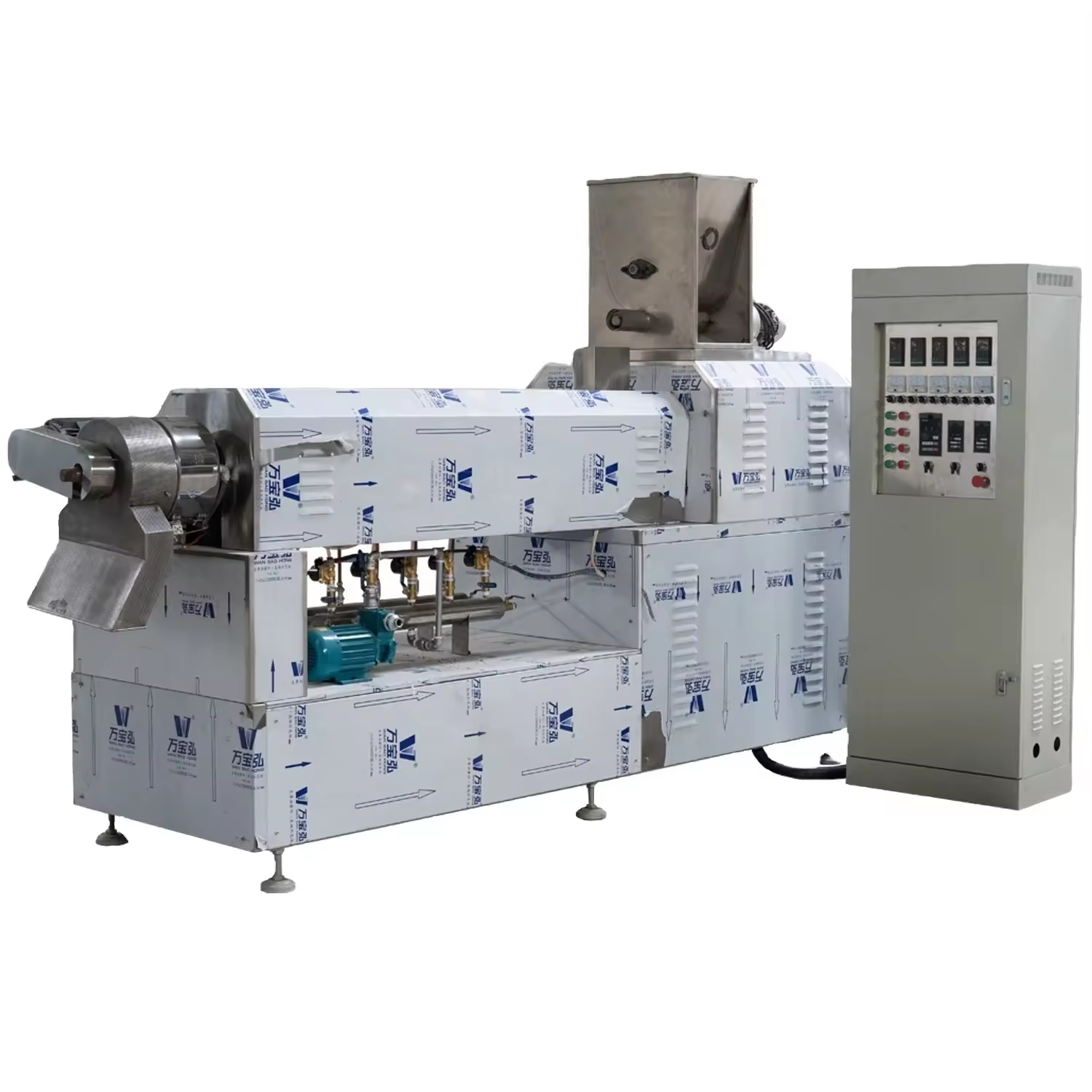
The demand for pasta products continues to grow worldwide as consumers seek convenient, affordable, and versatile food options. From traditional spaghetti and macaroni Plant to specialty pasta varieties, manufacturers are constantly expanding their production capabilities to meet market demand.
For businesses entering the pasta manufacturing industry or upgrading existing operations, selecting the right Pasta Plant is one of the most important investment decisions. The efficiency of the production facility directly affects product quality, operational costs, production capacity, and long-term profitability.
A well-designed Pasta Plant helps manufacturers streamline production processes, maintain consistent quality standards, and maximize output. This guide explains the key factors businesses should consider when choosing a pasta processing facility for commercial food production.
Understanding the Importance of a Modern Pasta Plant
A Pasta Plant is more than just a collection of machines. It is an integrated production system designed to transform raw ingredients into high-quality pasta products through a series of carefully controlled processes.
Modern facilities are designed to:
- Improve production efficiency
- Ensure product consistency
- Reduce waste
- Maintain food safety standards
- Support large-scale manufacturing
- Enhance profitability
Choosing the right setup from the beginning can help businesses avoid costly operational challenges in the future.
Define Your Production Goals
Before investing in a Pasta Plant, businesses should clearly define their production objectives.
Important questions include:
- What type of pasta will be produced?
- What production volume is required?
- Who is the target market?
- Are future expansion plans expected?
Understanding these goals helps determine the size, capacity, and configuration required for the facility.
A plant designed for small-scale operations may not be suitable for businesses planning significant production growth.
Determine the Required Production Capacity
Production capacity is one of the most critical factors when selecting a Pasta Plant.
Manufacturers should estimate:
- Daily production requirements
- Monthly output targets
- Seasonal demand fluctuations
- Future business growth
Choosing a facility with insufficient capacity may create bottlenecks, while an oversized operation can lead to unnecessary expenses.
The ideal solution balances current needs with future scalability.
Evaluate Product Range Requirements
Different pasta products require different production capabilities.
A modern Pasta Plant may produce:
- Spaghetti
- Macaroni
- Penne
- Fusilli
- Vermicelli
- Specialty pasta products
If the business plans to offer multiple product types, the production system should be flexible enough to accommodate different shapes and processing requirements.
Versatile equipment can help manufacturers respond to changing market trends more effectively.
Assess Raw Material Handling Systems
Efficient raw material handling plays a major role in production efficiency.
The Pasta Plant should include systems capable of handling:
- Flour
- Semolina
- Water
- Additives
- Ingredients for specialty products
Proper storage and handling systems help maintain ingredient quality while reducing contamination risks.
Automated material handling solutions can further improve production efficiency and consistency.
Consider Dough Mixing Technology
Mixing is one of the most important stages in pasta production.
High-quality mixing equipment ensures:
- Uniform ingredient distribution
- Consistent dough quality
- Improved product texture
- Reliable production performance
When evaluating a Pasta Plant, manufacturers should assess the design and capabilities of the mixing system to ensure it can consistently produce high-quality dough.
Examine Extrusion and Forming Equipment
Extrusion is the process that shapes pasta into its final form.
The quality of extrusion equipment directly influences:
- Product appearance
- Texture
- Dimensional consistency
- Production efficiency
A modern Pasta Plant should include advanced extrusion systems capable of producing precise and consistent products.
Manufacturers should evaluate:
- Production speed
- Die change flexibility
- Product variety options
- Maintenance requirements
Reliable extrusion technology contributes significantly to overall product quality.
Evaluate Drying System Performance
Drying is one of the most critical stages in pasta manufacturing.
Improper drying can lead to:
- Product cracking
- Texture defects
- Reduced shelf life
- Quality inconsistencies
A well-designed Pasta Plant should feature drying systems that provide:
- Precise temperature control
- Humidity management
- Consistent airflow
- Uniform drying conditions
Effective drying technology helps preserve product quality while improving storage stability.
Focus on Food Safety and Hygiene
Food safety should always be a top priority.
A commercial Pasta Plant must comply with food industry hygiene requirements and regulatory standards.
Key considerations include:
- Food-grade construction materials
- Easy-to-clean equipment
- Hygienic production layouts
- Contamination prevention measures
- Sanitary processing environments
Maintaining high hygiene standards protects both consumers and business reputation.
Assess Automation Capabilities
Automation has become increasingly important in modern food manufacturing.
An automated Pasta Plant can provide several advantages:
- Reduced labor requirements
- Increased production consistency
- Improved process control
- Higher efficiency
- Better production monitoring
Automated systems can also help reduce human error and improve product quality.
Manufacturers planning long-term growth should consider automation as an essential investment.
Evaluate Energy Efficiency
Energy consumption represents a significant operating cost in food processing facilities.
An energy-efficient Pasta Plant can help reduce expenses while supporting sustainability initiatives.
Features to consider include:
- High-efficiency motors
- Optimized drying systems
- Automated controls
- Energy-saving technologies
Lower energy consumption contributes to improved profitability over the life of the facility.
Review Maintenance Requirements
Reliable equipment should be easy to maintain.
Before selecting a Pasta Plant, businesses should assess:
- Equipment accessibility
- Spare parts availability
- Maintenance schedules
- Technical support options
Facilities with simplified maintenance requirements typically experience less downtime and lower operating costs.
Preventive maintenance planning is essential for maximizing equipment lifespan.
Consider Facility Layout and Space Requirements
The physical layout of the production facility directly impacts workflow efficiency.
A properly designed Pasta Plant should support:
- Smooth material movement
- Efficient production flow
- Worker safety
- Future expansion opportunities
Manufacturers should ensure that the chosen system fits available space while allowing room for operational growth.
Evaluate Supplier Expertise and Support
The success of a production facility often depends on the quality of supplier support.
When selecting a Pasta Plant, businesses should consider:
- Industry experience
- Technical expertise
- Installation support
- Training services
- After-sales assistance
A reliable supplier can provide valuable guidance throughout the project’s lifecycle.
Long-term technical support is especially important for maintaining operational efficiency.
Future-Proof Your Investment
Market demands and production requirements can change over time.
A scalable Pasta Plant allows businesses to adapt without requiring major facility modifications.
Future-proofing considerations include:
- Production expansion capabilities
- Equipment upgrade options
- Automation integration
- Product diversification potential
Investing in a flexible production system helps protect long-term business growth.
Common Mistakes to Avoid
When choosing a pasta production facility, businesses should avoid:
- Selecting equipment based solely on price
- Ignoring future production needs
- Overlooking food safety requirements
- Underestimating maintenance costs
- Choosing inadequate production capacity
Careful planning can help prevent these costly mistakes.
Conclusion
Selecting the right Pasta Plant is a critical decision that affects product quality, production efficiency, and overall business success. From production capacity and equipment performance to automation, food safety, and energy efficiency, every aspect of the facility should be carefully evaluated before making an investment.
A well-designed Pasta Plant enables manufacturers to produce high-quality products consistently while supporting operational growth and long-term profitability. By focusing on current requirements and future expansion opportunities, businesses can build a strong foundation for success in the competitive pasta manufacturing industry.
