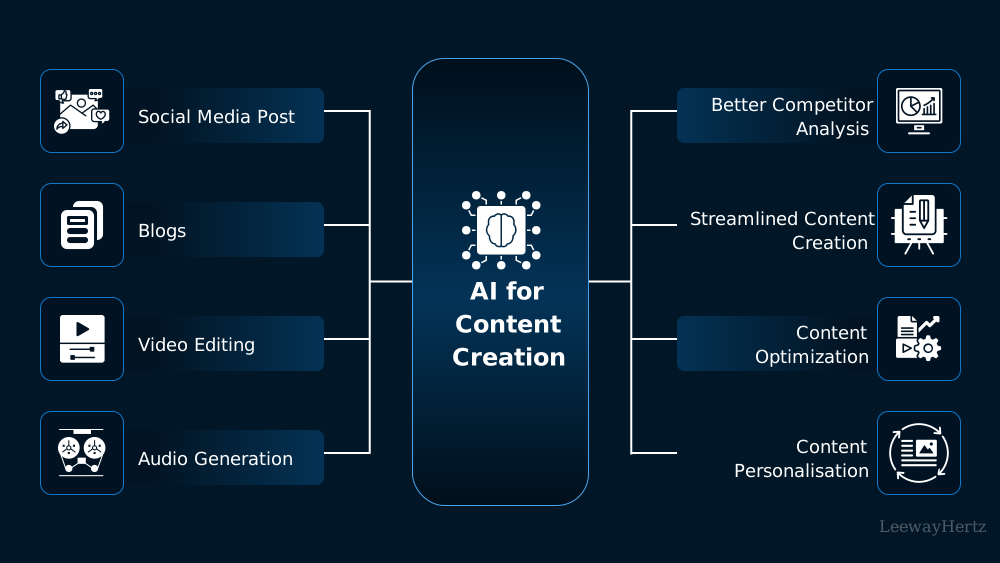
An AI writer is no longer a novelty. It has become a regular part of how content is planned, written, and published online. Businesses, marketers, bloggers, and agencies now use AI writing tools to keep up with growing content demands without burning out teams or slowing production.
Publishing at scale is not about volume alone. It is about consistency, relevance, and timing. AI writing software helps teams move faster, but it does not replace the thinking behind the work. The best results still come from human direction, editing, and decision-making.
Most people using an AI writer today are not trying to remove humans from the process. They are trying to remove friction.
What Is an AI Writer?
An AI writer is a digital writing assistant that helps generate text based on prompts, outlines, or short instructions. It uses language models trained to recognize patterns in writing, which allows it to produce readable, structured content quickly.
In practice, an AI content writer is often used to get ideas onto the page faster. It helps with structure, phrasing, and momentum, especially at the draft stage.
Common use cases include:
- Blog articles and guides
- Website and landing page copy
- Product descriptions
- Social media posts
- Emails and internal documentation
AI writing software works best when it supports an existing workflow instead of replacing it. Writers still decide what matters, what sounds right, and what should be published.
How AI Writers Are Changing Writing Work
The conversation around AI writing often focuses on whether it replaces writers. In reality, it changes how writing time is spent.
Instead of starting from a blank page, writers now spend more time on:
- Choosing topics and angles
- Shaping tone and voice
- Editing for clarity and originality
- Aligning content with search intent
This shift matters. Drafting is only one part of writing, and it is not the most valuable part. Judgment, context, and experience still come from people.
Writers who understand how to guide and refine AI output usually become faster without sacrificing quality.
AI Writers and AI Detection Tools
As AI-generated content becomes more common, AI detection tools have become more visible. These tools attempt to guess whether content was written by a human or generated by software.
They are inconsistent by design.
Detection systems rely on probability, not proof. They often flag clean, well-structured writing, even when it is human-written. Edited AI content can pass unnoticed, while original work can still be flagged.
Search engines do not use AI detectors to rank content. Readers do not care how something was drafted. What matters is whether the content is useful, accurate, and readable.
Human editing is still the deciding factor.
Why Businesses Use AI Writing Tools
Content demands keep growing. Blogs, websites, email campaigns, and social media all need steady output. At the same time, teams are expected to move faster with fewer resources.
Businesses use AI writing tools to:
- Reduce time spent on first drafts
- Keep messaging consistent
- Support SEO structure and formatting
- Lower production costs
- Manage higher content volume
When AI is used thoughtfully, it supports scale without turning content into noise.
AI Writers and SEO
AI writing for SEO works when strategy comes first. An AI writer can help organize ideas, include keywords naturally, and follow clear heading structures, but it cannot decide what should rank.
A practical workflow usually looks like this:
- Human keyword research and intent planning
- AI-assisted drafting
- Manual editing and fact-checking
- Final optimization for clarity and flow
Search engines reward content that answers real questions. AI tools help with efficiency, not authority.
Responsible Use of AI Writing Software
AI writing is most effective when it supports original thinking. Publishing raw output without review almost always shows.
Good practice includes:
- Editing every draft before publishing
- Adding real insight or experience
- Verifying facts and claims
- Writing for people first
This approach keeps content credible and sustainable.
The Future of Writing Is Human-Guided
AI writers are not the future on their own. The future is human-guided AI.
AI handles speed and structure. Humans handle meaning, nuance, and judgment. When those roles stay clear, content improves.
Writers who learn how to work with AI writing assistants will stay relevant. Businesses that use AI responsibly will move faster without losing trust.
To explore AI-powered writing designed for scalable, natural content, visit