
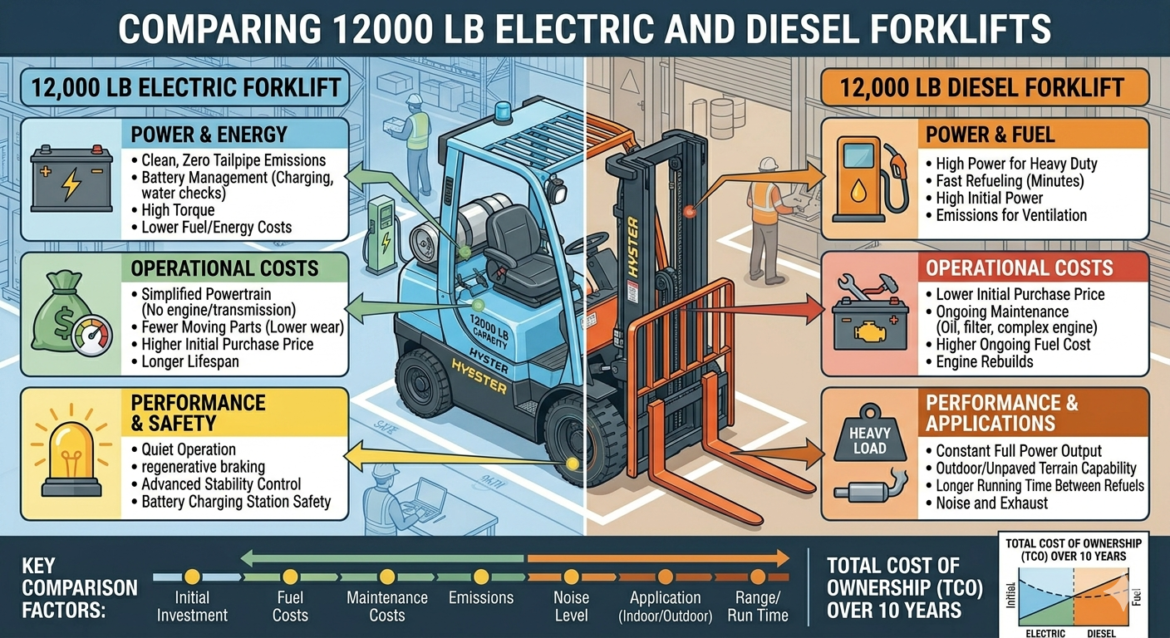
Choosing the right forklift is an important decision for businesses involved in warehousing, manufacturing, logistics, construction, and material handling. A 12000 lb forklift offers the lifting capacity needed for heavy-duty applications while providing flexibility across a variety of work environments. However, one of the biggest decisions buyers face is whether to choose an electric or diesel-powered model.
Both options have unique advantages and potential drawbacks. Factors such as operating costs, performance requirements, environmental conditions, and maintenance needs all play a role in determining which forklift is the better fit. Understanding the differences between electric and diesel forklifts can help businesses make a more informed investment.
Understanding the Role of a 12000 lb Forklift
A 12000 lb forklift is designed to handle loads weighing up to 12,000 pounds under proper operating conditions. These forklifts are commonly used in:
- Warehouses
- Manufacturing facilities
- Lumber yards
- Distribution centers
- Construction sites
- Shipping terminals
Their higher lifting capacity makes them suitable for moving large pallets, machinery, building materials, and industrial products.
Selecting the right power source is just as important as selecting the right lifting capacity.
Electric 12000 lb Forklifts
Electric forklifts have become increasingly popular as businesses focus on efficiency, sustainability, and lower operating costs.
Key Advantages of Electric Forklifts
Lower Operating Costs
Electric forklifts generally cost less to operate than diesel models because electricity is often less expensive than fuel.
Businesses can benefit from:
- Reduced fuel expenses
- Lower maintenance costs
- Fewer moving engine components
- Less frequent servicing requirements
Studies show that electric industrial vehicles often have lower long-term operating costs compared to internal combustion equipment.
Environmentally Friendly Operation
A 12000 lb forklift powered by electricity produces zero direct emissions during operation.
This provides several benefits:
- Improved indoor air quality
- Reduced environmental impact
- Easier compliance with sustainability initiatives
- Lower carbon emissions
Many businesses are choosing electric equipment to support environmental goals and regulatory requirements.
Quieter Performance
Electric forklifts operate much more quietly than diesel-powered alternatives.
This creates:
- More comfortable working conditions
- Reduced workplace noise
- Improved communication among employees
Quiet operation is especially beneficial in warehouses and indoor facilities.
Potential Limitations of Electric Forklifts
While electric models offer many advantages, they may not be ideal for every application.
Common limitations include:
- Battery charging requirements
- Higher upfront purchase costs
- Limited operating time between charges
- Potential performance reductions during extended shifts
Businesses with around-the-clock operations may need spare batteries or charging infrastructure to maintain productivity.
Diesel 12000 lb Forklifts
Diesel forklifts remain a popular choice for demanding industrial applications.
Key Advantages of Diesel Forklifts
Powerful Performance
Diesel engines are known for delivering strong torque and consistent performance.
A diesel-powered 12000 lb forklift is often well-suited for:
- Heavy outdoor lifting
- Construction projects
- Rugged industrial environments
- Long operating hours
These machines perform exceptionally well when handling demanding workloads.
Longer Operating Periods
Unlike electric forklifts that require charging, diesel models can be refueled quickly and returned to service.
This helps support:
- Continuous operations
- Multiple work shifts
- High-demand environments
For businesses that cannot afford charging downtime, diesel forklifts may provide greater operational flexibility.
Better Performance Outdoors
Diesel forklifts are commonly used in outdoor settings because they handle rough terrain and varying weather conditions effectively.
Typical applications include:
- Construction sites
- Lumber yards
- Shipping terminals
- Heavy industrial facilities
Their durability makes them a preferred option for challenging environments.
Potential Limitations of Diesel Forklifts
Despite their advantages, diesel-powered forklifts also have some drawbacks.
Common concerns include:
- Higher fuel costs
- Increased maintenance requirements
- Greater emissions
- Louder operation
Engine servicing, fuel system maintenance, and exhaust-related repairs can contribute to higher ownership costs over time.
Comparing Operating Costs
Operating costs are often a major factor when purchasing a 12000 lb forklift.
Electric Forklift Costs
Electric forklifts typically offer:
- Lower energy expenses
- Reduced maintenance costs
- Fewer engine-related repairs
Because electric motors contain fewer moving parts, maintenance requirements are generally lower.
Diesel Forklift Costs
Diesel forklifts often involve:
- Fuel expenses
- Engine maintenance
- Oil changes
- Exhaust system servicing
While diesel models may cost less initially in some cases, long-term operating expenses can be higher depending on usage patterns.
Businesses should evaluate total cost of ownership rather than purchase price alone.
Maintenance Requirements
Proper maintenance is essential regardless of the chosen power source.
Electric Forklift Maintenance
Routine service often includes:
- Battery inspections
- Electrical system testing
- Tire evaluations
- Brake inspections
- Hydraulic maintenance
Electric models generally require fewer maintenance procedures than diesel forklifts.
Diesel Forklift Maintenance
A diesel-powered 12000 lb forklift typically requires:
- Oil changes
- Fuel filter replacements
- Engine servicing
- Cooling system maintenance
- Exhaust inspections
These additional maintenance tasks can increase service costs over time.
Safety and Workplace Conditions
Workplace environment plays a significant role in equipment selection.
Indoor Operations
Electric forklifts are usually preferred for indoor facilities because they:
- Produce no exhaust emissions
- Operate quietly
- Improve air quality
Warehouses and manufacturing facilities often favor electric models for these reasons.
Outdoor Operations
Diesel forklifts are often better suited for:
- Rough terrain
- Remote locations
- Heavy outdoor lifting
Their performance characteristics make them ideal for demanding external environments.
Environmental Considerations
Sustainability has become a growing priority for many businesses.
Electric Forklift Benefits
Electric models help organizations:
- Reduce emissions
- Improve environmental performance
- Support sustainability initiatives
Many companies view electric equipment as part of their long-term environmental strategy.
Diesel Forklift Challenges
Diesel-powered forklifts generate exhaust emissions and consume fossil fuels.
While modern engines are more efficient than previous generations, environmental impact remains a consideration for many buyers.
Which Option Is Best?
The best 12000 lb forklift depends on operational requirements.
Electric forklifts may be ideal for businesses that:
- Operate primarily indoors
- Prioritize sustainability
- Seek lower operating costs
- Have charging infrastructure available
Diesel forklifts may be better suited for organizations that:
- Work outdoors frequently
- Require continuous operation
- Handle rugged environments
- Need maximum power and endurance
Carefully evaluating workload, operating conditions, and long-term costs can help businesses choose the most effective solution.
Final Thoughts
Both electric and diesel 12000 lb forklift models offer valuable advantages for material handling operations. Electric forklifts provide lower operating costs, quieter performance, and environmental benefits, while diesel forklifts deliver powerful outdoor performance and extended operating capability.
The right choice depends on your specific business needs, work environment, and productivity goals. By comparing operating costs, maintenance requirements, safety considerations, and application demands, businesses can select a forklift that delivers reliable performance and long-term value. Investing in the right equipment today can help improve efficiency, reduce costs, and support operational success for years to come.
