
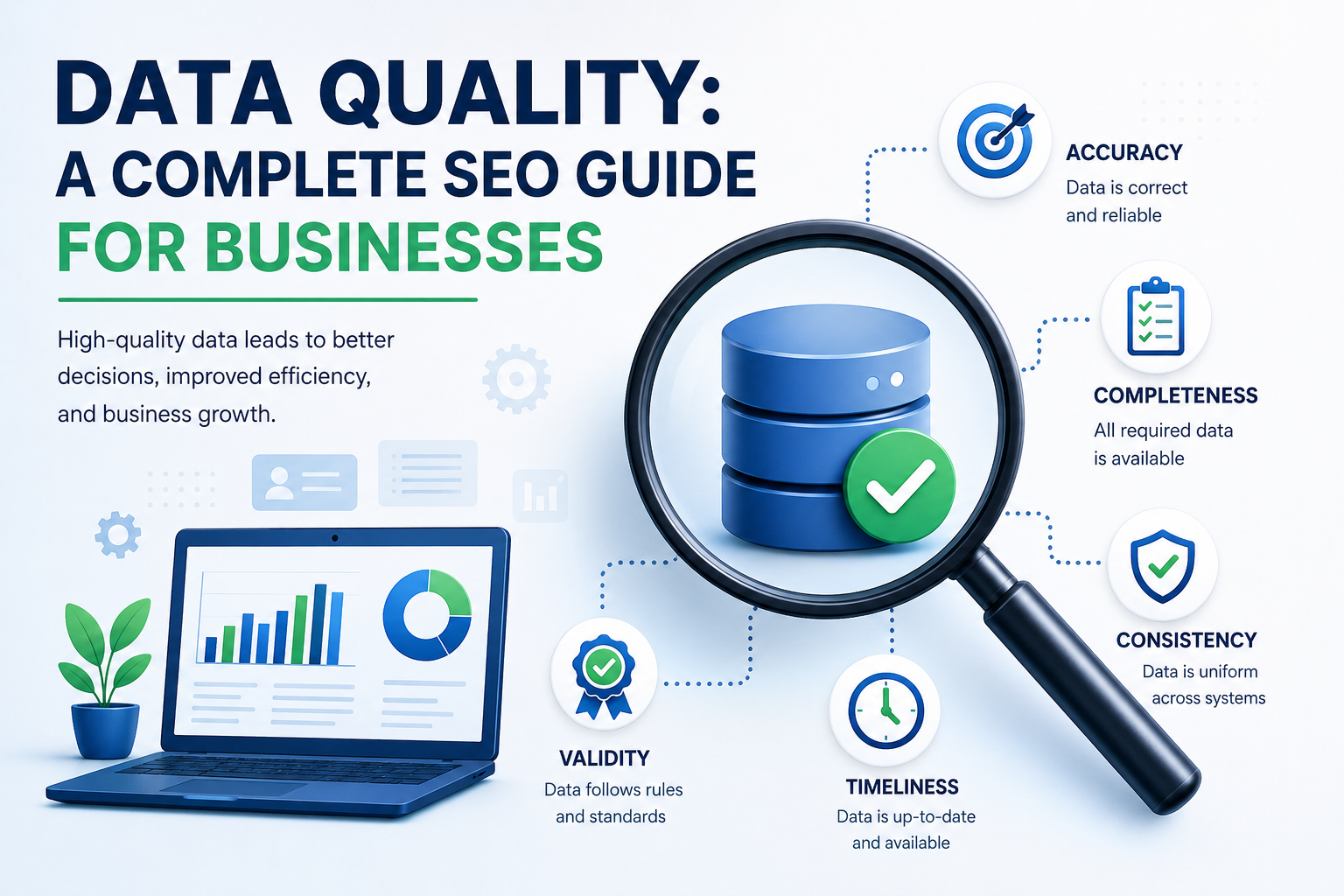
Data quality is the measure of how reliable, accurate, and useful data is for its intended purpose. It ensures that information stored in databases or systems correctly represents real-world entities and events. When data is of high quality, businesses can confidently use it for analysis, reporting, and planning.
For example, if a company’s customer database contains correct names, valid emails, and updated phone numbers, the data is considered high quality. But if the same database contains duplicates, missing values, or outdated information, then the data quality becomes poor and unreliable.
Good data quality is also essential for systems like Data Management, where organizations store, organize, and control large volumes of information efficiently.
Why Data Quality Is Important
Data quality is extremely important because it directly impacts business performance and decision-making. Organizations rely on data for almost every operation, including marketing campaigns, financial planning, customer service, and product development.
High-quality data helps companies make accurate decisions based on real insights rather than assumptions. It also improves customer experience by ensuring that communication is personalized and relevant. When data is clean and reliable, businesses can reduce operational errors and save valuable time.
Furthermore, strong data quality reduces unnecessary costs caused by wrong decisions or repeated processes. It also plays a key role in maintaining compliance with industry regulations. Overall, good data quality leads to improved efficiency, better analytics, and stronger business growth.
Key Dimensions of Data Quality
Data quality is measured using several important dimensions that define how useful and reliable the data is for business use.
Accuracy
Accuracy ensures that the data correctly represents real-world information without errors or distortions. Accurate data helps businesses make correct decisions and avoid costly mistakes.
Completeness
Completeness refers to whether all required data fields are filled and available. Missing data can reduce the usefulness of datasets and affect analysis results.
Consistency
Consistency ensures that data remains uniform across all systems and platforms. If different systems show different values for the same data, it creates confusion and errors.
Timeliness
Timeliness means that data should always be updated and available when needed. Outdated data can lead to incorrect insights and poor decision-making.
Validity
Validity ensures that data follows defined rules, formats, and business standards. For example, email addresses or phone numbers should follow correct formats.
Uniqueness
Uniqueness ensures that there are no duplicate records in the system. Duplicate data can lead to inaccurate reporting and inefficient processes.
Common Data Quality Issues
Many organizations face several data quality problems that affect their performance and reporting accuracy.
One of the most common issues is duplicate data, where the same record appears multiple times in a database. Another issue is missing data, where important information is not filled, making the dataset incomplete and less useful.
Incorrect or outdated data is also a major problem because it leads to wrong business decisions. Inconsistent formatting across systems can create integration challenges. All these issues together reduce the overall reliability of data and negatively impact business outcomes.
Causes of Poor Data Quality
There are several reasons why data quality becomes poor in organizations. One of the main causes is manual data entry errors, where employees accidentally input incorrect information. These small mistakes can grow into major data issues over time.
Another cause is the lack of proper data standards. Without clear rules and guidelines, different departments store data in different formats, causing inconsistency.
Multiple data sources can also lead to conflicts when the same information is stored differently in separate systems. Poor system integration and lack of regular data maintenance further contribute to declining data quality over time.
How to Improve Data Quality
Improving data quality requires a structured approach and continuous monitoring. One of the most effective methods is implementing strong data governance policies that define how data should be collected, stored, and managed.
Organizations should also use validation rules to prevent incorrect data from entering the system. Regular data cleansing processes help remove duplicates, fix errors, and update outdated records.
Standardizing data formats across all departments improves consistency and reduces confusion. Employee training is also important because well-trained staff make fewer data entry mistakes. In addition, automation tools can significantly improve data accuracy by detecting and correcting errors automatically.
Data Quality and Data Analytics
Data quality plays a critical role in the success of data analytics. If the data used for analysis is incorrect or incomplete, the results will also be misleading and unreliable.
Businesses rely on analytics to identify trends, understand customer behavior, and improve operations. However, all these insights depend on the quality of the underlying data. High-quality data ensures that analytics tools produce accurate and meaningful results, which helps businesses make better strategic decisions.
Best Practices for Data Quality Management
Organizations must follow best practices to maintain long-term data quality. One important practice is defining clear data quality standards that every department must follow.
Continuous monitoring is also essential to identify and fix errors quickly before they affect business operations. Assigning ownership of data ensures accountability and proper management.
Automation should be used wherever possible to reduce manual effort and improve accuracy. Lastly, maintaining proper documentation helps ensure consistency and supports future data improvements.
Future of Data Quality
The future of data quality is closely connected to artificial intelligence and machine learning technologies. These advanced systems will help organizations automatically detect errors, clean data, and maintain accuracy in real time.
As data volumes continue to grow, businesses will rely more on automated solutions for data validation and monitoring. This will make data management faster, more efficient, and more reliable across industries.
Conclusion
Data quality is one of the most important factors for business success in the modern digital world. Without accurate and reliable data, organizations cannot make effective decisions or achieve long-term growth.
By implementing proper data governance, validation, and data management practices, companies can significantly improve their performance. In today’s competitive environment, investing in data quality is not just an option — it is a necessity for sustainable success.
