
A railing shifts slightly under pressure. A deck board gives off a hollow sound. A nail begins rising from the wood like a warning no one notices. Most homeowners dismiss these details because the structure still “looks fine” from a distance. But outdoor surfaces rarely fail without leaving clues first.
Decks, porches, and elevated walkways endure years of stress from rain, sunlight, fluctuating temperatures, moisture intrusion, and foot traffic. Over time, that wear slowly weakens the structure beneath the surface. What appears cosmetic can quickly become a serious safety hazard.
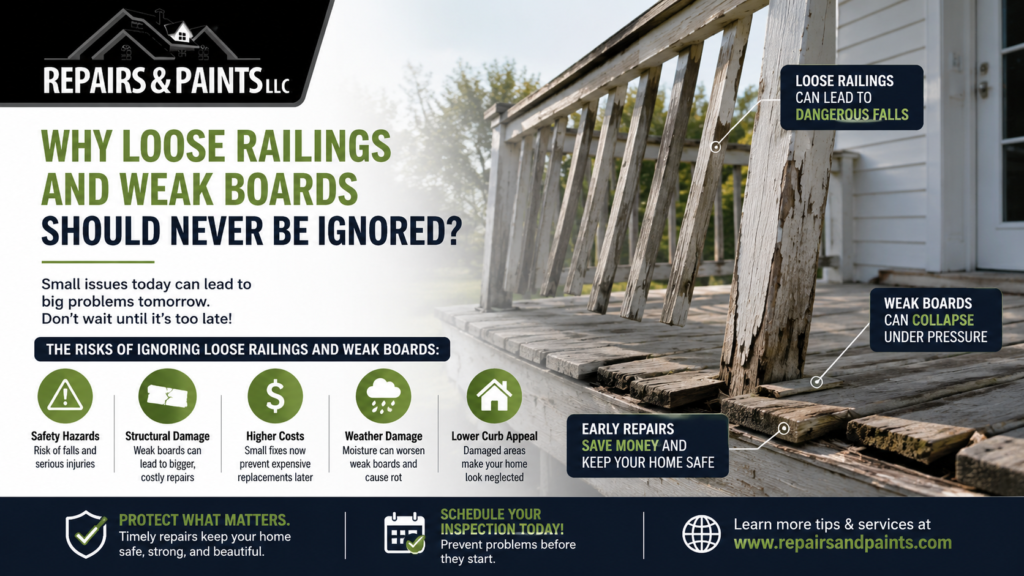
Loose railings and weak boards are not minor inconveniences. They are early indicators of structural deterioration that can lead to injuries, expensive repairs, exterior house painter and even total deck failure if left untreated. Whether the damage is caused by aging lumber, water exposure, or improper maintenance, ignoring these warning signs often turns a manageable repair into a major reconstruction project.
The Hidden Danger Behind a “Small” Deck Problem
Outdoor structures deteriorate gradually, which is exactly why many issues go unnoticed.
A single weak board may not seem urgent today. However, wood rot spreads. Moisture penetrates surrounding areas. Fasteners loosen. Support posts weaken. The problem expands beneath the visible surface until the deck can no longer safely support weight.
Loose railings are especially dangerous because they create a false sense of security. People naturally lean on railings while climbing stairs or gathering outdoors. When those railings shift unexpectedly, falls and injuries become far more likely.
Children, elderly family members, and guests are particularly vulnerable because they assume the structure is stable.
The reality is simple: if a deck component feels unstable, the structure is already compromised to some degree.
Why Deck Boards Become Weak Over Time?
Deck boards face constant environmental exposure. Even treated lumber eventually breaks down without proper maintenance.
Several factors contribute to weakening boards:
1. Moisture Intrusion
Rainwater is one of the biggest threats to outdoor wood structures. When water penetrates unsealed or cracked boards, rot begins developing internally. This decay often spreads long before discoloration becomes visible.
2. UV Damage
Sun exposure dries wood fibers over time, causing cracking, splitting, and brittleness. Boards become weaker and more vulnerable to pressure.
3. Rusted Fasteners
Screws, nails, and metal connectors corrode over time. As hardware weakens, boards shift and lose structural stability.
4. Mold and Mildew Growth
Persistent moisture encourages fungal growth that slowly deteriorates wood integrity. Soft spots and spongy surfaces are common warning signs.
5. Poor Original Installation
Improper spacing, low-quality materials, or inadequate support systems accelerate deterioration. Some decks begin failing years earlier than expected because they were not built correctly in the first place.
The Safety Risks of Loose Railings
Railings are not decorative features. They are critical safety systems designed to prevent falls and stabilize movement across elevated surfaces.
When railings loosen, several dangers emerge:
- Increased fall risk on stairs and elevated decks.
- Structural instability during gatherings or heavy use.
- Liability concerns for homeowners.
- Greater stress on surrounding deck components.
- Accelerated damage to support posts and connectors.
A railing that wobbles even slightly should never be ignored. The issue may stem from weakened posts, failing anchors, rotted wood, or hidden structural decay beneath the surface.
Professional inspections often reveal that visible railing movement is only part of a much larger problem.
How Delayed Repairs Increase Costs?
Many homeowners postpone deck maintenance because the damage appears manageable. Unfortunately, outdoor structural problems rarely remain isolated.
A small repair today may involve replacing a few boards or tightening railing connections. Waiting another season could require rebuilding framing sections, replacing support posts, or reconstructing entire deck areas.
Moisture damage spreads quickly, especially in humid and storm-prone environments. Delays also increase labor complexity because contractors must remove and replace larger portions of the structure.
In many cases, prompt deck repair in South Jersey saves homeowners thousands of dollars compared to full replacement costs later.
Warning Signs Homeowners Should Never Ignore
Deck problems often provide visible clues before becoming dangerous. Homeowners should routinely inspect outdoor structures for the following issues:
Soft or Spongy Boards: If the wood compresses underfoot, internal rot may already be advanced.
Wobbling Railings: Movement indicates weakening connections or compromised support systems.
Cracked or Splitting Wood: Large cracks weaken load-bearing capacity and allow more moisture penetration.
Rusted Hardware: Corroded screws, nails, and brackets reduce structural integrity.
Loose Stairs: Unstable stairs create immediate tripping and fall hazards.
Discoloration or Mold: Dark stains and mildew often indicate trapped moisture and underlying decay.
Popping Nails or Raised Fasteners: Wood expansion and deterioration can force hardware upward over time.
Ignoring these signs allows minor problems to evolve into significant structural risks.
Why Professional Repairs Matter?
Some homeowners attempt temporary fixes themselves, such as adding extra screws or replacing individual boards. While minor cosmetic maintenance may be manageable, structural repairs require professional evaluation.
Experienced contractors understand how moisture affects framing systems, support beams, connectors, and ledger boards. They can identify hidden deterioration that may not be visible from the surface.
Professional repairs also ensure compliance with local safety standards and building codes.
An improperly repaired deck can become more dangerous than an unrepaired one because underlying issues remain unresolved.
The Role of Protective Coatings and Exterior Maintenance
Structural repairs alone are not enough. Long-term deck durability depends heavily on protection against moisture and weather exposure.
This is where a qualified exterior house painter becomes essential.
Protective stains, sealants, and exterior coatings shield wood surfaces from rain, UV rays, and temperature fluctuations. Proper finishing techniques help reduce cracking, moisture absorption, and premature aging.
An experienced exterior house painter can also identify early signs of deterioration during routine maintenance inspections. In many cases, repainting or resealing surfaces at the right time significantly extends the lifespan of decks, railings, and porches.
Preventive maintenance is always more affordable than major structural reconstruction.
South Jersey Weather Creates Additional Challenges
Outdoor structures in coastal and humid regions face accelerated wear.
South Jersey experiences:
- Heavy seasonal rainfall.
- Humidity fluctuations.
- Snow and freeze-thaw cycles.
- Salt air exposure near coastal areas.
- Intense summer UV radiation.
These environmental conditions place continuous stress on wood surfaces and metal fasteners. Without regular inspections and maintenance, deterioration progresses much faster than many homeowners expect.
This is why routine deck repair in South Jersey is particularly important for preserving outdoor safety and structural reliability.
How Routine Inspections Prevent Major Problems?
Annual deck inspections help identify small issues before they become hazardous.
Professional inspections typically evaluate:
- Structural framing
- Support posts
- Ledger board connections
- Stair stability
- Fastener condition
- Railing security
- Surface integrity
- Water damage indicators
Homeowners who schedule regular evaluations often avoid emergency repairs and unexpected failures.
The goal is not simply appearance — it is long-term structural performance.
Protecting Property Value and Outdoor Living Spaces
Outdoor living areas significantly influence curb appeal and home value. A damaged or unstable deck immediately affects buyer perception and raises concerns during property inspections.
Loose railings, rotting boards, and visible structural wear suggest deferred maintenance throughout the property. Even if the rest of the home is well-maintained, deteriorating outdoor structures create negative impressions.
By investing in repairs and protective maintenance, homeowners preserve both safety and property value while extending the usable life of their outdoor spaces.
Final Thoughts
Loose railings and weak boards are not cosmetic inconveniences. They are warning signs that should never be dismissed.
Outdoor structures endure years of environmental stress, and even minor damage can escalate quickly when moisture, rot, and instability spread beneath the surface. Early repairs protect families, reduce long-term expenses, and help maintain the integrity of the entire structure.
Whether the issue involves unstable railings, deteriorating boards, or weather-related wear, timely maintenance makes all the difference. Working with professionals experienced in deck repair in South Jersey and partnering with a skilled exterior house painter helps homeowners protect their investment while ensuring outdoor spaces remain safe, durable, and visually appealing for years to come.
