
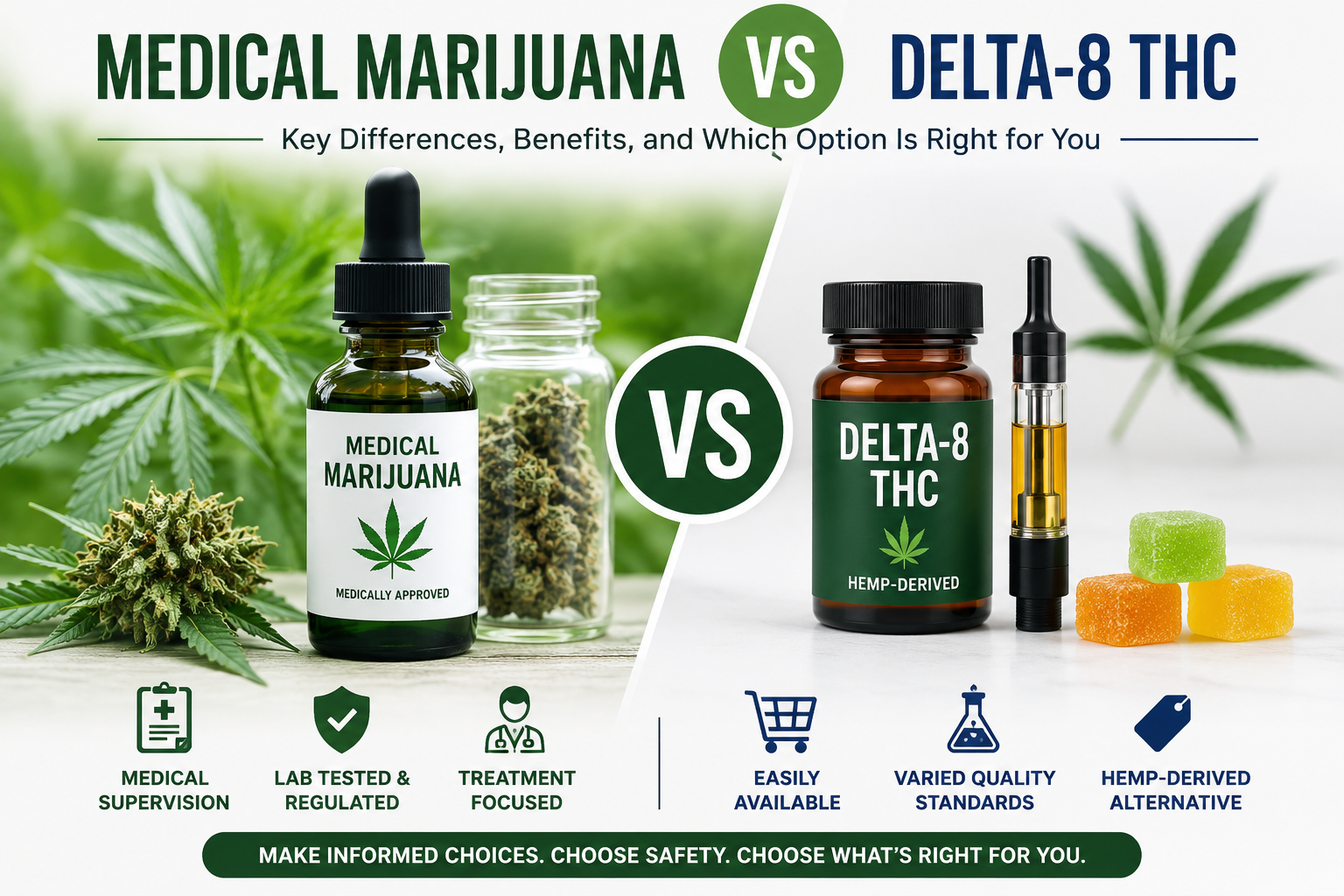
The landscape of legal cannabis products in America has transformed dramatically over the past five years. Today’s patients and curious consumers face a genuinely confusing decision: should they pursue a medical marijuana program in their state, or explore the widely available Delta-8 THC products sold online and in convenience stores?
This question doesn’t have a one-size-fits-all answer, which is precisely why I’m writing this guide. The comparison between medical marijuana and Delta-8 THC has become increasingly urgent as millions of Americans reconsider cannabis for wellness purposes. More people than ever before are asking about these options, yet most lack reliable information to make an informed choice.
If you’re trying to understand the differences between these products, resources like medical cannabis vs hemp-derived THC products can provide additional context on how these two options compare in real-world applications. The truth is, these products operate in entirely different regulatory ecosystems, offer different potency levels, and come with distinct advantages and drawbacks. Understanding these differences could literally shape your health outcomes and legal standing.
What Is Medical Marijuana?
Medical marijuana refers to cannabis products prescribed and monitored by healthcare professionals within a state-regulated medical program. It’s not the casual recreational cannabis you might see advertised at a dispensary down the street-though the plants are technically the same.
When you enter a medical marijuana program, you’re enrolling in a structured healthcare system. A qualified physician evaluates your condition, reviews your medical history, and determines whether cannabis might help your specific situation. This isn’t a rubber-stamp process. Legitimate programs require documented medical conditions that demonstrate a genuine therapeutic need.
Medical marijuana works by delivering cannabinoids-primarily THC and CBD-directly into your system. These compounds interact with your endocannabinoid system, which regulates pain perception, mood, appetite, and sleep cycles. The medical advantage is that your doctor can track how your body responds, adjust dosages, and monitor for drug interactions.
State-approved cannabis programs maintain rigorous oversight. Products must be tested for potency, contaminants, and consistency. Dispensaries operate under strict licensing requirements. Patients receive guidance from trained staff who understand dosing, consumption methods, and potential side effects.
This structured approach exists for a reason: accountability. When something goes wrong or doesn’t work as expected, patients have recourse through their healthcare provider and state regulatory agencies.
What Are Delta-8 THC Products?
Delta-8 THC is a naturally occurring cannabinoid found in cannabis plants, but in extremely small quantities-typically less than 1% of the plant’s total cannabinoid content. This is where things get interesting from a legal and industrial perspective.
Most Delta-8 products on the market today aren’t extracted directly from cannabis plants. Instead, manufacturers convert CBD (cannabidiol) derived from hemp into Delta-8 THC through a chemical process. This conversion happens in laboratories using various catalysts and solvents. The resulting product can then be incorporated into gummies, oils, cartridges, and beverages.
The availability of Delta-8 is remarkable. You can purchase it online, in gas stations, at convenience stores, and through Amazon. No medical card required. No physician consultation necessary. It’s remarkably accessible, which partly explains its explosive growth since 2020.
Popular Delta-8 product forms include vape cartridges, edibles (especially gummies), tinctures, flower, and concentrates. The products often mimic the presentation and marketing of recreational cannabis, complete with colorful packaging and suggestive branding.
This accessibility comes with a catch: minimal regulation. The Delta-8 industry operates in a legal gray zone, with inconsistent quality standards and variable oversight depending on state and local regulations.
Medical Marijuana vs Delta-8 THC: Key Differences
Understanding how these products differ is crucial for making an informed decision about your health. The distinctions run deeper than you might initially think.
Differences in Cannabinoid Content
Medical marijuana contains naturally balanced cannabinoid profiles. A strain labeled “25% THC” genuinely contains approximately that concentration, along with naturally occurring CBD, CBN, terpenes, and other minor cannabinoids working in concert-what scientists call the “entourage effect.”
Delta-8 products contain isolated or synthesized Delta-8 THC, often with minimal other cannabinoids. This mono-cannabinoid approach means you’re consuming a single active compound rather than the complex plant medicine that medical cannabis provides.
From a pharmacological standpoint, this matters significantly. Natural cannabinoid combinations may produce different effects than isolated compounds. Medical marijuana’s full spectrum may offer advantages for certain conditions, though research is still evolving.
Differences in Product Quality Standards
Medical marijuana products face mandatory testing through state-certified laboratories. These tests verify potency, screen for pesticides, heavy metals, microbial contamination, and mold. Failing tests means the product never reaches patients. Packaging must include accurate labeling with cannabinoid percentages, serving sizes, and testing dates.
Delta-8 products exist in an uneven regulatory environment. Some manufacturers maintain excellent quality standards voluntarily. Others cut corners. Testing is frequently voluntary rather than mandatory. The difference is vast: you might purchase a Delta-8 gummy labeled as containing 10mg of Delta-8, only to discover through independent testing that it actually contains 3mg-or something else entirely.
This quality disparity represents one of the most significant practical differences between the two options.
Differences in Patient Experience
Medical marijuana patients typically experience stronger, more predictable effects due to higher THC concentrations and established dosing protocols. A physician can recommend specific strains or products based on their understanding of your condition.
Delta-8 produces milder psychoactive effects than Delta-9 THC (standard cannabis THC). Many users describe a gentler, less intense experience-sometimes described as producing a “clear-headed” high with reduced anxiety compared to Delta-9.
For some patients, this milder profile is exactly what they need. For others pursuing therapeutic effects for serious conditions, Delta-8’s lower potency proves insufficient.
Why More Patients Are Choosing Medical Marijuana Programs
Despite the accessibility of Delta-8, medical marijuana programs continue expanding and attracting new patients. There are concrete reasons for this trend.
Medical marijuana programs provide healthcare guidance that Delta-8 users simply don’t receive. When you register for a program, you’re connecting with the medical establishment. Doctors can monitor your progress, discuss potential drug interactions, and adjust your treatment as needed. This ongoing professional relationship creates accountability and safety.
Product consistency ranks among medical marijuana’s strongest advantages. When you purchase the same product from your state dispensary twice, you know you’re getting the same cannabinoid profile, terpene composition, and quality standards. Delta-8 manufacturers, by contrast, have inconsistent batch-to-batch variations that can surprise and disappoint users.
Safety testing provides measurable peace of mind. Knowing your medical marijuana passed certified laboratory testing for contaminants, potency accuracy, and mold eliminates a major source of uncertainty. Delta-8 products often lack this verification.
Perhaps most importantly, treatment plans within medical programs ensure you’re not flying blind. You’re not self-diagnosing or self-treating. A qualified physician confirms that cannabis is appropriate for your condition and guides your usage patterns.
Safety Considerations Before Choosing Any THC Product
Regardless of which option you pursue, safety deserves serious consideration.
Product contamination concerns plague the unregulated Delta-8 industry far more than medical marijuana. Some Delta-8 products have tested positive for heavy metals, residual solvents from the extraction process, harmful additives, and bacterial contamination. Buying from an unlicensed online seller creates genuine health risks.
Label accuracy is another critical issue. Independent testing of Delta-8 products frequently reveals discrepancies between claimed and actual cannabinoid content. You might purchase a “50mg” gummy containing far less-or occasionally far more-Delta-8 than advertised. This inconsistency makes dosing dangerous for those seeking predictable effects.
Drug interactions deserve attention regardless of which product you choose. THC-containing products can interact with blood thinners, sedatives, antidepressants, and other medications. Medical marijuana programs catch these interactions because doctors review your full medication profile. Delta-8 users typically don’t receive this screening.
The importance of physician consultation cannot be overstated. Even if you ultimately decide Delta-8 suits your needs, consulting with your doctor about your cannabis use provides invaluable safety information. Your healthcare provider understands your unique health profile in ways that online retailers never can.
Medical Marijuana vs Delta-8 THC for Common Health Conditions
Different conditions respond differently to these options.
Chronic pain represents one of cannabis medicine’s strongest applications. Medical marijuana, with its higher and more variable THC content, typically provides superior pain relief for moderate to severe cases. Delta-8 may offer modest relief for mild pain, though research remains limited.
Anxiety presents an interesting case. Medical marijuana’s CBD-rich strains can ease anxiety, while high-THC strains might worsen it for sensitive individuals. Delta-8’s gentler profile appeals to some anxiety patients precisely because it produces milder psychoactive effects. However, medical supervision helps determine which cannabinoid ratios work best for your specific anxiety presentation.
Sleep issues often respond well to both options, though medical marijuana’s ability to combine THC with sleep-supporting terpenes offers advantages. Physicians can recommend strains engineered for sleep support.
PTSD shows promising results in clinical research with medical cannabis, particularly full-spectrum products that medical programs provide. Delta-8’s limited research base makes it a riskier choice for serious conditions like PTSD.
For other qualifying conditions-ranging from neuropathy to epilepsy to cancer-related nausea-medical marijuana’s professional oversight and established treatment protocols generally offer superior outcomes.
Legal Status of Medical Marijuana and Delta-8 THC in the United States
The legal distinction between these products explains much of their diverging paths. Currently, 38 states have enacted medical cannabis programs that operate under clear state-level frameworks, though federal classification creates ongoing complexities.
Medical marijuana operates under state-by-state legalization frameworks. These programs exist within state law, though federal law technically still classifies marijuana as a Schedule I controlled substance. This federal-state conflict creates interesting tensions, but state-level medical programs operate with clear legal frameworks for patients holding medical cards.
If you’re looking for comprehensive information about program requirements and how to navigate state regulations, Medical Marijuana vs Delta-8 THC resources can guide you through each step of the process. Understanding your state’s specific requirements is essential before committing to either option.
Delta-8 THC inhabits murkier legal territory. The 2018 Farm Bill legalized hemp-derived products containing less than 0.3% Delta-9 THC. Since Delta-8 can be derived from federally legal hemp, many argue it’s legal federally. However, some states have explicitly banned Delta-8, while others regulate it. This inconsistent legal landscape creates genuine confusion.
Compliance considerations matter for both options. Medical marijuana patients operating within their state’s program face no legal jeopardy. Delta-8 legality depends entirely on your location. Crossing state lines with Delta-8 products could expose you to federal trafficking charges, despite its current legal status in your home state.
Understanding your specific state’s regulations before committing to either option protects you legally and practically.
How to Decide Which Option Is Right for You
Several factors should guide your decision.
Evaluate the severity of your condition honestly. Serious, chronic conditions often warrant medical marijuana’s stronger effects and professional oversight. Mild discomfort might respond adequately to Delta-8’s gentler profile.
Consider your location. If you live in a medical marijuana state and qualify for a program, accessing it costs little effort. If you live in a state without medical marijuana, Delta-8 becomes more practically appealing-assuming your state permits it.
Assess your comfort with medical supervision. Do you want a doctor involved in your cannabis use, or do you prefer independent decision-making? There’s no universally correct answer, but your preference matters.
Think about product consistency requirements. If you need predictable, reliable dosing, medical marijuana’s regulated environment suits you. If occasional variation doesn’t concern you, Delta-8 remains viable.
Long-term wellness goals should influence your choice. Are you seeking temporary symptom relief, or building a long-term health management strategy? Medical programs typically serve the latter purpose better.
Honestly assess cost considerations. Medical marijuana programs involve state registration fees and potentially higher product prices. Delta-8 costs far less upfront, making it accessible to budget-conscious users.
The Future of Medical Cannabis and Alternative THC Products
The cannabis industry continues evolving rapidly, and understanding emerging trends helps you make forward-looking decisions.
Research developments increasingly validate medical cannabis for specific conditions. Major universities and research institutions are finally receiving federal approval to study cannabis as medications, something that was nearly impossible for decades. These studies will likely expand medical marijuana’s accepted therapeutic applications.
Consumer awareness about quality and safety is rising. Educated consumers increasingly demand testing transparency and batch-specific information, even from Delta-8 manufacturers. This pressure may gradually improve quality standards across the industry.
Healthcare integration is happening gradually. More mainstream physicians are discussing cannabis with patients and learning about cannabinoid medicine. This professionalization of cannabis in healthcare could eventually make medical marijuana the default choice for serious conditions.
The regulatory environment will almost certainly clarify. Whether through federal legalization, enhanced Delta-8 regulations, or state-level standardization, the current legal ambiguity likely won’t persist forever. Understanding today’s landscape positions you well for tomorrow’s developments.
Final Thoughts
The comparison between medical marijuana and Delta-8 THC doesn’t yield a clear universal winner. Instead, each serves different patient populations with different needs, priorities, and circumstances.
Medical marijuana offers higher potency, professional oversight, quality assurance, and integration with your broader healthcare strategy. It represents the more cautious, supervised approach to cannabis medicine. Patients with serious conditions, those already engaged with healthcare providers, and anyone seeking maximum therapeutic benefit typically find medical marijuana more valuable.
Delta-8 THC products provide accessibility, affordability, and convenience without medical bureaucracy. For mild symptom relief, wellness experimentation, or patients in non-medical-marijuana states, Delta-8 fills a legitimate niche. However, the quality variability and limited research base make it a riskier choice for serious health conditions.
Whichever path you choose, prioritize informed decision-making over convenience. Consult with healthcare providers about your cannabis use. Verify product quality through independent testing when possible. Stay aware of your local legal landscape. Consider your specific health situation rather than generalizations about either product category.
For deeper exploration of how these products truly compare in practical applications, learning more about understanding Delta-8 and medical marijuana differences can help you evaluate which option aligns with your personal health goals and circumstances.
The future of cannabis medicine belongs to patients who take responsibility for understanding what they consume and why. This guide provides the foundation. Your personal health decisions must account for your unique circumstances-and ideally, guided by qualified healthcare professionals.
Frequently Asked Questions
1. Is Delta-8 THC legal everywhere?
Delta-8’s legal status varies by state-some states permit it while others have explicitly banned it, so you must verify your local regulations before purchasing.
2. Will medical marijuana show up on a drug test?
Yes, medical marijuana can trigger positive results on standard drug tests because they detect THC metabolites, though some employers honor medical marijuana cards as a legal use.
3. How long does it take to get approved for a medical marijuana card?
Approval timelines vary by state but typically range from one to four weeks after a physician approves your application and you submit required documentation.
4. Can I use Delta-8 and prescription medications together?
Potential interactions exist between Delta-8 and certain medications, so consulting your doctor before combining them is essential for safety.
5. Does Delta-8 produce the same effects as medical marijuana?
No-Delta-8 produces milder psychoactive effects than medical marijuana’s typically higher THC content, making it less potent for therapeutic purposes.
Business Information
Ezmedcard
Address: 423 Weathersby Rd Suite 170, Hattiesburg, MS 39402
Phone: 475-467-0863
Website: https://ezmedcard.com
