
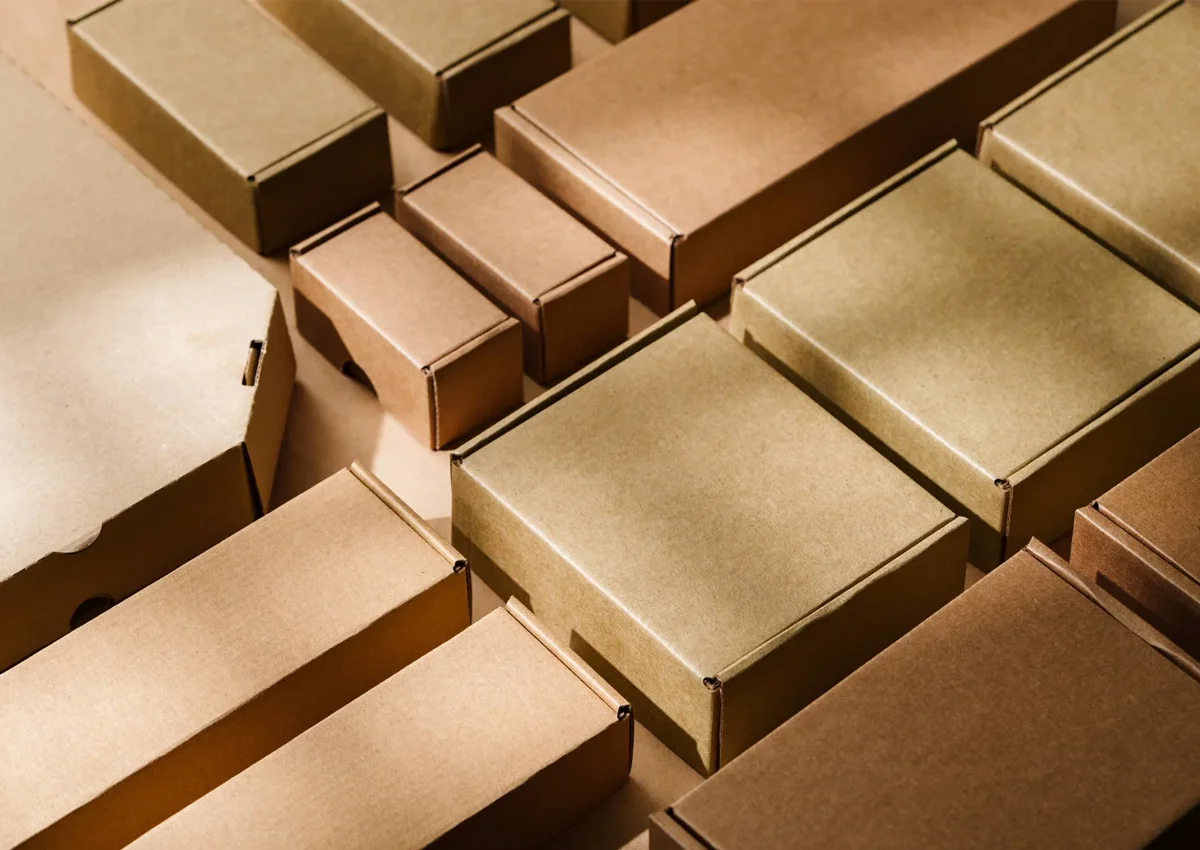
Think about the last time something arrived at your door broken. Chances are, it wasn’t the product that failed — it was the box.
Now think about all the times things arrived perfectly fine. You didn’t think about the box then, did you? Nobody does. That’s the strange reality of cardboard boxes — when they do their job right, they’re completely invisible. When they fail, they’re suddenly everyone’s problem.
I’ve been around packaging long enough to know that most people — business owners included — don’t think seriously about cardboard boxes until something goes wrong. A product shows up crushed. A customer posts a complaint. A pallet collapses mid-warehouse. And then suddenly, boxes become very interesting very fast.
So let’s talk about them before something goes wrong for you.
Why Cardboard Still Rules, Decades Later
Plastic was supposed to replace it. Then foam. Then a dozen other materials that promised better protection with less waste. And yet, here we are — cardboard boxes still dominate packaging across every industry on earth.
There’s a reason for that, and it’s not tradition or stubbornness. Cardboard is genuinely hard to beat when you look at the full picture. It’s lightweight. It stacks. It insulates. It absorbs impact. It’s printable, cuttable, foldable, and recyclable. No other single packaging material checks all those boxes — pun intended.
The other thing people underestimate is how much cardboard has evolved. The plain brown box your grandfather shipped things in looks similar to today’s corrugated cardboard box, but the materials science behind modern versions is significantly more sophisticated. Moisture resistance coatings, high-ECT fluting, recycled fiber blends that perform as well as virgin material — the boring-looking brown box of 2024 is a quietly impressive piece of engineering.
Not All Cardboard Boxes Are the Same — Here’s What Separates Them
Walk into any packaging supplier and ask for “cardboard boxes” and they’ll immediately ask you to be more specific. That’s because the term covers a surprisingly wide range of products that behave very differently from each other.
Here’s how to think about the main categories:
Corrugated Cardboard Boxes
This is what most people picture. The fluted inner layer — that wavy structure you can see when you tear the edge of a shipping box — is what makes corrugated boxes strong. The corrugation creates tiny air pockets that act as shock absorbers, distributing impact across the whole surface rather than letting it concentrate in one spot.
Corrugated boxes come in single-wall, double-wall, and triple-wall versions. Single-wall handles most everyday shipping just fine. Double-wall is for heavier or more valuable products. Triple-wall is industrial-grade and most people will never need it.
The strength of a corrugated box is measured two ways — Edge Crush Test (ECT) tells you how much stacking pressure it can handle, and burst strength tells you how much outward force the walls can take before they fail. Both matter depending on your product and how it’s being shipped.
Folding Carton Boxes
These are the boxes you see on retail shelves — cereal boxes, medicine packaging, cosmetic boxes. They’re made from paperboard, not corrugated material, so they’re thinner and lighter. They’re not designed to handle much weight or rough handling — they exist to present your product attractively at the point of sale.
If you’re a product-based business selling through retailers, folding cartons are likely part of your packaging lineup. They print beautifully, they’re cost-effective at scale, and they’re what customers interact with before they even open the product.
Rigid Boxes
Also called setup boxes. These are the thick, sturdy, non-collapsible boxes that luxury brands use. You know the feeling of opening a new phone or an expensive watch — that solid, weighty box that doesn’t flex at all when you hold it? That’s a rigid box.
They cost considerably more than corrugated or folding carton options. But for high-ticket products, that cost makes sense because the box itself communicates quality before the customer even sees what’s inside.
Kraft Mailer Boxes
Smaller, self-locking boxes without tape requirements. These are popular for subscription boxes and e-commerce brands that want a clean, simple unboxing experience. They’re not as strong as corrugated shipping boxes, but for lighter products on short shipping routes, they work well and look great.
Sizing: The Detail That Costs Businesses Real Money
Here’s something most guides won’t tell you plainly: choosing the wrong box size is one of the most expensive packaging mistakes a business can make. Not because boxes cost too much — they’re relatively cheap — but because of what happens downstream.
Major carriers like FedEx, UPS, and DHL don’t just charge based on how heavy your package is. They charge based on dimensional weight — a calculation that factors in the box’s length, width, and height. If your box is too large relative to what’s inside, you’ll pay for space you’re not actually using.
Multiply that across hundreds or thousands of shipments per month, and you’re looking at a significant amount of money walking out the door unnecessarily. Getting your box sizes right — truly right, not just roughly right — is one of the fastest ways to reduce shipping costs without changing anything else.
The general guidance: leave about two inches of space on each side of your product for protective fill. Any more than that is excess dimensional weight you’re paying to ship. Any less and your product doesn’t have adequate protection.
For businesses with multiple product sizes, the temptation is to stock every box size imaginable. Resist that. Figure out the three or four sizes that cover the bulk of your shipments and standardize around those. Fewer SKUs, simpler inventory, fewer mistakes in the pick-and-pack process.
What to Actually Look for When Buying Cardboard Boxes
When you’re evaluating cardboard boxes — whether from a local supplier or an online distributor — here are the things that actually matter:
Wall construction. Single-wall is fine for most products under 20 lbs on standard shipping routes. Once you’re getting into heavier products, longer transit times, or international shipments, start looking at double-wall. The extra cost per box is almost always worth it when you factor in the cost of damaged goods and replacement shipments.
ECT rating. For standard e-commerce, 32 ECT is a reasonable baseline. If your boxes will be stacked — in a warehouse, on a pallet, or during transit — go higher. 44 ECT or 51 ECT gives you significantly more stacking strength.
Moisture resistance. Standard corrugated boxes are not waterproof. They’re not even close. If your products are shipping through humid climates, being stored in non-climate-controlled warehouses, or going through outdoor delivery routes, uncoated corrugated boxes will absorb moisture and lose a significant portion of their strength. Ask suppliers about moisture-resistant coatings if this is a concern.
Supplier consistency. This one gets overlooked. You find a great box at a great price, place a bulk order, and everything’s perfect. Then six months later you reorder and the quality has slipped — slightly thinner walls, looser fluting. This happens more than suppliers like to admit. Build relationships with suppliers who are transparent about their manufacturing specs and willing to stand behind consistent quality.
Custom Cardboard Boxes: Worth It or Vanity Project?
There’s a legitimate debate in the packaging world about whether custom-printed cardboard boxes are a worthwhile investment or just an expensive way to make founders feel good about their brand.
The honest answer: it depends on your volume and your product.
If you’re shipping fewer than a few hundred orders per month, custom boxes probably don’t make financial sense yet. The cost premium is real, and at low volumes, you won’t recover it through efficiency gains or measurably higher customer retention. Branded tape, custom tissue paper, or a well-designed insert card can give you most of the unboxing experience benefits at a fraction of the cost.
Once you’re shipping at scale — several hundred to thousands of orders monthly — the math starts to shift. Custom-sized boxes reduce void fill and dimensional weight charges. Branded packaging reduces the need for additional inserts. And the customer experience benefits compound over time as your brand becomes more recognizable.
One thing that’s changed meaningfully in recent years: minimum order quantities for custom corrugated boxes have come down significantly. Digital printing technology made short runs economical. Some suppliers now offer custom boxes starting from as few as 50 units, which opens the door for smaller businesses that weren’t previously in the market.
The Sustainability Side of Cardboard Boxes
Cardboard has a genuine sustainability story that often gets overlooked in conversations dominated by reusable packaging and bioplastics.
Corrugated cardboard has one of the highest recycling rates of any packaging material in use today. In most markets, well over 80% of corrugated produced gets recycled and re-enters the material stream. The corrugated box you’re shipping products in today likely contains a significant percentage of recycled fiber from boxes that were used before it.
That said, not all cardboard is equally recyclable. Heavy lamination, wax coatings, and mixed-material constructions can make boxes difficult or impossible to recycle through standard municipal programs. If sustainability is genuinely part of your brand values — not just something you mention on your website — it’s worth asking suppliers specifically about recycled fiber content and end-of-life recyclability.
FSC and SFI certifications are the ones to look for. They don’t guarantee a box is made from recycled material, but they do confirm that the virgin fiber used comes from responsibly managed forestry operations.
Finding the Right Supplier Without Getting Burned
The packaging industry is full of suppliers who quote aggressively and then quietly compromise on quality once they have your business. It happens constantly, and the consequences show up three months later when your return rate ticks up for reasons that aren’t immediately obvious.
A few things that help:
Always get samples before committing to a bulk order. A supplier who won’t send samples is a red flag. Samples cost them almost nothing — reluctance to provide them usually means reluctance to stand behind the product.
Ask specifically about quality control processes. Where do they source their raw materials? Do they test finished boxes for ECT and burst strength? What’s their policy if a batch doesn’t meet spec?
Don’t make the final decision on price alone. The cheapest box is rarely the cheapest packaging solution once you factor in damage rates, reorders, and the time your team spends dealing with quality issues.
Local and regional corrugated manufacturers often offer better value than national distributors for medium to large order volumes, because they’re cutting out middleman markups. They’re also typically more flexible on custom sizing. A quick search for corrugated box manufacturers in your region is worth the 10 minutes it takes.
The Practical Summary
Cardboard boxes are not glamorous. Nobody’s going to write a magazine profile about the corrugated packaging decisions you made for your business. But those decisions quietly affect your shipping costs, your damage rates, your customer experience, and your brand perception every single day.
Get the basics right — correct sizing, appropriate wall strength, a reliable supplier — and you’ve removed a whole category of business problems. Get them wrong and you’ll spend more time than you’d ever imagine dealing with the consequences.
