
Introduction
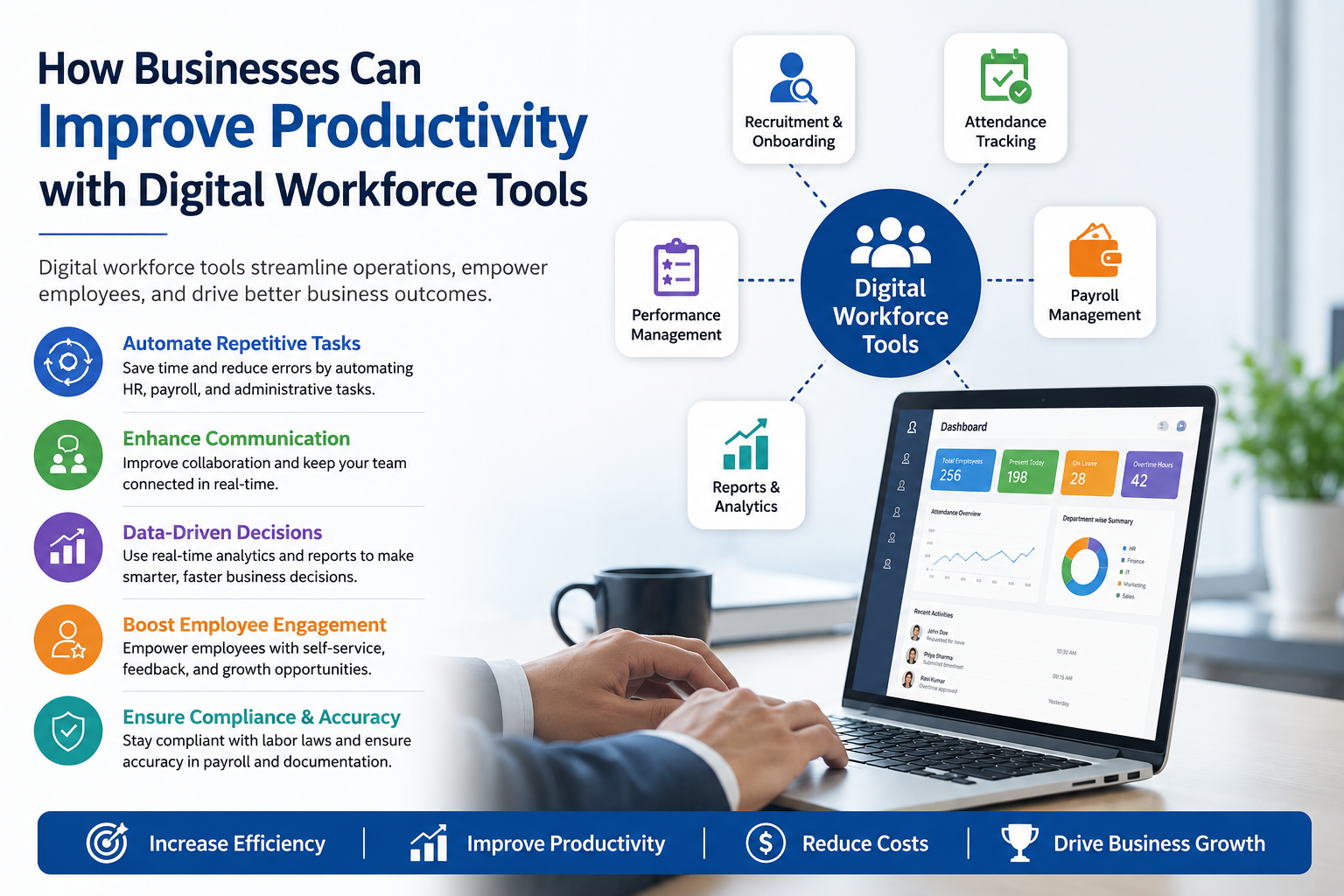
In today’s competitive business environment, organizations are constantly searching for ways to improve efficiency, reduce operational costs, and enhance employee performance. Digital workforce tools have emerged as a powerful solution for businesses looking to streamline daily operations and achieve higher productivity levels. From attendance tracking and employee communication to payroll processing and performance management, these tools simplify complex tasks and allow teams to focus on strategic goals. Companies adopting solutions such as Payroll Software Chennai are experiencing significant improvements in workforce management, accuracy, and overall business performance.
Understanding Digital Workforce Tools
Digital workforce tools are software solutions designed to automate and optimize employee-related processes. These platforms help businesses manage various functions, including attendance, scheduling, payroll, recruitment, performance evaluation, and employee engagement.
Unlike traditional manual systems, digital tools provide real-time access to workforce data, enabling managers to make informed decisions quickly. Whether a company has a small team or a large workforce, these solutions create a more organized and efficient work environment.
Automating Repetitive Administrative Tasks
One of the biggest productivity challenges businesses face is the time spent on repetitive administrative work. Manual data entry, attendance calculations, leave approvals, and payroll processing can consume valuable hours every week.
Digital workforce tools automate these routine tasks, reducing human effort and minimizing errors. Employees and managers can complete processes faster, while HR teams can focus on strategic activities such as talent development and workforce planning.
Automation also ensures consistency across operations, helping businesses maintain accuracy and compliance with company policies.
Enhancing Employee Attendance and Time Management
Employee attendance plays a critical role in business productivity. Traditional attendance systems often involve manual tracking, which can lead to inaccuracies and delays.
Digital attendance solutions provide real-time monitoring of employee work hours, overtime, shifts, and leave balances. These systems automatically record attendance data and generate reports, eliminating the need for manual calculations.
With better visibility into employee schedules, managers can optimize workforce allocation and ensure that resources are available where they are needed most.
Improving Communication and Collaboration
Effective communication is essential for workplace productivity. Digital workforce platforms often include communication tools that allow employees and managers to share updates, announcements, and important information instantly.
Centralized communication reduces misunderstandings and ensures that everyone remains informed about company objectives and project progress. Employees can collaborate more effectively, regardless of their location, making these tools especially valuable for hybrid and remote work environments.
By improving collaboration, businesses can complete projects faster and achieve better outcomes.
Streamlining Payroll and Compliance Management
Payroll management is one of the most critical functions within any organization. Errors in salary calculations, tax deductions, or statutory compliance can create employee dissatisfaction and legal complications.
Digital payroll systems automate salary processing, tax calculations, and compliance reporting. This not only reduces administrative workload but also improves accuracy and transparency.
Businesses can ensure timely salary disbursement while maintaining compliance with changing labor regulations. As a result, employees gain confidence in organizational processes, leading to improved morale and productivity.
Empowering Human Resource Management
Modern workforce tools provide comprehensive human resource management capabilities. Businesses can use these platforms to manage recruitment, onboarding, performance reviews, training, and employee records from a single system.
Organizations leveraging HR Software Chennai can simplify workforce administration and create a more engaging employee experience. Employees gain access to self-service portals where they can view payslips, request leave, update personal information, and access company resources without relying heavily on HR personnel.
This level of accessibility improves employee satisfaction while reducing administrative burdens.
Leveraging Data for Better Decision-Making
Data-driven decision-making is a major advantage of digital workforce tools. These systems generate valuable insights into employee performance, attendance trends, productivity levels, and workforce costs.
Managers can analyze reports and identify opportunities for improvement. For example, attendance data may reveal staffing shortages during specific periods, while performance reports can highlight training needs within teams.
By using workforce analytics, businesses can make informed decisions that support long-term growth and operational efficiency.
Supporting Remote and Hybrid Work Models
The rise of remote and hybrid work has increased the need for digital workforce solutions. Businesses require tools that allow employees to remain productive regardless of location.
Cloud-based workforce platforms enable employees to access company systems, submit requests, track attendance, and communicate with colleagues from anywhere. Managers can monitor team performance and project progress without requiring physical presence in the office.
This flexibility helps organizations maintain productivity while offering employees a better work-life balance.
Enhancing Employee Engagement and Satisfaction
Employee engagement directly impacts productivity. Motivated employees are more likely to perform efficiently, contribute innovative ideas, and remain committed to organizational goals.
Digital workforce tools support engagement by providing transparent communication, recognition programs, performance tracking, and learning opportunities. Employees gain clarity about expectations and receive timely feedback on their contributions.
When employees feel valued and supported, they become more productive and actively contribute to business success.
Reducing Operational Costs
Manual workforce management processes often lead to inefficiencies, errors, and unnecessary expenses. Businesses may spend considerable resources correcting mistakes, managing paperwork, and handling compliance issues.
Digital workforce tools reduce these costs through automation and improved process management. Organizations can optimize staffing levels, minimize payroll errors, and eliminate redundant administrative tasks.
The resulting cost savings can be reinvested into growth initiatives, employee development programs, and technology upgrades.
Conclusion
Digital workforce tools have become essential for businesses seeking higher productivity, operational efficiency, and sustainable growth. By automating routine tasks, improving communication, streamlining payroll management, and providing valuable workforce insights, these solutions help organizations perform at their best.
As workplaces continue to evolve, companies that embrace digital workforce technology will be better positioned to adapt to changing demands, support employee success, and maintain a competitive advantage. Investing in the right workforce tools is no longer just an operational decision—it is a strategic step toward building a more productive and future-ready organization.