
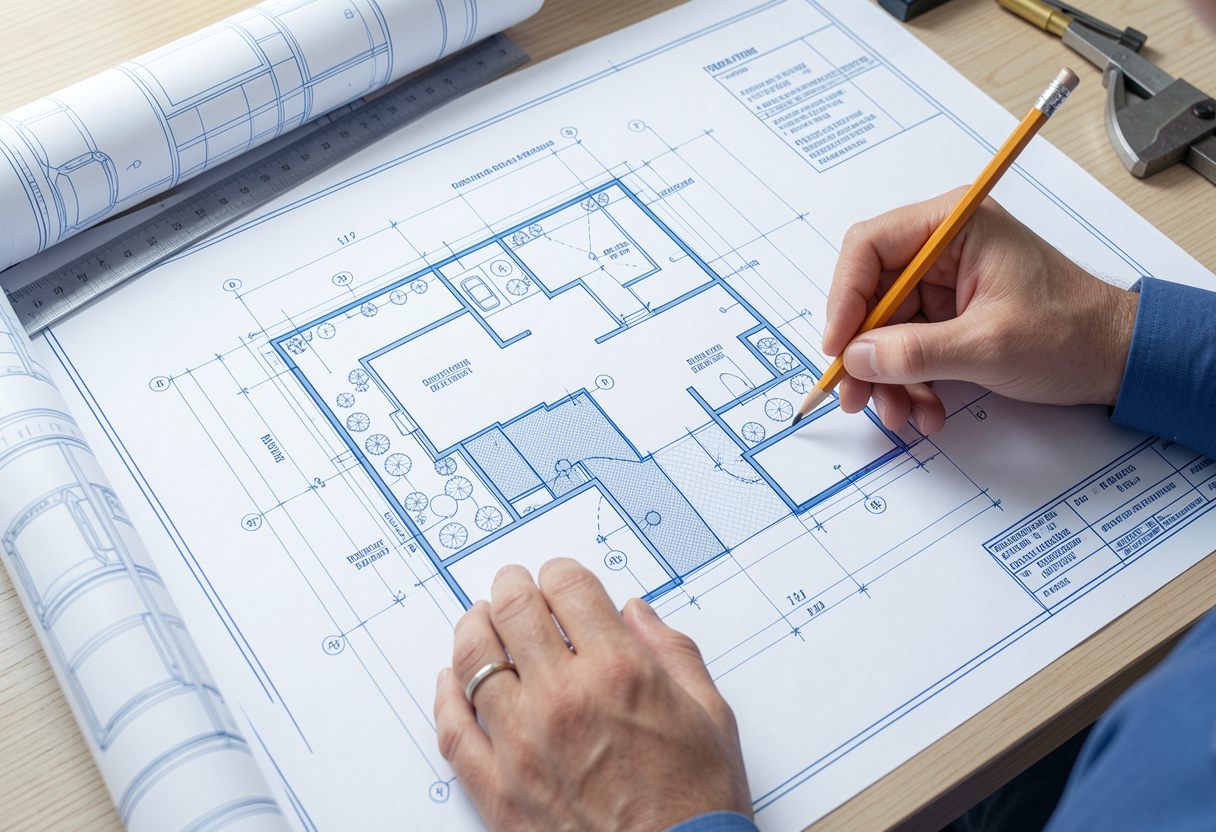
Whether you’re building a new home, adding an extension, installing a pool, or preparing a property for development, a site plan is one of the most important documents you’ll need. Local authorities, contractors, architects, and engineers all rely on accurate site plans to understand a property’s layout and ensure a project complies with zoning and building regulations.
Many property owners are unfamiliar with site plans until they begin a construction or permit application process. Questions like “What is a site plan?”, “How do I get a site plan?”, and “What is the difference between a site plan vs plot plan?” are common among homeowners and developers alike.
This guide explains everything you need to know about site plans, their purpose, and how they support successful construction and property projects.
What Is a Site Plan?
A site plan is a detailed drawing that shows the layout of a property and the structures located on it. It provides a bird’s-eye view of the land, illustrating buildings, property boundaries, driveways, utilities, landscaping features, easements, and other important elements.
Site plans help local planning departments evaluate whether a proposed project complies with zoning laws, setback requirements, drainage regulations, and safety standards.
A typical site plan may include:
- Property lines and dimensions
- Existing and proposed buildings
- Driveways and parking areas
- Utility connections
- Sidewalks and pathways
- Landscaping features
- Fences and retaining walls
- Setback distances
- North arrow and scale
Because every project is different, the level of detail required can vary depending on local regulations and permit requirements.
Why Site Plans Are Important for Construction Projects
Site plans play a critical role in planning and development. They provide a visual representation of how a project fits within a property and help identify potential issues before construction begins.
Benefits of a site plan include:
Ensures Permit Approval
Most municipalities require site plans for permits before approving construction projects. A clear and accurate site plan allows officials to verify compliance with local codes and zoning ordinances.
Improves Project Planning
Builders and contractors use site plans to understand the property’s layout and coordinate construction activities efficiently.
Prevents Costly Mistakes
An accurate site plan helps avoid problems such as building too close to property lines, utility conflicts, or drainage issues.
Supports Property Development
Developers rely on site plans to maximize land use while meeting local planning regulations.
Without a properly prepared site plan, permit applications may be delayed or rejected.
Site Plan vs Plot Plan: What’s the Difference?
One of the most common questions property owners ask is about the difference between a site plan vs plot plan.
Although the terms are often used interchangeably, there are important distinctions.
Plot Plan
A plot plan generally focuses on the basic layout of a property. It shows:
- Property boundaries
- Existing structures
- Setbacks
- Easements
- Driveways
Plot plans are often used for smaller residential projects and permit applications.
Site Plan
A site plan is typically more detailed and comprehensive. In addition to everything included in a plot plan, it may also show:
- Proposed construction
- Utility locations
- Landscaping features
- Drainage systems
- Parking areas
- Grading information
For larger construction and development projects, local authorities usually require a detailed site plan rather than a basic plot plan.
In simple terms, a plot plan focuses on the property layout, while a site plan provides a broader view of how the entire project interacts with the site.
Site Plans for Permits: What You Need to Know
Many construction projects require official approval before work can begin. This is where site plans for permits become essential.
Common projects that may require site plans include:
- New home construction
- Home additions
- Detached garages
- Swimming pools
- Deck installations
- Commercial developments
- Accessory dwelling units (ADUs)
- Fencing and retaining walls
Permit reviewers use site plans to determine whether a project complies with:
- Zoning requirements
- Setback regulations
- Building codes
- Accessibility standards
- Drainage requirements
- Environmental regulations
Submitting an incomplete or inaccurate site plan can lead to permit delays and additional costs. That’s why it’s important to ensure your plan includes all required information before submission.
How to Get a Site Plan
If you’re wondering how to get a site plan, there are several options depending on your property’s location and project requirements.
Check Existing Property Records
Many local government offices maintain property records that may include historical site plans, surveys, or plot plans.
You can often find these through:
- Building departments
- Planning departments
- County assessor offices
- Land registry offices
Review Your Property Survey
If you received a survey when purchasing your property, it may contain much of the information needed to create a site plan.
Hire a Professional
Architects, engineers, surveyors, and site planning specialists can create accurate site plans tailored to permit requirements.
This option is often recommended for complex projects or properties with unique conditions.
Use Online Site Plan Services
Many property owners now use professional online services to obtain permit-ready site plans quickly and affordably.
Online providers can create customized plans using property data, satellite imagery, surveys, and municipal requirements.
For homeowners seeking a fast and convenient solution, online site plan services can significantly simplify the permit process.
What Information Is Needed to Create a Site Plan?
To prepare an accurate site plan, you’ll typically need the following information:
- Property address
- Lot dimensions
- Existing building locations
- Proposed construction details
- Setback requirements
- Driveway locations
- Utility information
- Survey documents (if available)
The more information provided, the more accurate and useful the final site plan will be.
Before ordering or creating a site plan, it’s a good idea to confirm your municipality’s specific permit requirements.
Tips for Getting Permit-Ready Site Plans
To improve your chances of fast permit approval, follow these best practices:
Verify Local Requirements
Permit requirements vary by city and county. Always check local guidelines before submitting plans.
Include Accurate Measurements
Incorrect dimensions can cause permit delays and may require plan revisions.
Show Proposed Improvements Clearly
New structures, additions, and modifications should be clearly labeled.
Include Setbacks
Demonstrating compliance with setback regulations is one of the most important aspects of permit review.
Work With Experienced Professionals
Professional site plan providers understand local permit expectations and can help reduce approval issues.
Final Thoughts
A site plan is much more than a simple property drawing. It serves as a critical planning tool for construction, development, and permit approval. Whether you’re building a home, adding a garage, installing a pool, or launching a larger development project, an accurate site plan helps ensure compliance and keeps your project moving forward.
Understanding the difference between a site plan vs plot plan, knowing when site plans for permits are required, and learning how to get a site plan can save time, money, and frustration throughout the construction process.
By obtaining a professional, permit-ready site plan, property owners can confidently move from planning to construction while meeting local requirements and avoiding unnecessary delays.
