
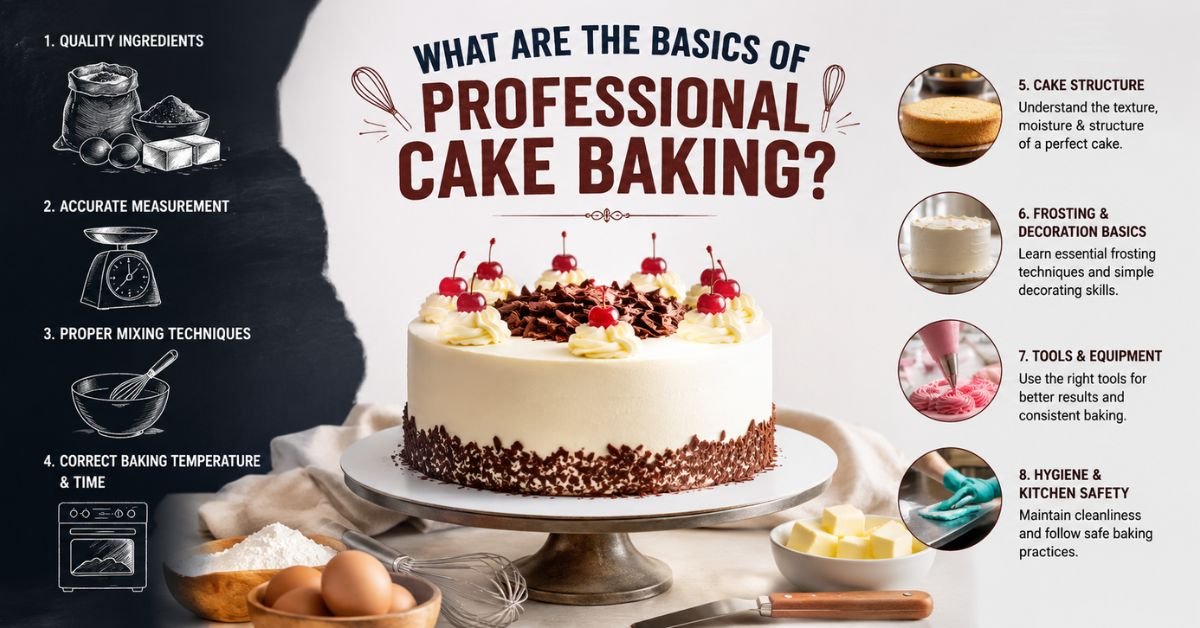
Professional cake baking is a skill that combines creativity, precision, and technical knowledge. While baking may look simple from the outside, creating high-quality cakes requires proper understanding of ingredients, measurements, techniques, and presentation. Many beginners start learning through online videos, but professional training provides a deeper understanding of the baking process and helps students avoid common mistakes. This is one reason why many aspiring bakers are now joining Cake Baking Classes in Chennai to improve their practical skills and industry knowledge.
Professional cake baking is not only about making cakes taste good. It also focuses on texture, consistency, appearance, hygiene, and presentation. Learning the basics properly can help students build confidence and create bakery-style products with better results.
Understanding the Role of Ingredients
Every ingredient used in cake baking has a specific purpose. Flour gives structure, eggs add stability, butter provides richness, and sugar improves flavor and texture. Baking powder and baking soda help cakes rise properly during baking.
Professional bakers understand how ingredients work together. Even small changes in ingredient quantity can affect the final texture of the cake. This is why accurate measurements are considered one of the most important basics in cake baking.
Students also learn the difference between various ingredients like unsalted butter and margarine, dark chocolate and compound chocolate, or cake flour and all-purpose flour. This knowledge helps in selecting the right ingredients for different recipes.
Mixing Methods and Batter Preparation
One of the key basics in professional cake baking is learning the correct mixing method. Different cake recipes require different techniques. Some cakes use the creaming method, while others use whisking or folding techniques.
Proper mixing affects the softness, volume, and texture of the cake. Overmixing can make cakes dense, while undermixing can create uneven textures. Professional baking classes teach students how to prepare smooth and balanced batters for different cake varieties.
Students also learn how to avoid common mistakes such as curdling, air bubbles, sinking cakes, or dry textures. These small technical skills make a big difference in the final result.
The Importance of Baking Temperatures
Temperature control is another important part of professional cake baking. Oven temperature directly affects cake texture, color, and baking time. Baking at the wrong temperature can lead to cracked tops, undercooked centers, or dry cakes.
Professional bakers learn how to preheat ovens correctly, position cake tins properly, and understand baking times for different recipes. Students also learn the importance of cooling cakes before frosting or decorating them.
Understanding oven settings helps bakers achieve consistent results, especially when preparing cakes for customers or commercial orders.
Decoration and Finishing Techniques
Cake decoration is one of the most exciting parts of professional baking. Students learn how to prepare smooth frosting, apply cream evenly, and create clean cake finishes. Decoration techniques include piping, fondant work, chocolate decoration, floral designs, and texture effects.
Presentation plays a major role in modern cake baking. A well-decorated cake creates a strong impression and increases customer interest. Professional bakers focus on both taste and appearance to create visually attractive cakes.
Creative decoration skills also help bakers develop their personal style and improve their confidence in handling customized cake orders.
Hygiene and Professional Kitchen Habits
Professional cake baking also requires proper hygiene and kitchen management. Students learn how to maintain clean workspaces, store ingredients safely, and handle equipment properly.
Time management is another important skill. Professional bakers often prepare multiple items within a limited time, so planning and organization become essential. These habits help students work more efficiently in bakeries, cafés, hotels, or home baking businesses.
Today, many learners choose Cake Baking Classes in Anna Nagar to gain hands-on experience and understand professional baking standards through practical sessions and expert guidance.
Conclusion
The basics of professional cake baking go far beyond simply following recipes. From ingredient knowledge and mixing techniques to temperature control and decoration skills, every step plays an important role in creating high-quality cakes.
With proper training and regular practice, students can improve their confidence, creativity, and technical abilities. Learning the basics correctly builds a strong foundation for anyone who wants to grow in the baking industry or start a successful cake baking journey.
