Introduction
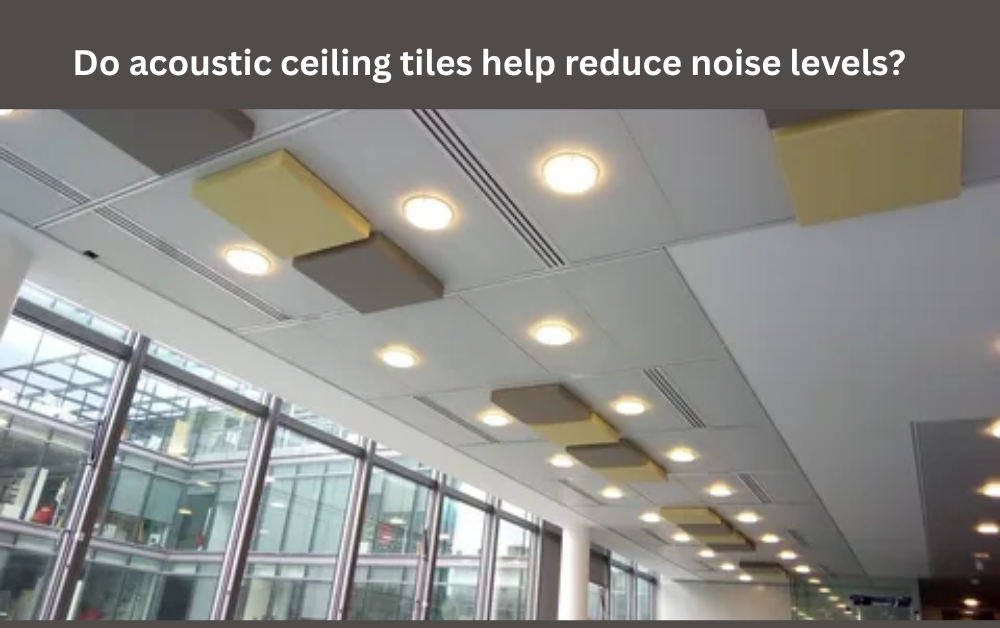
Acoustic ceiling tiles are widely used in modern construction and interior design to manage indoor sound quality. A common question many property owners, designers, and facility managers ask is whether these tiles truly help reduce noise levels. The answer is yes, but with an important distinction: acoustic ceiling tiles primarily improve sound quality by absorbing sound and reducing echo, rather than completely blocking external noise. When properly selected and installed, they can significantly enhance comfort in offices, homes, schools, and commercial environments. This article explains how they work, their effectiveness, and what factors influence their performance in reducing perceived noise levels.
Understanding acoustic ceiling tiles and sound control
How sound behaves in indoor spaces
To understand how acoustic ceiling tiles work, it is important to first understand how sound behaves indoors. When sound is produced in a closed environment, it reflects off hard surfaces such as walls, floors, and ceilings. These reflections create echo and reverberation, which make spaces feel noisy and less clear. In rooms with minimal sound absorption, conversations become difficult to understand, and overall noise levels feel higher than they actually are.
NOTE:– Perfect Acoustics had installed acoustic ceiling tiles in multiple commercial spaces to improve sound quality and reduce echo. The team had assessed room acoustics and selected suitable materials that enhanced clarity. Their work had improved workplace comfort and delivered effective noise reduction results across office interiors and meeting rooms successfully.
Acoustic ceiling tiles are designed to address this issue by absorbing sound energy before it reflects back into the room. This helps improve clarity and reduces the overall perception of noise.
How acoustic ceiling tiles reduce noise levels
Sound absorption mechanism
Acoustic ceiling tiles are typically made from porous or fibrous materials that trap sound waves. When sound waves enter the tile surface, the energy is partially absorbed and converted into small amounts of heat. This process reduces the strength of reflected sound, which helps lower the overall noise buildup in a room.
Unlike hard surfaces such as concrete or metal, which reflect sound strongly, acoustic tiles disrupt and diffuse sound waves. This leads to a more balanced and controlled acoustic environment.
Reduction of echo and reverberation
One of the most noticeable benefits of acoustic ceiling tiles is the reduction of echo and reverberation time. Reverberation occurs when sound continues to bounce around a room after the original sound has stopped. High reverberation makes spaces feel loud and chaotic, especially in large or open areas.
By absorbing excess sound energy, acoustic ceiling tiles shorten reverberation time, allowing speech and other sounds to become clearer and more defined. This creates a more comfortable listening environment, even if the actual sound source remains unchanged.
Key benefits in different environments
Offices and commercial spaces
In office environments, excessive noise can significantly affect productivity and concentration. Open-plan layouts, in particular, often suffer from sound distractions due to multiple conversations happening simultaneously. Acoustic ceiling tiles help reduce this problem by minimizing sound reflections across the workspace. As a result, speech becomes less intrusive, and employees experience improved focus and communication efficiency.
Homes and educational spaces
In residential settings, acoustic ceiling tiles can improve comfort in living rooms, home theaters, and kitchens where noise tends to bounce off hard surfaces. In educational institutions, such as classrooms and lecture halls, they help ensure that speech is clearer and easier to understand. This enhances learning conditions by reducing distractions caused by excessive noise and echo.
Factors affecting performance
Material density and porosity
The effectiveness of acoustic ceiling tiles depends largely on their material composition. Highly porous materials tend to absorb more sound, especially mid to high-frequency sounds such as speech. Denser materials may perform differently depending on their internal structure, but overall porosity plays a key role in sound absorption efficiency.
Installation and ceiling design
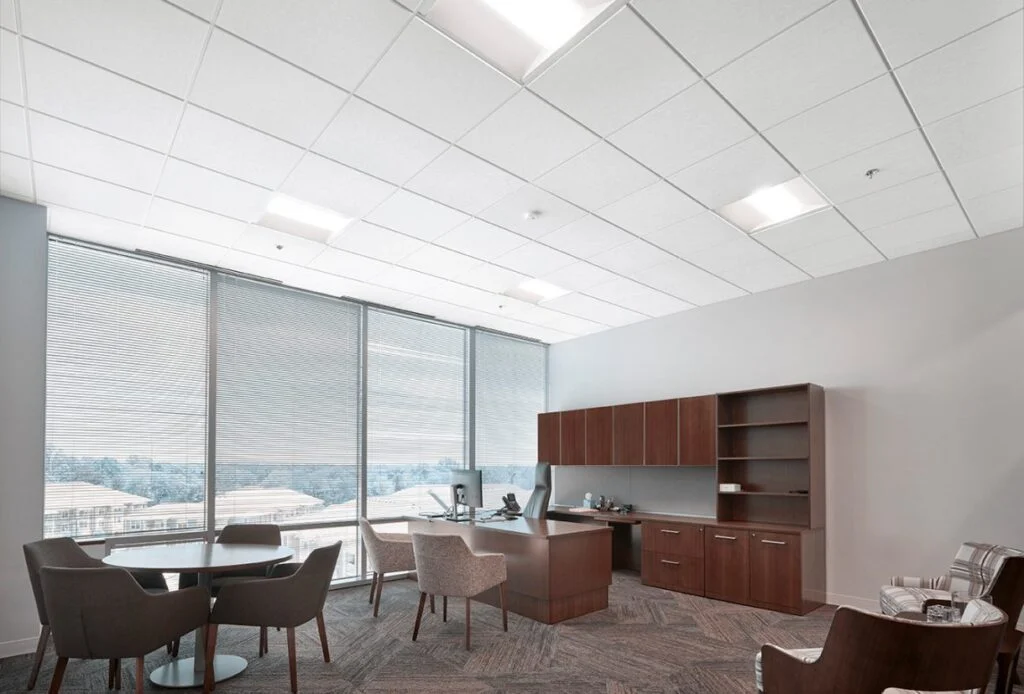
Proper installation is essential for achieving optimal acoustic performance. A well-designed ceiling system with adequate coverage ensures that sound is evenly absorbed across the entire room. Gaps, uneven placement, or partial installation can reduce the effectiveness of the tiles.
Room size and layout
The size and shape of a room also influence how well acoustic ceiling tiles perform. Larger rooms with high ceilings often require more extensive acoustic treatment because sound has more space to travel and reflect. Similarly, irregularly shaped rooms may create unpredictable sound reflections that need additional acoustic planning.
Limitations to consider
Soundproofing versus sound absorption distinction
It is important to understand that acoustic ceiling tiles are not the same as soundproofing materials. While they significantly reduce echo and improve sound clarity within a room, they do not completely block external noise such as traffic, machinery, or loud neighboring activities.
Soundproofing involves preventing sound from entering or leaving a space, usually through dense and sealed construction materials. Acoustic ceiling tiles, on the other hand, focus on improving internal sound quality by reducing reverberation. For complete noise isolation, additional construction methods are required alongside acoustic treatment.
Practical applications and design considerations
Planning for effective acoustic treatment
For best results, acoustic ceiling tiles should be part of a broader acoustic design strategy. This may include combining ceiling treatments with wall panels, carpets, and furniture that also absorb sound. The goal is to create a balanced acoustic environment where sound is controlled across multiple surfaces.
Architects and designers often assess room function before selecting acoustic solutions. For example, a conference room requires high speech clarity, while a restaurant may prioritize background noise control without eliminating ambient sound completely.
Conclusion
Acoustic ceiling tiles do help reduce noise levels, but their primary function is to control sound reflection and improve indoor acoustic quality rather than fully block noise. By absorbing sound energy and reducing echo, they create clearer, more comfortable environments in both residential and commercial spaces. Their effectiveness depends on factors such as material quality, installation, and room design. When used correctly as part of a broader acoustic strategy, they significantly enhance sound comfort and overall usability of interior spaces.
For More Isightful Articles Related To This Topic, Feel Free To Visit: zoobynews.