
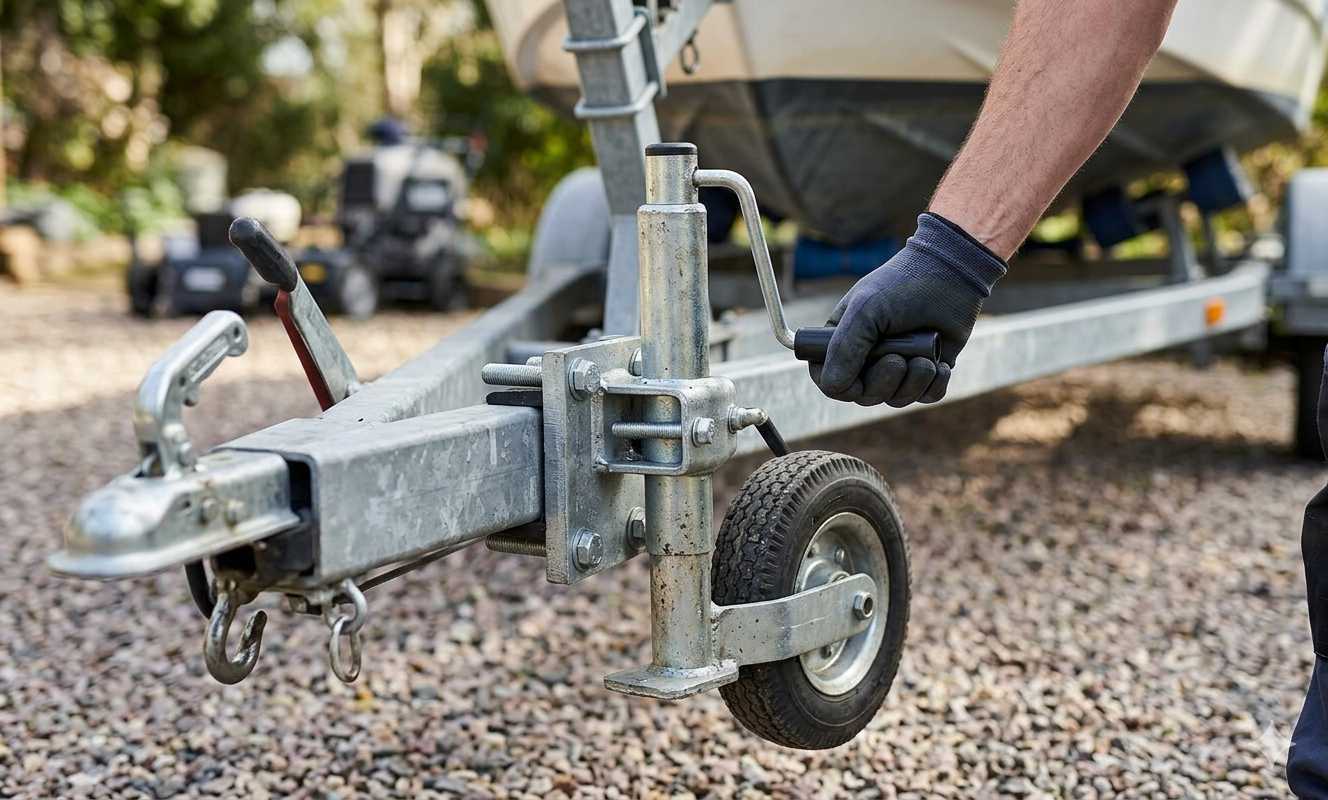
Are you planning a camping trip or a long drive with your trailer? Before you hook up and hit the road, there is one small but important part you should never overlook — the jockey wheel.
A jockey wheel may seem like a simple piece of equipment. But it plays a big role in keeping your trailer safe and easy to move. Skipping an inspection can lead to accidents, damage, or even a ruined trip.
Let’s look at why checking your jockey wheel before every trip is a smart habit every trailer owner should build.
What Is a Jockey Wheel and What Does It Do?
A jockey wheel is a small wheel attached to the front of a trailer. It is mounted on a support leg that you can raise or lower. When your trailer is not connected to a tow vehicle, the jockey wheel holds the front of the trailer off the ground.
It also helps you move the trailer by hand. You can steer and position it without needing a vehicle. This makes parking and hitching up much easier.
For caravan owners, the caravan jockey wheel is used constantly. Every time you set up camp or break it down, you rely on this little wheel. The same goes for a camper trailer jockey wheel — it takes a lot of wear and tear on every trip.
Why the Jockey Wheel Deserves More Attention
Most people focus on their tyres, brakes, and lights before a trip. But the trailer jockey wheel is often forgotten.
Here is the problem. A worn or damaged jockey wheel can fail at the worst moment — when you are trying to hitch up in a hurry or position your trailer on uneven ground. A failure can cause the trailer to drop suddenly, damage the coupling, or injure someone nearby.
The good news is that a quick inspection only takes a few minutes. And it can save you from a lot of trouble.
Signs That Your Jockey Wheel Needs Attention
Here are some clear warning signs to look out for:
The wheel is worn or cracked. Over time, the rubber or plastic on the wheel wears down. A flat spot or crack means it is time to replace it.
The clamp is loose. The jockey wheel attaches to the trailer with a clamp. If the clamp is loose, the wheel can slip or drop without warning. Always check that it is firmly tightened.
The leg is hard to raise or lower. If the mechanism feels stiff or stuck, there may be rust or dirt inside. This can make it hard to use when you need it most.
There is rust on the body. Surface rust is common, but deep rust can weaken the structure. A jockey wheel that is heavily corroded may not support the weight of your trailer safely.
The wheel does not spin freely. The wheel should roll smoothly. If it is grinding or stiff, the bearing may be worn out.
How to Inspect Your Jockey Wheel Before a Trip
A proper inspection is simple and quick. Here is what to check every time:
Step 1 – Look at the wheel itself. Check for cracks, flat spots, or heavy wear. Give it a spin to make sure it moves freely.
Step 2 – Check the clamp. Grip the clamp and try to move it. It should be firm and secure. Tighten it if needed.
Step 3 – Test the up-and-down movement. Lower the leg fully, then raise it again. It should move smoothly without sticking or grinding.
Step 4 – Look for rust or damage. Check the body of the jockey wheel for signs of rust or cracks. Pay close attention to the weld points where the clamp meets the leg.
Step 5 – Check the pin or locking mechanism. Most jockey wheels have a pin or lever that locks the height in place. Make sure it works properly and holds the leg at the right height.
This five-step check takes less than five minutes. But it gives you real peace of mind before you drive off.
The Right Jockey Wheel for Your Trailer
Not all jockey wheels are the same. Using the wrong type for your trailer can cause problems.
A jockey wheel for camper trailer setups needs to handle rough terrain. Camper trailers are often taken off-road, so the jockey wheel needs a wider, more durable wheel that can cope with dirt and gravel.
A caravan jockey wheel, on the other hand, is usually used on sealed roads and campsite surfaces. These are often lighter and designed for smooth ground.
When buying a replacement, always match the jockey wheel to the weight rating of your trailer. A wheel rated for too little weight will wear out quickly or fail under load.
Also check the clamp diameter. The clamp needs to match the size of your trailer’s A-frame tube. A poor fit means the wheel will not stay in place.
How Often Should You Inspect Your Jockey Wheel?
You should inspect your jockey wheel before every single trip. This is not an exaggeration. Every time you plan to tow your trailer, give it a quick once-over.
You should also do a more detailed check every three to six months, or after any rough trip. If you have been driving on dirt roads or in wet conditions, the jockey wheel may have picked up dirt or moisture that can cause rust or wear.
Keep a small can of lubricant in your tow kit. A spray of lubricant on the moving parts every few months will keep things working smoothly for much longer.
When to Replace Your Jockey Wheel
Even with good care, a jockey wheel will not last forever. Here are the key signs that it is time for a full replacement:
- The wheel is cracked, flat, or missing chunks of rubber
- The clamp no longer tightens properly
- The leg is bent or warped
- There is deep rust that has weakened the metal
- The locking mechanism no longer holds
Replacing a trailer jockey wheel is not expensive. A quality replacement is a small investment compared to the cost of a damaged trailer or a failed hitch.
A Small Part with a Big Job
The jockey wheel is small. It is easy to overlook. But it does a big job every time you use your trailer.
Whether you own a caravan, a camper trailer, or a general-purpose trailer, the jockey wheel is working hard every time you hitch up and move. Treating it with the same care as your tyres or brakes will keep your trailer in top shape and your trips running smoothly.
So before your next adventure, take five minutes. Get down and check your jockey wheel. It is a small habit that can make a very big difference.
