
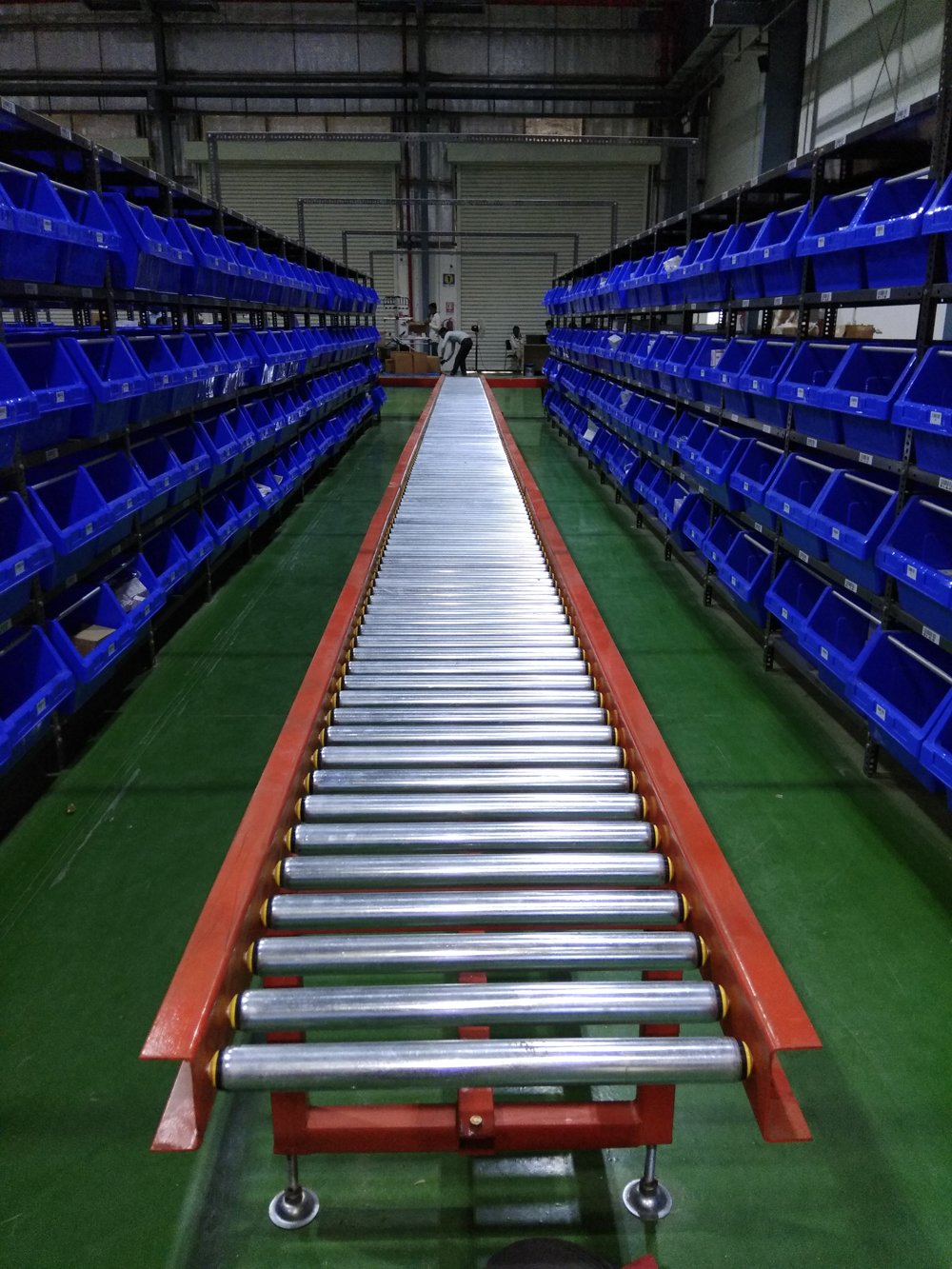
A Gravity Roller Conveyor is one of the most practical and economical systems used for moving goods in warehouses, factories, and distribution centers. It operates without motors or electrical components, relying on gravity or manual force to transport products smoothly from one point to another. Because of its straightforward design and low maintenance requirements, the Gravity Roller Conveyor remains a preferred choice for many industries seeking efficient material handling solutions.
What is a Gravity Roller Conveyor?
A Gravity Roller Conveyor consists of a series of rollers mounted within a sturdy frame. Products such as cartons, totes, bins, and pallets are placed on the rollers and move either by being pushed manually or by traveling along a slight incline. Since no external power source is needed, the system is highly energy-efficient and easy to operate.
The simplicity of the Gravity Roller Conveyor makes it suitable for both small and large operations. It can be installed as a straight line, curved section, or integrated into a broader conveyor network.
Key Features of Gravity Roller Conveyor
One of the most notable features of a Gravity Roller Conveyor is its non-powered design. This eliminates electricity costs and reduces the need for complex maintenance. The rollers are commonly manufactured from steel, stainless steel, aluminum, or PVC, depending on the intended application and load capacity.
Another important feature is modularity. A Gravity Roller Conveyor can be customized in terms of length, width, roller spacing, and frame construction. It can also be expanded or reconfigured as operational requirements change.
The system is highly durable and capable of handling a wide variety of products, from lightweight cartons to medium and heavy-duty materials.
Applications of Gravity Roller Conveyor
The Gravity Roller Conveyor is widely used across numerous industries. In warehouses and logistics centers, it helps move packages during sorting, packing, and shipping processes. In manufacturing plants, it transports components between assembly stations.
Retail distribution centers use a Gravity Roller Conveyor to streamline order fulfillment, while food and pharmaceutical industries employ specially designed systems for hygienic product handling. It is also commonly used at loading docks for transferring goods to and from trucks.
Benefits of Using Gravity Roller Conveyor
One of the biggest advantages of a Gravity Roller Conveyor is its cost-effectiveness. Since it does not require motors, sensors, or control systems, the initial investment and operating costs are relatively low.
Another major benefit is ease of maintenance. With fewer moving parts, the system requires only periodic cleaning and inspection. This reduces downtime and keeps operations running smoothly.
A Gravity Roller Conveyor also improves workplace efficiency by minimizing manual carrying and reducing worker fatigue. It enhances safety by lowering the risk of injuries associated with lifting and transporting heavy goods.
Additionally, the conveyor offers excellent flexibility. It can be relocated, extended, or integrated with powered systems as business needs evolve.
Maintenance and Care
Maintaining a Gravity Roller Conveyor is simple. Regular checks should be performed to ensure rollers rotate freely and remain properly aligned. Dirt and debris should be removed to prevent obstruction.
Periodic inspection of bearings and frame components helps identify wear before it affects performance. Replacing damaged rollers promptly ensures reliable operation and extends the lifespan of the system.
Conclusion
A Gravity Roller Conveyor is a dependable and economical material handling solution suitable for a wide range of industrial and commercial applications. Its simple construction, energy-efficient operation, and low maintenance requirements make it an excellent choice for businesses looking to improve productivity and reduce operating costs. By incorporating a Gravity Roller Conveyor, organizations can streamline workflows, enhance safety, and achieve smooth, efficient movement of goods throughout their facilities.
